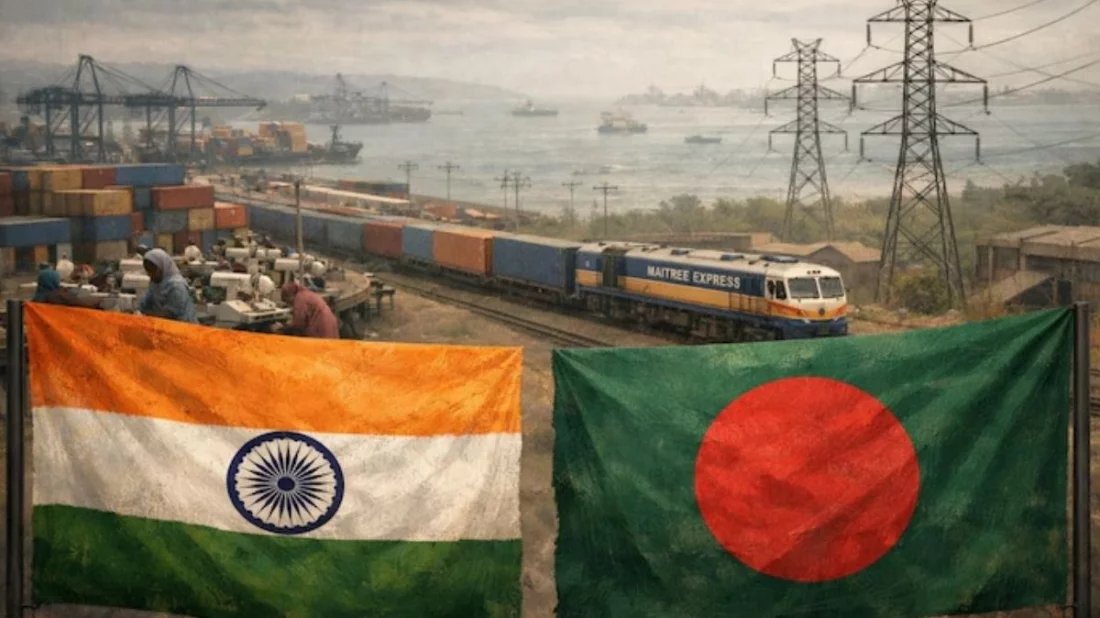
India is set to gain significant tariff advantages in the European market through a Free Trade Agreement (FTA) with the European Union (EU), a development that could intensify competition for Bangladesh’s readymade garment (RMG) sector.
After nearly two decades of negotiations, the EU–India Free Trade Agreement was officially announced last Tuesday. Once approved by the European Council, the European Parliament, and the Indian Parliament, the agreement is expected to come into force in 2027. Under the deal, most Indian products will enjoy preferential or zero-duty access to the markets of the EU’s 27 member states.
As part of the agreement, the existing tariff of around 12 percent on Indian garments entering the EU market will be reduced to zero. In addition, products such as leather goods, seafood, handicrafts, and jewellery will either receive reduced tariffs or duty-free access, significantly boosting India’s export competitiveness in Europe.
According to India’s media outlet Zee News, New Delhi hopes to capture a substantial share of Bangladesh’s garment exports to Europe following the implementation of the agreement. Bangladesh has enjoyed preferential access to the EU market since 1975 under the Least Developed Country (LDC) trade facility, which has helped it become the EU’s second-largest apparel supplier. In products such as denim, trousers, and T-shirts, Bangladesh has even surpassed China.
Currently, Bangladesh ranks just behind China among the top garment exporters to the EU, followed by Turkey, India, Cambodia, Vietnam, Pakistan, Morocco, Sri Lanka, and Indonesia. In the 2024–25 fiscal year, more than 50 percent of Bangladesh’s total garment exports were destined for EU countries, amounting to approximately USD 19.71 billion.
Following the deal announcement, India’s Commerce Minister Piyush Goyal expressed optimism that India’s textile exports to Europe could grow rapidly from USD 7 billion to between USD 30 and 40 billion. He noted that India had long questioned how Bangladesh managed to secure such a dominant position in the European market through duty-free access.
However, Bangladeshi garment manufacturers believe the increased competition will not pose an immediate or severe threat. Faisal Samad, Director of the Bangladesh Garment Manufacturers and Exporters Association (BGMEA) and Managing Director of Surma Garments, said Bangladesh remains significantly ahead of India in terms of pricing, quality, and production capacity.
He explained that the export profiles of Bangladesh and India differ considerably. Bangladesh primarily exports low- and mid-range apparel, while competition is relatively closer in knitwear segments. Nevertheless, he warned that increased competition could lead to pressure from buyers to reduce prices by 10 to 12 percent.
To address these challenges, Faisal Samad emphasized the importance of cost reduction and long-term strategic planning. He suggested that lowering interest rates on industrial loans, ensuring uninterrupted energy supply, and providing strong policy support would be critical for Bangladesh to maintain its competitiveness in the European market.