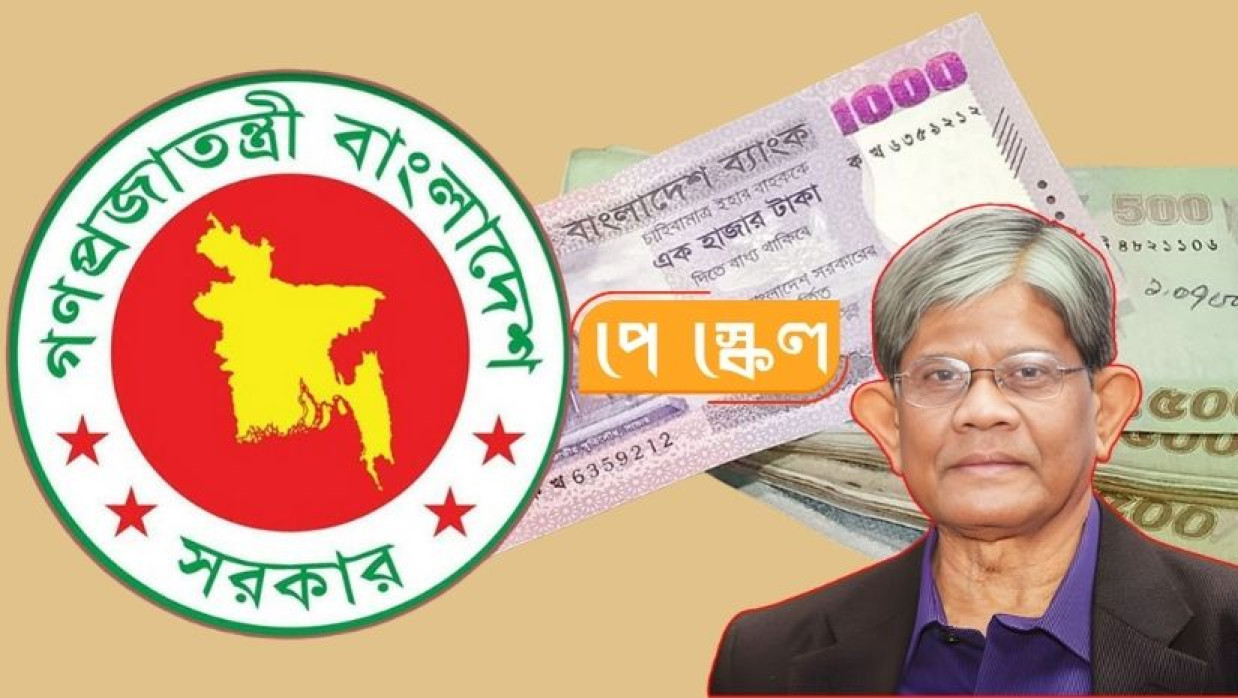
Bangladesh is currently passing through a critical and complex economic phase. On one hand, discussions are underway regarding a new pay scale for government and semi-government employees; on the other, the country is struggling with high inflation, persistent price hikes, foreign exchange shortages, and growing pressure on the national treasury. In this context, a fundamental question arises: will a new pay scale genuinely improve citizens’ living standards, or will it further intensify inflation and deepen the hardship of ordinary people?
Background of the New Pay Scale
For years, government employees have been demanding a revised and realistic pay scale, arguing that the existing structure has become inadequate amid rising living costs. Given current market prices, this demand carries legitimate weight. However, implementing a new pay scale is expected to require an additional 70 to 80 thousand crore taka, raising serious concerns about the government’s financial capacity. The key question is: where will this massive amount come from?
Bangladesh’s Financial Capacity and Fiscal Stress
Bangladesh’s revenue collection has consistently fallen short of targets. Weak tax administration, declining imports, pressure on export earnings, and rising foreign debt repayments have all contributed to fiscal stress. At the same time, conditions attached to loans from international institutions such as the IMF have forced the government to reduce subsidies and raise fuel and electricity prices—measures that directly affect ordinary citizens.
Under such circumstances, financing a new pay scale would likely require either increased borrowing or higher taxes. In both cases, the ultimate burden would fall on the general population.
Inflation and the Cost of Living Crisis
Inflation in Bangladesh has significantly increased the cost of essential goods and services. Prices of food items, fuel, transportation, healthcare, education, and housing continue to rise, pushing daily life beyond the reach of many citizens. While government employees may benefit from higher salaries under a new pay scale, workers in the private sector, informal laborers, farmers, and small traders are unlikely to see comparable income growth.
Economic theory suggests that injecting large sums of money into the economy without proportional increases in productivity often fuels inflation. If the new pay scale expands purchasing power unevenly, it may further drive up prices, eroding the real value of income gains and worsening conditions for those outside the public sector.
Livelihoods of Ordinary Citizens
A large segment of Bangladesh’s population is already struggling to survive. Job losses, business closures, reduced incomes, and declining purchasing power have become common realities. If a new pay scale provides relief only to a limited group while the overall economy remains unstable, social inequality is likely to widen.
When salaries rise but the prices of basic necessities increase at an even faster rate, wage hikes lose their significance. For those excluded from the benefits of the pay scale, the situation becomes even more severe.
Debt, Taxes, and the Burden on Future Generations
To mobilize 70–80 thousand crore taka, excessive borrowing could push the country deeper into debt, transferring today’s liabilities to future generations. Alternatively, increasing taxes would inevitably be reflected in higher prices of goods and services. Either way, ordinary citizens bear the cost.
What Needs to Be Done?
Bangladesh urgently needs a comprehensive economic reform strategy, not merely a revised pay scale. Key priorities should include:
- Strong market monitoring and dismantling price-fixing syndicates
- Reducing unnecessary government expenditure
- Combating corruption and capital flight
- Reforming the tax system to ensure fairness and efficiency
- Boosting domestic production and employment
Without these structural reforms, a new pay scale alone cannot provide sustainable economic relief.
A new pay scale may be necessary, but implementing it on a fragile economic foundation could turn it from a solution into a problem. The real challenge for Bangladesh lies in balancing wage adjustments with economic stability, inflation control, and the protection of ordinary citizens’ livelihoods.
Ultimately, the future depends on political will, good governance, and realistic, people-centered economic policies.