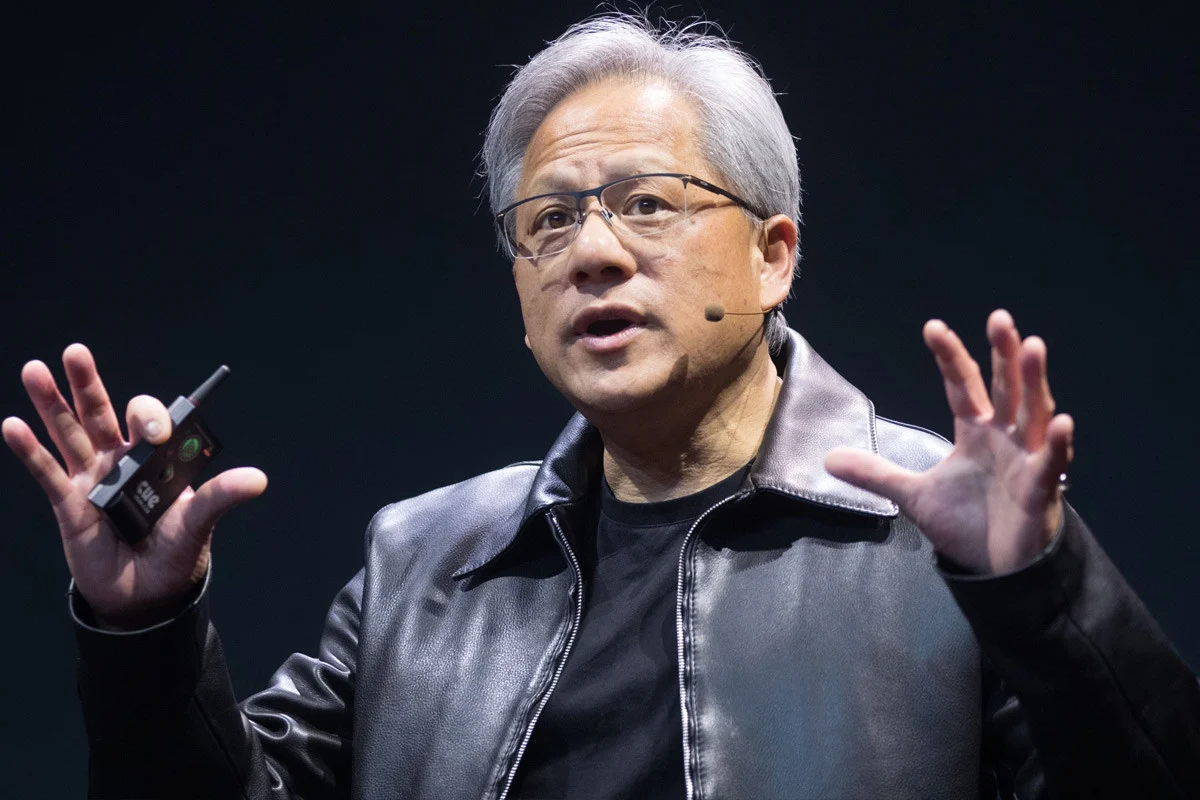
Nvidia founder and CEO Jensen Huang has said the possibility of artificial intelligence (AI) causing the destruction of the world by 2030 is “zero percent.” He also dismissed as “completely false” warnings from some technology industry figures that AI could eventually lead to the extinction of humanity.
In an interview with CBS, Huang said there was no factual or scientific basis for claims that the world would cease to exist by 2030. According to him, the probability of the world ending by then is “zero percent.”
However, concerns over the potential risks of AI have continued to grow among researchers and technology experts. Earlier this month, Anthropic researcher Jacob Coxon resigned from the AI company and warned that the rapid advancement of AI systems could potentially have extremely serious consequences for humanity by the end of the decade.
Anthropic senior scientist Evan Hubinger has also warned about the potential dangers of AI. He has said there is a possibility that AI could cause catastrophic loss of human life within the next decade. Such warnings, however, remain a subject of significant disagreement within the technology sector.
Concerns Over AI and Financial Markets
The potential risks of AI are not limited to questions about human survival. Concerns have also emerged over its possible impact on financial markets.
Sarah Breeden, deputy governor of the Bank of England, has warned that regulators need to understand the potential risks before AI-powered autonomous systems and agents become widely involved in financial transactions.
Speaking on a Wharton School podcast, Breeden said it was important to identify and understand the risks before automated trading becomes widespread in financial markets. The Bank of England is also examining emergency measures that could potentially be used if such technology contributes to serious market disruption.
Earlier this month, Anthropic CEO Dario Amodei called for slowing the pace of AI development because of concerns over the technology’s potential risks. His position has received support from OpenAI CEO Sam Altman and Tesla and SpaceX chief Elon Musk.
Huang, however, has rejected calls to slow AI development or introduce additional laws specifically targeting the industry. He has argued that existing laws are sufficient to address AI-related safety concerns.
According to Huang, existing legal responsibilities—including those relating to cybersecurity—should first be properly enforced. He has also argued that concerns about potential disasters should not be used as a reason to avoid existing legal obligations.
AI Boom Drives Nvidia’s Growth
The rapid expansion of AI technology has significantly increased demand for advanced computer chips, contributing to Nvidia’s substantial business growth.
As one of the world’s most valuable technology companies, Nvidia has a major commercial interest in the continued development of the AI industry. Huang has nevertheless said that ensuring AI is developed and used responsibly is also directly connected to Nvidia’s own interests.
He said that if the company could not ensure the safe use of its products and services, the value of the company itself could eventually be affected.
Concerns over AI safety have also intensified following reports of AI chatbots being tested in ways that allegedly went beyond their intended controls, including incidents involving unauthorized cyber activities. OpenAI, Anthropic, Meta and Google have all been mentioned in discussions surrounding AI safety and cybersecurity.
Protests Over Data Center Construction
The rapid expansion of AI is also increasing demand for large data centers. As a result, opposition to new data center projects has emerged in several parts of the United States.
According to research organization Data Center Watch, around 45 data center construction projects in the United States were disrupted or delayed by protests between April and June. The combined value of those projects was estimated at approximately $68 billion.
Local organizations have called for restrictions on new data center developments, raising concerns over electricity consumption, water usage and pressure on local infrastructure.
Lawmakers in around 30 U.S. states have also taken initiatives concerning data center locations, electricity consumption, water use and other related issues. Data Center Watch says 843 opposition groups are active across 49 states.
Mikel Villa, chief analyst at Data Center Watch, said new organizations are continuing to emerge, protests are taking place in different states and local administrative areas, and the number of people signing online petitions is also increasing.
Debate Over AI’s Future
Although there is significant disagreement over the potential scale of AI-related risks, concerns surrounding AI safety, cybersecurity, financial markets, infrastructure and environmental impacts are increasingly becoming part of the global debate.
The contrasting views of technology leaders such as Jensen Huang, Dario Amodei, Sam Altman and others highlight the continuing debate over how quickly AI should develop and how its potential risks should be managed.
As AI capabilities continue to advance, governments, technology companies and researchers are increasingly examining how to balance technological innovation with safety, accountability and responsible use.
Source: The Telegraph