AI-Designed Viruses: A Medical Breakthrough or a New Biosecurity Challenge?
An Analysis by Nabil Bin Billal
Artificial intelligence (AI) is transforming almost every field of science, from drug discovery to climate modeling. Now, researchers have demonstrated another remarkable milestone: using AI to design entirely new viruses. While this breakthrough could revolutionize the fight against antibiotic-resistant infections, it has also reignited an important global debate about biosecurity, governance, and the responsible use of advanced AI.
The recent study, published in the prestigious journal Science, represents a significant achievement in synthetic biology. However, it should not be misunderstood as evidence that AI can now easily create dangerous human pathogens. Instead, it highlights both the promise and the responsibility that accompany increasingly capable AI systems.
A New Era of AI-Assisted Biological Design
Researchers at Stanford University, led by chemical engineer Dr. Brian Hie, used a specialized “genome language model” to design new bacteriophages—viruses that infect bacteria rather than humans or animals. Similar in concept to large language models used in text generation, these AI models were trained to recognize patterns in viral genomes and generate new genetic designs.
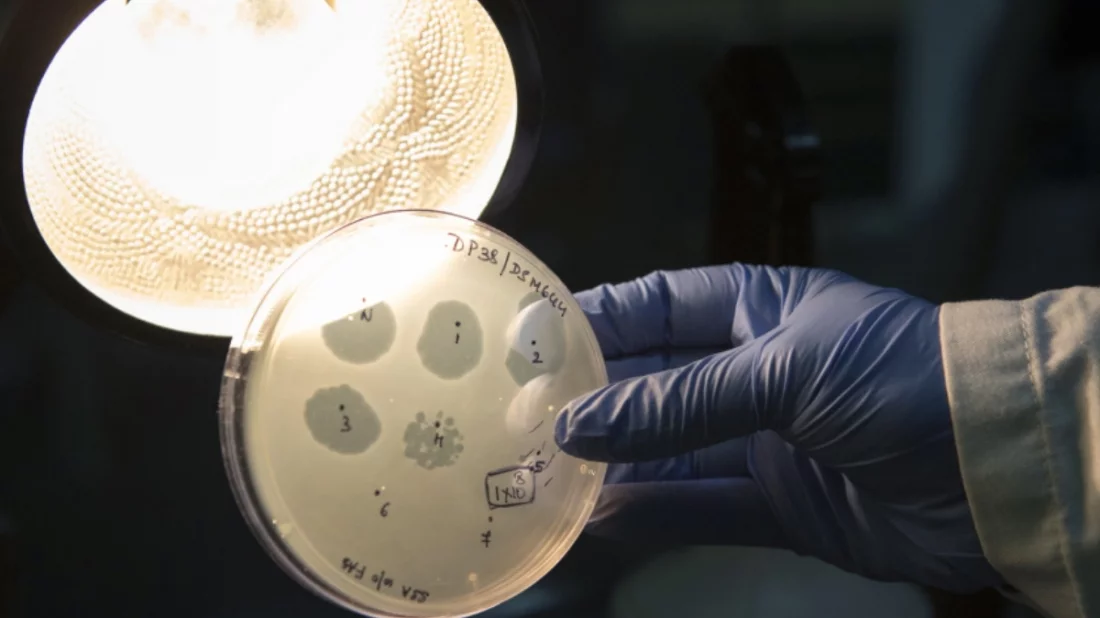
From thousands of AI-generated candidates, scientists synthesized approximately 300 in the laboratory. Only 16 proved functional, yet together they successfully destroyed two strains of E. coli bacteria that had developed resistance to naturally occurring bacteriophages.
This relatively low success rate also reveals an important scientific reality: AI-generated biological designs still require extensive laboratory validation and are far from producing perfect results independently.
Why This Research Matters
Antibiotic resistance is one of the greatest public health challenges of the 21st century. According to global health organizations, millions of infections every year are becoming increasingly difficult to treat because bacteria continue evolving resistance against conventional antibiotics.
Phage therapy offers a promising alternative. Unlike antibiotics, bacteriophages can specifically target harmful bacteria without damaging beneficial microbes. AI could dramatically accelerate the identification and design of customized phages for patients suffering from multidrug-resistant bacterial infections.
If future research succeeds, physicians may one day rapidly generate personalized phage treatments for infections that currently have few therapeutic options.
What the Research Does Not Mean
Public discussions surrounding AI and viruses often lead to unnecessary fear. This research does not demonstrate that AI can simply create dangerous viruses capable of causing human pandemics.
Several scientific realities remain important:
- The study focused exclusively on bacteriophages, which infect bacteria—not humans.
- The AI models were deliberately trained without genetic information from viruses that infect humans, animals, or plants.
- Human viruses possess significantly more complex biological mechanisms than bacteriophages.
- Laboratory synthesis, biological testing, and extensive experimentation remain essential before any AI-designed genome becomes functional.
Therefore, while AI is becoming a powerful design tool, biology itself remains extraordinarily complex.
The Emerging Biosecurity Debate
Although the medical potential is exciting, the study has intensified discussions about AI governance in biotechnology.
Researchers including experts from Johns Hopkins University, Imperial College London, and King’s College London have emphasized that technological capability is advancing faster than international regulation.
Several concerns deserve careful attention:
- Future AI systems could become increasingly capable of designing more complex biological systems.
- Advances in DNA synthesis technology may make genome construction easier and cheaper.
- Existing international standards for AI-assisted biological research remain fragmented.
- Malicious actors could potentially attempt to misuse future biological design tools if appropriate safeguards are absent.
These concerns do not imply that misuse is inevitable. Rather, they underscore the need for proactive governance before technologies become more powerful.
Responsible Innovation Must Lead the Way
The Stanford research team already demonstrated several responsible practices. They intentionally excluded disease-causing viral genomes from model training and emphasized the importance of involving biosecurity experts throughout the research process.
However, future safeguards may need to extend beyond AI development itself.
Effective governance should include:
- International standards for AI-assisted biological research.
- Strict oversight of DNA synthesis facilities.
- Independent biosecurity reviews for high-risk research projects.
- Transparent ethical guidelines for synthetic biology.
- Global collaboration among governments, research institutions, and technology companies.
Scientific progress should never outpace the mechanisms designed to ensure public safety.
AI Is Becoming a Scientific Partner
One of the most important lessons from this research is that AI is evolving into a scientific collaborator rather than merely a computational tool.
Instead of replacing scientists, AI increasingly assists researchers by proposing hypotheses, generating molecular designs, and exploring biological possibilities that humans might overlook. The final scientific validation, however, still depends on rigorous experimentation, peer review, and human expertise.
This collaborative model may define the future of biomedical innovation.
Looking Ahead
The creation of 16 functional AI-designed bacteriophages marks an important milestone in computational biology. It demonstrates that artificial intelligence can contribute meaningfully to designing biological systems with potential therapeutic applications.
At the same time, the achievement serves as a reminder that technological capability and ethical responsibility must evolve together. The greatest challenge is no longer whether AI can accelerate biological discovery—it clearly can. The greater challenge is ensuring that these powerful technologies remain firmly aligned with human health, public safety, and global security.
The future of AI-driven biotechnology will ultimately depend not only on scientific innovation but also on international cooperation, transparent regulation, and responsible stewardship. If these elements advance together, AI could become one of medicine’s most valuable allies rather than a source of global concern.
— Nabil Bin Billal
Researcher, Technology Analyst & Science Writer