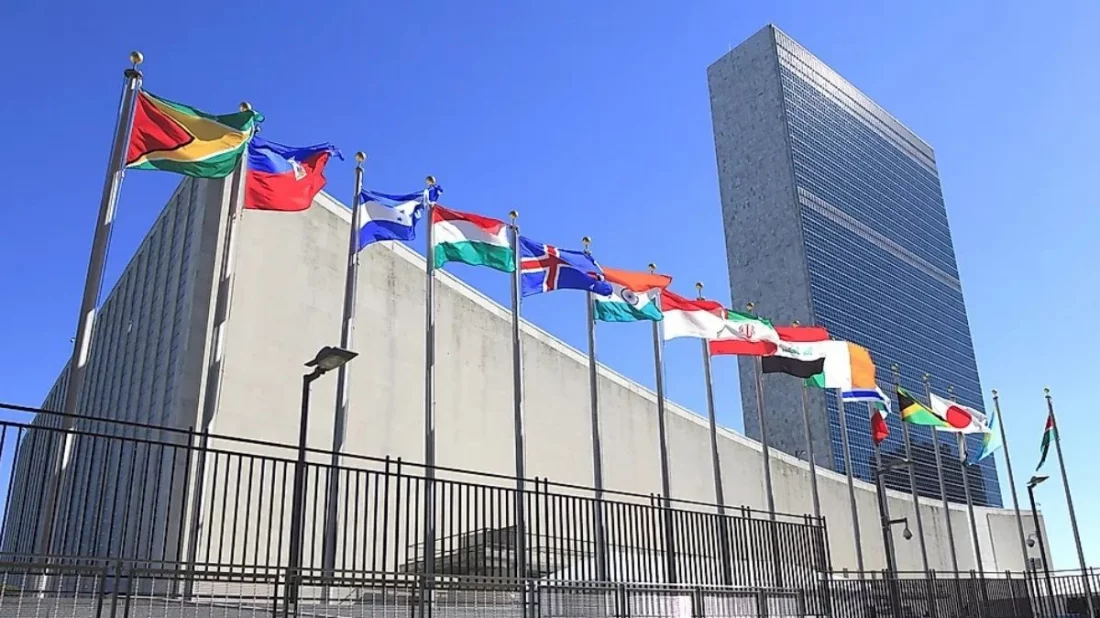
The United Nations (UN), the world’s largest international organization, was officially founded on this day in 1945 with 51 founding member states. Today, it stands as a global institution with 193 members—Bangladesh being the 136th to join. For eighty years, the UN has worked for world peace, human rights, and global development. Yet, debates continue over its successes and failures. Many tend to focus on its shortcomings, overlooking the undeniable achievements that have shaped the modern world.
The UN’s specialized agencies have played a pivotal role in economic progress, humanitarian aid, and social development. Institutions such as UNICEF, WHO, WFP, FAO, UNESCO, and UNDP have contributed immensely to poverty alleviation, hunger reduction, and sustainable development. The organization was instrumental in implementing the Millennium Development Goals (MDGs), and later, the Sustainable Development Goals (SDGs), transforming global cooperation for equitable growth. Millions have been saved from famine, displacement, and disease through the relentless work of UN agencies. For these contributions, the UN and its subsidiaries have earned multiple Nobel Peace Prizes.
However, despite its noble mission and significant achievements, the UN’s list of failures remains equally long. The structural imbalance of power within the organization—especially the dominance of the five permanent members of the Security Council (the United States, the United Kingdom, Russia, China, and France)—has severely limited its independence and effectiveness. Decisions often reflect the political interests of these powers rather than the collective will of the international community.
When the UN was established, the world was emerging from the devastation of World War II. The geopolitical landscape of 1945 was vastly different from today’s multipolar world. Yet, the UN’s foundational structure has hardly evolved to match this new reality. The five permanent members still retain veto power, which allows any of them to block major resolutions. This imbalance often paralyzes the organization, preventing decisive action even in the face of humanitarian catastrophes.
For example, the U.S.-led invasion of Iraq in 2003 occurred without UN authorization—an act that violated international law and moral principles. Under false pretenses of “weapons of mass destruction,” Iraq was devastated, and nearly a million lives were lost. Similarly, the U.S. attack on Afghanistan, and later NATO interventions in Libya and Syria, exposed the UN’s inability to prevent unilateral wars by powerful nations. On the other hand, when Israel repeatedly launched military offensives on Gaza and the West Bank, the UN’s responses were limited to “statements of concern” or expressions of regret. Although the Security Council has discussed labeling Hamas a terrorist organization, it has failed to condemn or punish Israel for its blatant human rights violations.
This double standard becomes even more apparent in the case of Ukraine. The UN and its Western allies have taken strong positions against Russia, imposing sanctions and isolating Moscow diplomatically. Yet, similar urgency is absent when it comes to the suffering of Palestinians or the Rohingya crisis in Myanmar. In these cases, the UN’s role has been reduced to symbolic resolutions and humanitarian aid, rather than concrete political solutions.
Historically, the UN has struggled in most major conflicts since World War II. While it played a notable role in resolving the 1962 Cuban Missile Crisis, its involvement in the Korean and Vietnam wars was disappointing. In Africa and Asia, the record is even bleaker. The UN failed to prevent genocides in Rwanda (1994) and Srebrenica (1995), both of which remain tragic reminders of its paralysis. It could not stop Myanmar’s brutal ethnic cleansing of the Rohingya, nor has it succeeded in ensuring their safe repatriation from Bangladesh. The UN also failed to protect civilians in Iraq, Libya, and Somalia during Western-led military interventions conducted under the guise of humanitarianism.
This recurring pattern of inaction and selective morality stems largely from the UN’s outdated organizational framework. Former Secretary-General Kofi Annan once proposed a ten-point reform plan emphasizing budget efficiency, accountability, and stronger global development initiatives. Earlier, Boutros Boutros-Ghali also suggested structural reforms to enhance UN effectiveness—recommendations that remain unimplemented. Analysts widely agree that the UN’s inefficiency is rooted in its flawed representational system, financial dependence, and the overwhelming influence of major powers.
The International Court of Justice (ICJ), the UN’s principal judicial organ, reflects this crisis of credibility. Although in 2024 the ICJ declared Israel’s occupation of Palestinian territories illegal and upheld the Palestinians’ right to self-determination, it lacks enforcement power. Its verdicts depend entirely on the political will of member states. Even in the ongoing genocide case against Israel in Gaza, the ICJ has denounced Israeli actions as crimes against humanity but cannot compel compliance. The same weakness undermines other bodies like the International Atomic Energy Agency (IAEA), which, despite its mandate to ensure nuclear safety, remains powerless against nuclear-armed non-NPT members like Israel.
Such double standards have eroded trust in the UN among developing nations of the Global South. Countries like India, Brazil, Turkey, and South Africa are now demanding comprehensive institutional reform, including expansion of the Security Council’s permanent membership to reflect current geopolitical realities. Without structural changes, the UN risks becoming irrelevant—a relic of the past unable to address present challenges like terrorism, poverty, climate change, and war.
As the United Nations marks its 80th anniversary, it stands at a crossroads. The ideals of peace, equality, and justice upon which it was founded remain as vital as ever. But achieving them in today’s fractured world requires courage and reform. A restructured and more representative United Nations could still fulfill its promise of global peace, prosperity, and security. The question is whether the world’s leaders have the will to make that transformation possible—before the UN itself becomes a monument to its own unfulfilled ideals.