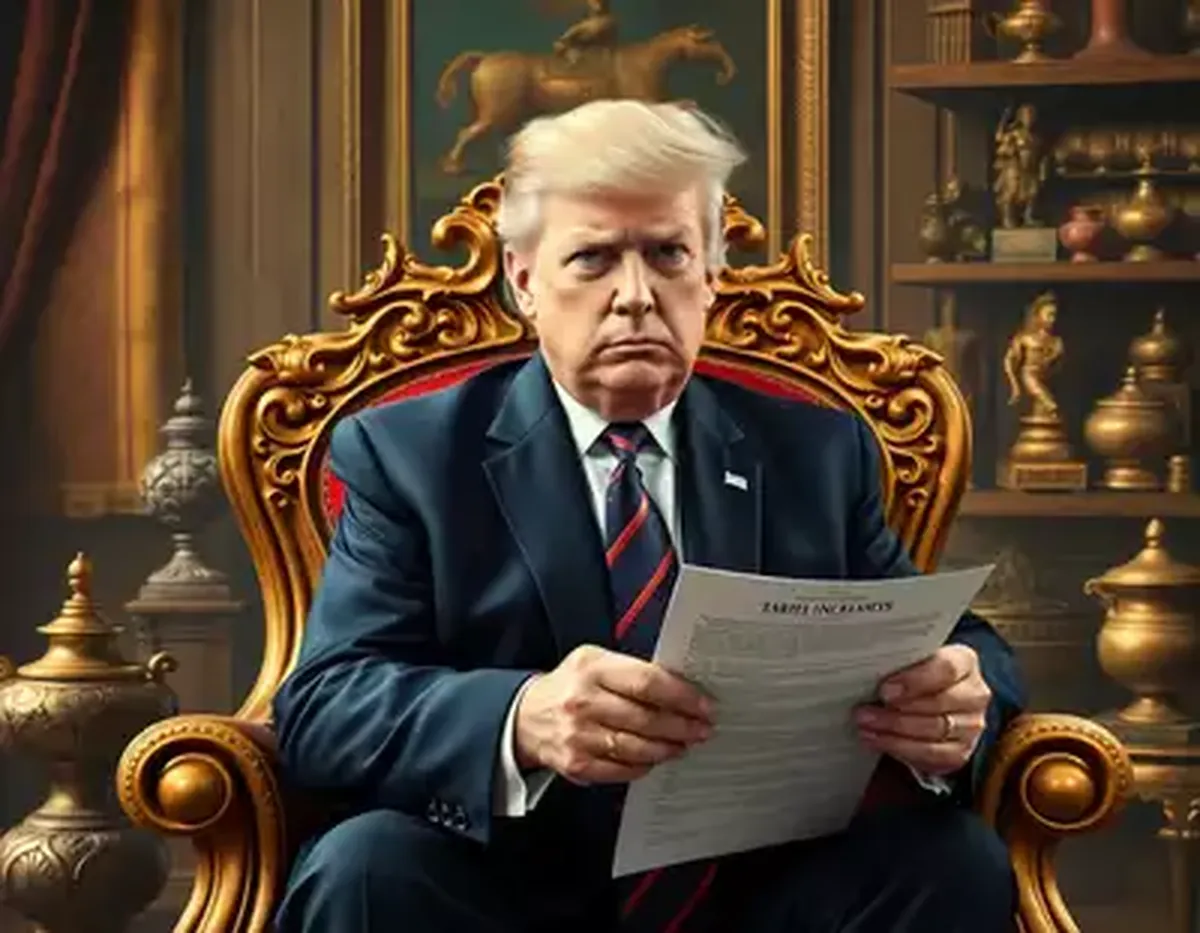
U.S. President Donald Trump has stirred global attention by asserting that the Russia-Ukraine war, which has caused widespread devastation and loss of life, could end almost instantly if Saudi Arabia were to take a decisive step. Trump claimed that a significant reduction in global oil prices, led by Saudi Arabia and other major oil-exporting nations, could deprive Russia of critical revenue and force an immediate cessation of hostilities. His remarks, reported by the BBC, were made during a virtual address at the World Economic Forum’s Annual Meeting in Davos, Switzerland.
Trump’s Solution: Reducing Oil Prices
Trump outlined a direct approach to ending the prolonged conflict in Eastern Europe, emphasizing the influence of the global oil market. He said, “If Saudi Arabia and other oil-exporting nations decide to lower oil prices, the war between Russia and Ukraine will stop immediately.”
Trump criticized the lack of action in this regard, stating, “This should have been done long before the U.S. presidential election. I’m genuinely surprised that Saudi Arabia and other oil-exporting nations haven’t taken this step.” He argued that Russia’s economic reliance on energy exports makes it highly vulnerable to declining oil prices.
Addressing OPEC and Saudi Arabia
Speaking directly to members of the Organization of the Petroleum Exporting Countries (OPEC), including Saudi Arabia, Trump urged immediate action. He remarked:
“I strongly encourage Saudi Arabia and OPEC to reduce oil prices. It’s not just important; it’s essential. Honestly, I’m shocked this hasn’t been done yet. If you lower oil prices, the war will end immediately. This is something that must be prioritized.”
Trump’s remarks reflect his belief that energy-exporting nations have a significant role to play in mitigating global conflicts by leveraging their control over oil prices. He further criticized these nations for their perceived inaction, suggesting they bear partial responsibility for the war’s continuation.
The Link Between Oil and War
Trump’s theory centers on the idea that Russia’s ability to finance its military operations largely depends on the revenue generated from its energy exports. Russia is one of the world’s leading exporters of oil and natural gas, and high oil prices have provided the country with a financial cushion to sustain its military ambitions despite international sanctions.
By reducing oil prices, OPEC nations, led by Saudi Arabia, could diminish Russia’s income, creating significant financial strain and reducing its capacity to continue the war. Trump elaborated:
“Oil prices are excessively high, and this allows the war to continue. If you lower oil prices, it will cut off Russia’s main source of revenue. Without this revenue, the war cannot be sustained.”
The Humanitarian Perspective
Trump also highlighted the severe human toll of the ongoing conflict, criticizing the lack of urgency in addressing its economic underpinnings. He stated:
“What’s happening is heartbreaking. So many innocent lives are being lost, and for what? The nations capable of acting, particularly oil-exporting countries, have a moral obligation to do so. They can save lives by simply lowering oil prices.”
His remarks underscore the interplay between economic policies and humanitarian crises, emphasizing the need for coordinated global action to alleviate suffering.
Saudi Arabia’s Role and Current Position
As a leading member of OPEC, Saudi Arabia holds considerable influence over global oil prices. The country has often used its position to stabilize or adjust the market, depending on geopolitical and economic considerations. However, Saudi Arabia has not officially responded to Trump’s remarks.
Analysts note that Saudi Arabia’s priorities often involve balancing its economic interests with maintaining strategic alliances. While a sharp reduction in oil prices could strain Russia’s economy, it might also impact Saudi Arabia’s own revenues, given its dependence on oil exports.
Complexities Beyond Oil Prices
While Trump’s proposal is straightforward, experts caution against oversimplifying the conflict. The Russia-Ukraine war is rooted in deep-seated geopolitical tensions, territorial disputes, and historical grievances that cannot be resolved solely through economic measures.
Additionally, global oil markets are influenced by a range of factors, including supply chain dynamics, demand fluctuations, and political alliances. A sudden reduction in oil prices could have unintended consequences, such as destabilizing other oil-dependent economies or disrupting global energy markets.
Ongoing Conflict and Global Implications
The Russia-Ukraine war, which began on February 24, 2022, following Russian President Vladimir Putin’s announcement of a “special military operation,” has caused immense destruction and loss of life. The conflict has also triggered a global energy crisis, with skyrocketing oil and gas prices contributing to inflation and economic instability worldwide.
While international sanctions have targeted Russia’s economy, the country’s robust energy exports have helped it weather the impact. A coordinated effort to reduce oil prices could amplify the pressure on Russia, potentially hastening an end to the conflict.
Trump’s assertion that Saudi Arabia could end the Russia-Ukraine war with a single decision has reignited discussions about the role of global energy markets in international diplomacy. While the proposal highlights the potential leverage of oil-exporting nations, its feasibility and broader implications remain subjects of debate.
As the world grapples with the ongoing conflict, Trump’s remarks serve as a reminder of the complex interplay between economics, politics, and humanitarian crises. Whether Saudi Arabia and OPEC nations will take action remains uncertain, but the need for innovative solutions to end the bloodshed in Ukraine has never been more urgent.