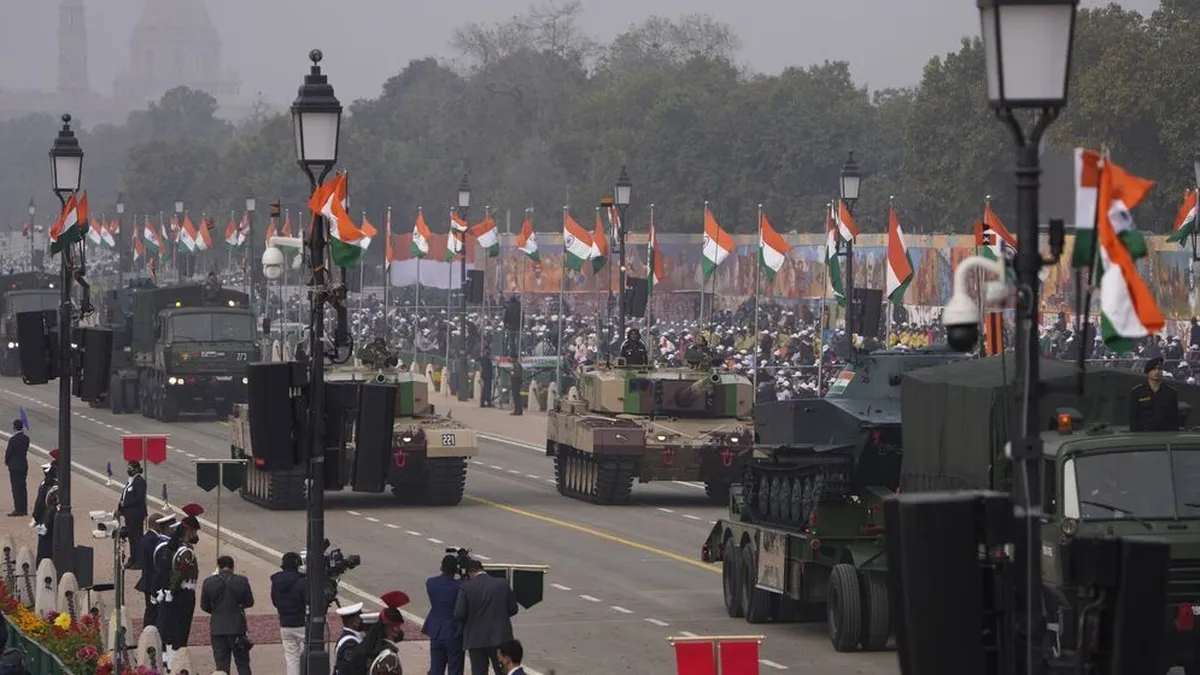
India has unveiled a robust defense budget of $78 billion for 2025, marking a significant 9.5% increase from the previous year’s allocation. This allocation, under the leadership of Prime Minister Narendra Modi, underscores India’s commitment to fortifying its military capabilities. The country now ranks as the fourth-largest defense spender globally, trailing only the United States, Russia, and China. India’s defense expenditure now accounts for 8% of its total Gross Domestic Product (GDP), signaling a substantial investment in national security and military modernization.
Key Details of the 2025 Defense Budget
India’s defense budget for 2025 includes several major provisions aimed at enhancing the country’s military strength and capabilities, particularly in light of ongoing geopolitical tensions in the region. Here are some of the key components of the new budget:
- Capital Expenditure Increase: The Indian government has earmarked significant funds for defense modernization, with a focus on procuring cutting-edge military equipment. This includes a 4.6% rise in capital expenditure for defense, which is designed to upgrade military infrastructure, modernize weaponry, and invest in new technologies.
- Fighter Jet Procurement: The budget allocates $5.6 billion for the acquisition of new fighter jets. India’s air force is undergoing a substantial upgrade as the country seeks to replace its aging fleet with state-of-the-art aircraft capable of meeting modern security challenges. The procurement plan is seen as a critical move to strengthen India’s air defense capabilities in the face of rising tensions with neighboring countries, particularly China and Pakistan.
- Naval Fleet Expansion: An additional $2.8 billion has been earmarked for the enhancement of India’s naval power. This move is part of India’s broader strategy to bolster its maritime defense and assert its influence in the Indian Ocean region. The funding will be directed towards modernizing the naval fleet, including the acquisition of advanced submarines, warships, and naval aircraft.
- Missile Defense Systems: As part of its focus on modernizing defense technologies, India is also investing in strengthening its missile defense systems. The rise in missile and drone technologies across the globe, particularly by adversaries like China, has made this a crucial area of focus.
- Cyber Warfare and Space Technology: With the growing threat of cyberattacks and space-based warfare, India has increasingly recognized the need to bolster its cyber capabilities and space technology infrastructure. The budget includes provisions for enhancing India’s cyber defense capabilities, as well as increasing investment in space research for military applications.
India’s Position in the Global Defense Landscape
The massive increase in India’s defense budget is reflective of the country’s broader ambition to assert itself as a dominant military power in Asia. India’s defense spending has seen a steady rise over the years, driven in large part by growing concerns about China’s expanding military footprint in the region. Analysts argue that India needs to ramp up its military spending even further to match China’s technological advances and its rapidly expanding defense capabilities.
China, with its aggressive expansionist policies and military modernization, has become the primary focus of India’s defense strategy. The ongoing border disputes between the two nations, particularly in the Himalayan region, have heightened tensions, making military readiness a top priority for India.
Moreover, India’s defense strategy is not just reactive; it is also proactive. The Indian government is aiming to project power beyond its immediate borders, with a focus on enhancing its strategic presence in the Indo-Pacific region. The expansion of India’s naval capabilities and its investment in advanced fighter jets and missile systems are part of this broader strategy.
Socio-Economic Concerns Amid Military Spending
Despite the significant increases in defense spending, India faces ongoing challenges in addressing its domestic socio-economic issues. Over 80 million people in India still live below the poverty line, and there are widespread concerns about rising inequality and unemployment. The government’s massive defense budget, while ensuring national security, has raised questions about its priorities, especially when it comes to allocating resources to address poverty, health care, education, and infrastructure development.
The debate has intensified as the Indian government’s military spending has grown significantly, even as the country grapples with pressing domestic challenges. Critics argue that the large allocation for defense spending could divert vital resources away from addressing issues such as poverty alleviation and improving the quality of life for millions of people in the country.
The Challenge of Pension and Salary Payments
A significant portion of India’s defense budget continues to be allocated to pensions and salaries for military personnel. This issue has long been a matter of concern, as experts point out that such expenditures consume a large part of the defense budget without directly contributing to the country’s military modernization goals.
Amit Kaushik, former financial adviser to India’s Ministry of Defense, highlighted that a large share of the defense budget continues to be spent on pensions and salaries, despite the government’s attempts to modernize the forces. This raises questions about how efficiently the budget is being utilized and whether more funds should be directed towards capital expenditure, which is essential for military modernization.
Potential Geopolitical Ramifications
India’s expanding defense budget is likely to have significant implications for regional geopolitics. As India strengthens its military capabilities, neighboring countries, particularly China and Pakistan, are likely to respond by bolstering their own defense spending, potentially leading to an arms race in the region. India’s military expansion could also escalate existing tensions along the India-China border, where skirmishes have erupted in recent years.
Additionally, the growing defense budgets in the region could complicate diplomatic efforts to address longstanding territorial disputes and regional security concerns. The strategic competition between India and China, in particular, is expected to continue driving defense spending and military modernization efforts on both sides.
The Road Ahead: Balancing Defense and Development
While India’s growing defense budget reflects its aspirations to secure its borders and assert its role as a regional power, the challenge lies in balancing military priorities with the country’s developmental needs. The debate over India’s defense spending versus its domestic spending on poverty alleviation, healthcare, and education will continue to be a crucial issue in the coming years.
As India prepares for future military confrontations and geopolitical challenges, it will need to ensure that its defense investments do not come at the expense of addressing the urgent needs of its people. Striking a balance between national security and economic development will be key to maintaining India’s stability and fostering long-term growth in the coming decades.
In conclusion, India’s decision to significantly increase its defense budget highlights the country’s commitment to strengthening its military posture, particularly in the face of rising challenges from regional competitors. However, the ongoing debate about the appropriate allocation of resources between military expenditure and domestic welfare will continue to shape the discourse on India’s defense policies in the years ahead.