Despite Bangladesh’s growing trade relationship with the United States, American products continue to face significantly higher import duties compared to other global trading partners. This dynamic is becoming increasingly important as bilateral trade between the two countries expands and as the government explores policy reforms to enhance economic cooperation.
According to 2024 data from the National Board of Revenue (NBR), the average tariff imposed on goods imported from the U.S. was 6%. This translates to the government collecting Tk 6.15 in customs duties and taxes for every Tk 100 worth of imported U.S. goods. However, after adjusting for refundable taxes such as Value Added Tax (VAT), Advance Income Tax (AIT), and Advance Tax (AT)—which importers can reclaim or adjust later—the actual or effective average tariff rate falls to 2.2%.
Massive Revenue from Limited Imports: A Closer Look at the Numbers
The NBR’s data analysis reveals that Bangladesh imported $2.91 billion worth of goods from the U.S. in 2024. These imports were valued at approximately Tk 35,189 crore for customs assessment purposes. Against this backdrop, the government collected Tk 2,166 crore in tariffs and import-related taxes.
Such figures underscore the crucial role of American imports in revenue generation—even though in some cases, the volume of imports remains relatively small. A striking example is the case of whiskey and luxury automobiles, which face extraordinarily high tariffs but contribute disproportionately high tax revenues compared to their volume.
Dual Import Channels: Duty-Free vs. Duty-Paid Goods
U.S. goods enter Bangladesh through two distinct channels:
- Bonded Warehouse Imports (Duty-Free):
These are primarily raw materials used in the export-oriented sectors, such as textiles, leather, and pharmaceuticals. Imports under bonded warehouse schemes are fully exempt from customs duties and other taxes. - Direct Imports for Domestic Consumption:
These include finished products and industrial goods for local use. The majority of these goods are subject to customs duties and regulatory taxes.
In 2024:
- $290 million worth of U.S. goods were imported duty-free as raw materials for export industries.
- Of the remaining $2.61 billion worth of domestic-use imports, $790 million still qualified for tax exemptions under special provisions or low-duty categories.
This means a significant portion of imports are still subject to high tariff burdens, especially when they do not fall under bonded or preferential schemes.
Most Heavily Taxed U.S. Products in Bangladesh
Among the 2,515 types of U.S. products imported into Bangladesh, certain items stand out for attracting extraordinarily high tariffs, particularly luxury and non-essential goods.
🥃 1. Whiskey (611% Tariff)
- Import Volume: Only 228 bottles of Jack Daniel’s whiskey were brought in during 2024.
- Revenue Collected: Despite the low volume, the government collected Tk 3.1 million in taxes and duties.
- The massive tariff reflects Bangladesh’s policy of discouraging consumption of alcoholic beverages, especially imported ones.
🚗 2. Mercedes-Benz Cars (443% Tariff)
- Units Imported: Only 4 vehicles in total.
- Revenue Generated: A staggering Tk 14.85 crore in duties and taxes.
- These luxury vehicles fall under the highest automotive tariff brackets due to their engine size, luxury classification, and high CIF (cost, insurance, and freight) value.
💨 3. Vapes & E-cigarettes (289% Tariff)
- Import Value: Roughly $73,000 worth of electronic nicotine delivery systems were imported.
- Revenue Collected: Approximately Tk 3 crore in duties.
- These products are often targeted for high taxation due to public health concerns and rising youth consumption.
❄️ 4. Mid-size Cars & Air Conditioning Equipment (Up to 200% Tariff)
- These goods collectively contributed Tk 5.15 crore in duties, mainly due to a mix of luxury classification and environmental concerns (energy consumption and emissions).
Raw Materials: Low Tariff, High Revenue
While luxury items are taxed heavily, the real bulk of government revenue comes from high-volume imports of industrial raw materials.
🔩 Scrap Iron for Rebar Production
- Used in the local construction and steel manufacturing industry.
- Even with a low tariff of 4%, this category generated Tk 450 crore in revenue due to its massive import volume.
- This highlights how lower tariffs on essential raw materials can still yield high revenue if import volumes are large.
Geopolitical Context: Tariff Reforms Under Discussion
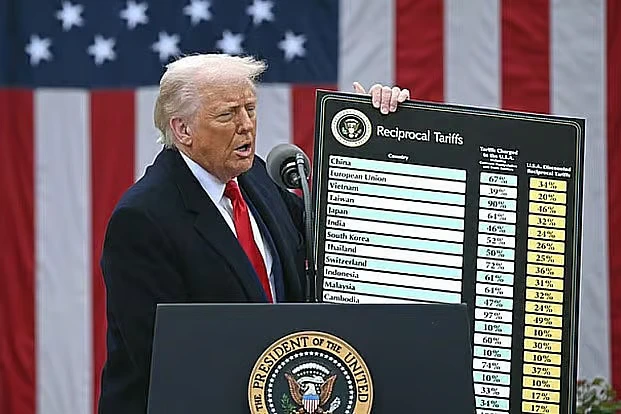
The issue of high tariffs on U.S. goods has gained new relevance due to changing international dynamics. Former U.S. President Donald Trump recently announced retaliatory tariffs on select countries, citing trade imbalances and the need to protect U.S. industries.
This move has prompted Bangladesh to re-evaluate its existing tariff structure on U.S. imports. According to NBR Chairman Abdur Rahman Khan, a high-level meeting will be held on April 7, 2025, to assess whether reductions in duties on selected U.S. products are possible—particularly where:
- The import volume is low, and
- The tariff rate is unusually high without significant impact on domestic industries.
Officials from the Bangladesh Trade and Tariff Commission are working with the Ministry of Commerce and Finance Division to prepare detailed product lists where such policy adjustments could be considered.
Opportunities and Challenges Ahead
The U.S. is steadily becoming a strategic trade partner for Bangladesh, especially as the country seeks to diversify its sources of imports and reduce over-dependence on regional giants like India and China.
However, challenges persist:
- Transport costs and longer shipping times make American products less competitive.
- Tariff barriers, especially on luxury and lifestyle goods, often make U.S. products unaffordable to average consumers.
- Complex customs procedures can disincentivize importers from choosing U.S. suppliers.
Yet, opportunities are also emerging:
- Quality and regulatory compliance of U.S. goods are attracting more local importers.
- Potential tariff rationalization could open doors to more balanced trade.
- Strengthening trade relations with the U.S. could provide diplomatic leverage in future negotiations on labor, trade access, and technology cooperation.
Conclusion: Strategic Policy Needed for Balanced Growth
Bangladesh’s high tariffs on U.S. goods reflect a broader policy framework aimed at protecting local industries and maximizing revenue from luxury imports. However, as international trade norms evolve, and as bilateral cooperation deepens, there is a growing need for strategic tariff restructuring.
Careful identification of low-impact, high-tariff goods can help the government strike a balance between revenue collection and trade liberalization. In doing so, Bangladesh can send a strong signal to the U.S., encouraging greater bilateral trade and reinforcing its commitment to fair, open, and mutually beneficial commerce.
The upcoming NBR meeting could be the first step toward a more equitable and modern trade policy framework, paving the way for better integration of Bangladesh into the global supply chain while maintaining its economic interests at home.