A disturbing and deeply unsettling picture of sexual harassment and violence within the Indian Army has once again come into sharp focus, laying bare a crisis that has existed for decades but has rarely been addressed with seriousness. Allegations of sexual abuse by members of the Indian Army are not new; they stretch back decades and cover both uniformed women inside the forces and civilian women in militarized regions. Female officers who joined the armed forces with the hope of serving their country have spoken of facing predatory behavior from their superiors, while women in Kashmir and the Northeast—already living under militarization—have recounted stories of rape, intimidation, and humiliation at the hands of soldiers. Yet, time and again, these allegations have either been silenced, dismissed, or distorted by institutional mechanisms designed to protect the accused. Cover-ups through internal inquiries, the reluctance of state authorities to prosecute, and the shield of special laws such as the Armed Forces (Special Powers) Act (AFSPA) have all contributed to what observers describe as “systemic impunity.”
The Shocking Allegations of Colonel Amit Kumar
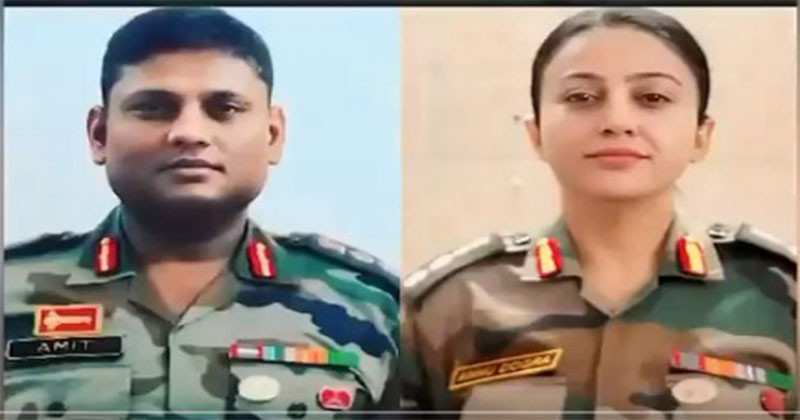
The recent allegations made by retired Colonel Amit Kumar illustrate this entrenched culture of denial and cover-up. Kumar claimed that his wife was brutally raped by senior army officers after being moved from a family ward in Odisha. This was not a vague accusation but one backed by his wife’s detailed testimony, video evidence, and an FIR naming three brigadiers and one lieutenant colonel. Despite the seriousness of the charges and the presence of corroborating evidence, the Army’s internal inquiry dismissed the allegations and declared the officers innocent. Kumar went further, alleging that a nexus exists between senior military leadership and the police, whereby powerful perpetrators are shielded while victims are intimidated, coerced, or silenced into submission. Such claims underscore the perception that justice in cases of sexual violence within the military is not merely delayed but deliberately denied.
A Pattern, Not an Isolated Incident
The case of Colonel Kumar’s wife is far from unique. In 2015, a young officer from the Army’s Signals Corps accused her commanding officer in Rajasthan of sexual harassment. Instead of swift justice, the case was delayed through bureaucratic hurdles, leaving her psychologically devastated and professionally vulnerable. She eventually had no option but to approach the Defence Minister directly, an extraordinary step that highlights the failure of institutional redress mechanisms.
Going back further, the case of Captain Poonam Kaur in 2008 remains emblematic of the Army’s victim-blaming culture. Kaur accused senior officers of sustained sexual and psychological harassment. Instead of investigating the allegations with impartiality, the Army’s court of inquiry branded her a liar, calling her a “false complainant,” and declared her guilty. This shocking reversal not only denied her justice but also sent a chilling message to other potential complainants: speaking out could destroy their careers and reputations. Human rights defenders and women’s organizations strongly condemned this outcome, calling it a textbook example of how institutions suppress victims while protecting offenders.
Kashmir: The Darkest Chapter of Sexual Violence
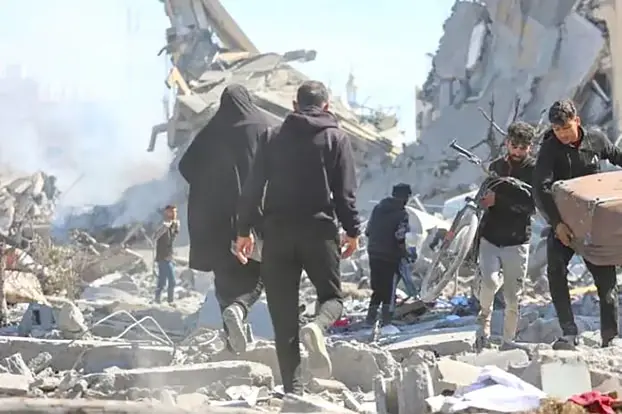
Nowhere are these allegations more harrowing than in Kashmir, where the Army has been accused of using sexual violence as a weapon of intimidation against civilians. The 1991 mass rape in the villages of Kunan and Poshpora in Kupwara district stands out as one of the darkest chapters. During a late-night raid, Indian soldiers allegedly raped dozens of women ranging from teenagers to elderly grandmothers. Official records listed 23 women, but independent investigations and human rights groups have estimated the number to be as high as 100. Despite widespread international condemnation—from Amnesty International to the United Nations—justice has remained elusive for over three decades. The survivors, many of whom continue to live with social stigma, have repeatedly petitioned the courts, but the Indian legal system has failed to deliver accountability.
Similar stories have emerged from India’s Northeast, particularly in Manipur and Nagaland, regions long subjected to counterinsurgency operations. Women have testified about being assaulted during army crackdowns, house searches, and interrogations. Here too, the AFSPA has provided broad legal immunity to soldiers, effectively shutting the door to justice. The law, which allows soldiers to operate with sweeping powers, has been criticized for decades for enabling human rights abuses, but successive governments have defended it as “necessary for national security.”
The “Zero Tolerance” Rhetoric Versus Reality
Publicly, the Indian Ministry of Defence and Army officials insist on a “zero tolerance” stance toward sexual misconduct. The phrase is often repeated in press briefings and parliamentary sessions as proof of the military’s commitment to discipline and ethical conduct. Yet, the lived reality of victims reveals the stark hollowness of this rhetoric. Complaints frequently languish in bureaucratic limbo for years, and when internal inquiries are held, they almost invariably exonerate the accused. Rarely do such cases result in criminal prosecution in civilian courts, and even more rarely do they lead to conviction. The message this sends is clear: perpetrators enjoy protection, while victims must either remain silent or face retaliation. This dynamic perpetuates a culture of fear within the ranks of the armed forces, discouraging other survivors from coming forward.
Human Rights Concerns and Systemic Impunity
Human rights observers argue that these incidents are not a series of unfortunate, disconnected episodes but rather symptoms of a structural problem deeply embedded within the military institution. Colonel Kumar’s allegations, activists say, reflect a broader, historical pattern in which sexual violence is not treated as a crime demanding accountability but as an issue to be managed, contained, and eventually buried. Amnesty International, Human Rights Watch, and India’s own human rights groups have documented numerous cases where the military’s internal justice system protected officers while punishing or intimidating complainants. This not only erodes the credibility of the armed forces but also undermines trust in India’s democratic institutions, particularly in regions where the military wields immense power over civilian life.
Moreover, activists warn that this culture of impunity undermines the dignity and safety of women in uniform as well as the human rights of civilians in conflict zones. When soldiers know they are shielded from accountability, the risks of abuse increase exponentially. In the words of one human rights advocate, “Impunity breeds repetition. Every unpunished crime becomes an invitation for the next.”
A Threat to Justice and Human Rights
The repeated cover-ups of sexual violence within the Indian Army ultimately raise profound questions about justice, accountability, and transparency in one of the world’s largest military institutions. If the Army cannot—or will not—hold its own accountable for crimes against women, how can it claim moral legitimacy in the eyes of those it governs or protects? The cycle of abuse is likely to continue as long as systemic impunity shields perpetrators from consequences.
These incidents reveal that sexual violence in the Indian Army is not simply the result of rogue individuals but a manifestation of deep-rooted institutional failure. It endangers the lives and dignity of women in uniform and erodes the fundamental human rights of millions of civilians living under military control in conflict regions such as Kashmir and the Northeast. Until the structures that enable impunity are dismantled, and until survivors are empowered to seek justice without fear, the promise of “zero tolerance” will remain nothing more than empty words.