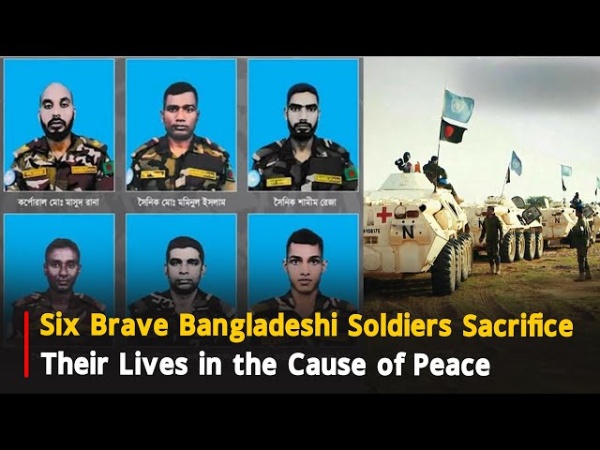
Carrying their lives in their hands, Bangladesh’s peacekeepers serve not only their homeland but humanity at large—both in times of war and peace. The latest and most painful example of this commitment has emerged from Sudan, where six Bangladeshi peacekeepers laid down their lives while performing their duties under the United Nations flag in the Abyei region. Eight others were injured, including three female soldiers. This supreme sacrifice is both a moment of profound national grief and a source of immense pride.
These fallen soldiers upheld their oath to protect peace, even at the cost of their own lives. Their sacrifice reinforces Bangladesh’s long-standing reputation as one of the world’s most dedicated contributors to United Nations peacekeeping operations. In Sudan, the global community once again witnessed the professionalism, courage, and selflessness of the Bangladesh Army. At the time of reporting, fighting in the area continues, with several personnel still facing dangerous conditions.
Among the 119 countries that contribute troops to UN peacekeeping missions, Bangladesh has consistently held a position of distinction. Since the UN launched its first peacekeeping mission in 1948 to stabilize conflict-ridden regions, Bangladesh formally entered the global peacekeeping arena in 1988 by deploying military observers to the Iran-Iraq mission. That initial contingent of just 15 personnel marked the beginning of a remarkable journey. Today, Bangladeshi peacekeepers are deployed across ten countries, carrying the banner of peace into some of the world’s most volatile environments.
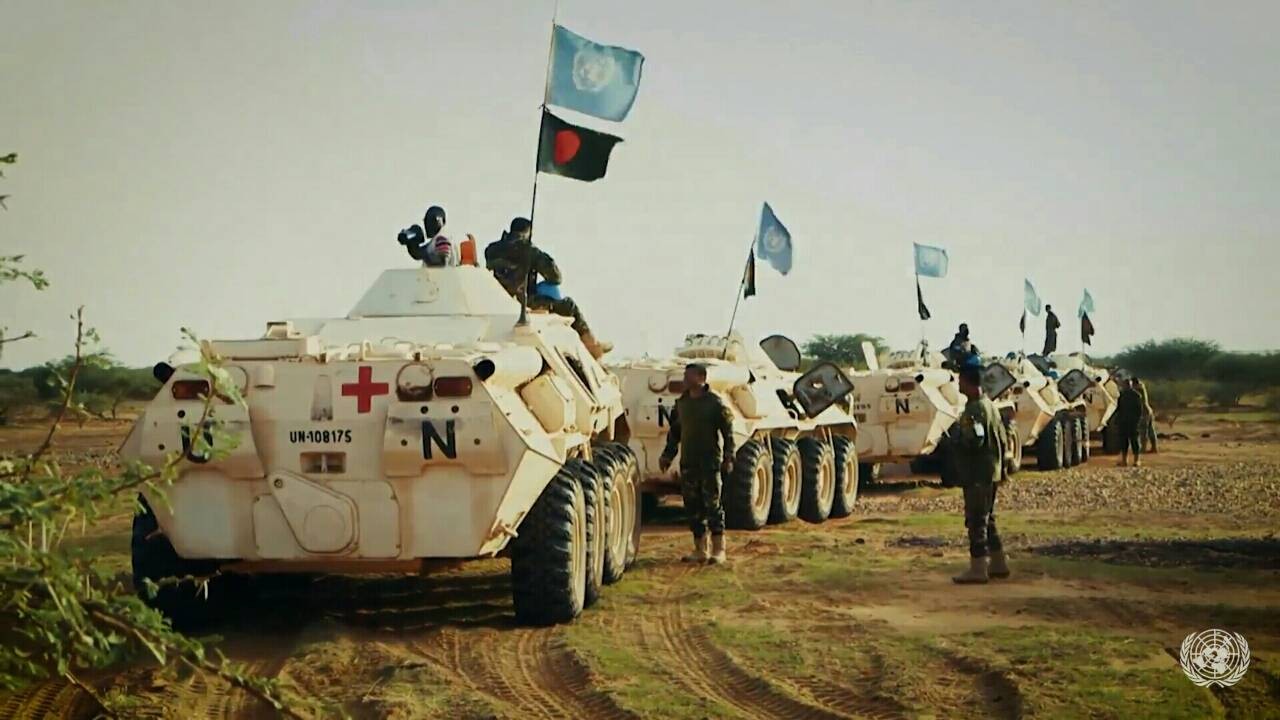
In a historic milestone, Bangladesh has recently deployed three army helicopters to the Democratic Republic of Congo, expanding its operational capabilities in peacekeeping missions. Since joining UN operations, Bangladesh has lost 168 peacekeepers—131 from the army, four from the navy, six from the air force, and 24 from the police—while 272 have been injured. Alongside soldiers, Bangladeshi doctors, engineers, and technical experts have also served in these missions, earning international recognition and reinforcing Bangladesh’s standing as a responsible global partner.
Peacekeeping missions are never easy. In Africa especially, ethnic violence, armed militias, political instability, harsh climates, natural disasters, and limited resources often obstruct peace efforts. These challenges are further complicated by global political tensions that can hinder swift and decisive action. Yet Bangladeshi peacekeepers continue to operate with resilience, adaptability, and determination.
Over time, the nature of peacekeeping itself has evolved. Modern missions demand not only military strength but also diplomacy, cultural sensitivity, and humanitarian engagement. In this changing landscape, Bangladesh’s armed forces, police, and civilian personnel have emerged as some of the UN’s most trusted partners. Peacekeepers are deployed in regions affected by civil war, genocide, mass displacement, and post-conflict instability to help restore order, rebuild institutions, and support peace agreements.
From Abyei on the Sudan–South Sudan border to the Central African Republic, Cyprus, DR Congo, Lebanon, South Sudan, Western Sahara, Yemen, Libya, and even UN headquarters in New York, Bangladeshi peacekeepers perform duties that test both physical endurance and moral strength.
Beyond monitoring ceasefires and reporting violations, peacekeepers protect civilians, safeguard women and children, assist refugees, disarm former combatants, and help reintegrate them into society. They also train local police, support judicial systems, and contribute to rebuilding infrastructure such as schools, hospitals, and roads. These responsibilities expose them to danger, but they also create moments of deep human connection and lasting goodwill. In many countries, Bangladeshi peacekeepers have won the hearts of local communities through compassion and integrity—so much so that the Bangla language itself has earned respect and popularity, particularly in Sierra Leone.
Bangladesh Police joined UN peacekeeping in 1989 through the Namibia mission. Since then, over 21,800 police personnel have served in 26 missions across 24 countries. Currently, 199 Bangladeshi police officers are deployed in three countries. Twenty-four police peacekeepers have sacrificed their lives while serving in high-risk environments such as Congo, Sudan, Haiti, Liberia, Mali, and Kosovo.
Bangladesh has also been a pioneer in women’s participation in peacekeeping. In 2010, it became the first Muslim-majority country to deploy an all-female police contingent to a UN mission. To date, at least 1,718 Bangladeshi women have served as peacekeepers—1,513 from the army, 54 from the navy, and 151 from the air force. The UN aims to increase women’s participation in peacekeeping to 22 percent this year, and Bangladesh has already achieved an 18–19 percent rate, with plans to go further. Since 2000, Bangladeshi female police officers have served in missions across Congo, South Sudan, and Central Africa.
History bears witness to Bangladesh’s courage in moments when others retreated. During the 1994 Rwandan genocide, while many forces withdrew, Bangladeshi troops remained and saved countless lives. In Somalia, US forces explicitly sought to operate alongside Bangladeshi soldiers. In Bosnia’s Bihac region, Bangladeshi peacekeepers prevented mass killings with limited weaponry—where better-equipped European forces had failed.
Peacekeeping has also contributed significantly to Bangladesh’s economy, generating more than 20 billion taka in revenue. Recently, the UN Under-Secretary-General for Peace Operations, Jean-Pierre Lacroix, praised Bangladesh’s contributions, and discussions are underway to include members of Bangladesh Ansar and Village Defence Force in future missions.
For its enduring commitment, Bangladesh has been described by the international community as a messenger of “peace diplomacy.” Its peacekeepers do far more than enforce ceasefires—they rebuild societies, promote education, provide healthcare, empower women, and restore hope. Under the leadership of Bangladesh Army Chief General Waker-Uz-Zaman, participation in UN missions has grown stronger, reinforcing Bangladesh’s role in international relations and military diplomacy.
Ultimately, Bangladesh’s peacekeepers are not merely armed soldiers—they are soldiers of humanity. Their sacrifices, most recently in Sudan, reaffirm a legacy of courage and compassion that continues to elevate Bangladesh’s standing on the world stage and remind the world that peace often comes at a very high cost.