On June 12, 2020, the India Study Centre of the Institute of Strategic Studies Islamabad (ISSI) organized a significant webinar titled “India’s Aggressions Towards its Neighbours: A Threat to Regional Stability.” The event brought together seasoned diplomats, military experts, and prominent academics from Pakistan and beyond. Distinguished participants included Ambassador Riaz Khokhar, Ambassador Zamir Akram, Ambassador Salman Bashir, Major General (Retd.) Dr. Shahid Hashmat, Dr. Zafar Nawaz Jaspal, Dr. Moonis Ahmer, and Dr. Asma Khawaja. The speakers offered in-depth analyses of India’s recent domestic and regional policies and their implications for South Asia.
In his opening remarks, Dr. Saif Malik, Director of the India Study Centre, emphasized that since its independence, India has consistently generated border, geopolitical, and diplomatic disputes with almost all of its neighbours. He highlighted India’s illegal annexation of Jammu and Kashmir, border disputes with Nepal, unresolved border issues with Bangladesh, military intervention in Sri Lanka under the guise of a peacekeeping force, interference in Bhutan’s defence and foreign policy, and the recent military escalation in Ladakh. According to Dr. Malik, these actions clearly reflect India’s aggressive regional posture. He further noted that Hindutva ideology has increasingly shaped India’s foreign policy, posing serious threats to neighbouring states.
ISSI’s Director General, Ambassador Aizaz Ahmad Chaudhary, stated that the escalation along the Line of Actual Control (LAC) in May 2020 was widely portrayed as Chinese aggression, whereas the reality suggested Indian provocation. To understand India’s real motives, he stressed the importance of examining its behaviour toward other neighbouring countries, which collectively contributes to a growing security dilemma in South Asia.
Ambassador Riaz Khokhar outlined India’s strategic objectives, identifying regional hegemony, domination of the eastern and western Indian Ocean, and control over South Asian states as key goals. He described Pakistan as the principal obstacle to these ambitions. Since August 2019, India’s policies in Kashmir and increased pressure along the Line of Control (LoC) have significantly heightened tensions. He warned that India’s belief in using repression in Kashmir as a “final solution” is a serious miscalculation with dangerous consequences.
Ambassador Salman Bashir discussed the India–China standoff, stating that China’s patience has worn thin due to persistent Indian provocations. These include the unilateral constitutional changes in Jammu and Kashmir, the creation of Ladakh as a union territory, threats against the China–Pakistan Economic Corridor (CPEC), and hostile statements regarding Gilgit-Baltistan. He emphasized that ensuring the security of CPEC is critical and requires close coordination between Pakistan and China.
Dr. Moonis Ahmer examined the implications of India’s Citizenship Amendment Act (CAA) and National Register of Citizens (NRC) on Bangladesh–India relations. While official relations at the government level have not deteriorated significantly, he noted strong public resentment in Bangladesh. Many Bangladeshis believe that India must not take Bangladesh for granted and that Dhaka must protect its sovereignty against any form of Indian interference.
Ambassador Zamir Akram addressed India–Nepal tensions, particularly the disputes over Kalapani and Susta. He explained that these territorial conflicts demonstrate India’s coercive behaviour toward smaller neighbours. According to him, India’s repeated economic blockades and political pressure have fueled deep resentment within Nepalese society.
Dr. Asma Khawaja focused on Hindutva ideology and Prime Minister Narendra Modi’s regional policies. She argued that Hindutva promotes religious and political polarization, undermines regional sovereignty, and destabilizes South Asia. This ideology, she said, has rendered SAARC ineffective, allowing India to preserve its hegemonic position while diverting resources toward militarization rather than development.
Dr. Shahid Hashmat highlighted India’s past intervention in Sri Lanka, noting that under the pretext of peacekeeping, India deployed troops without UN authorization and later pressured Sri Lanka to amend its constitution. He described this as a clear example of India’s long-standing interference in the internal affairs of neighbouring states.
Dr. Zafar Nawaz Jaspal analyzed what he termed India’s “new normal,” characterized by militarization and false flag operations. He warned that such tactics escalate crises, undermine strategic stability, and push the region toward dangerous arms competition, particularly between nuclear-armed states.
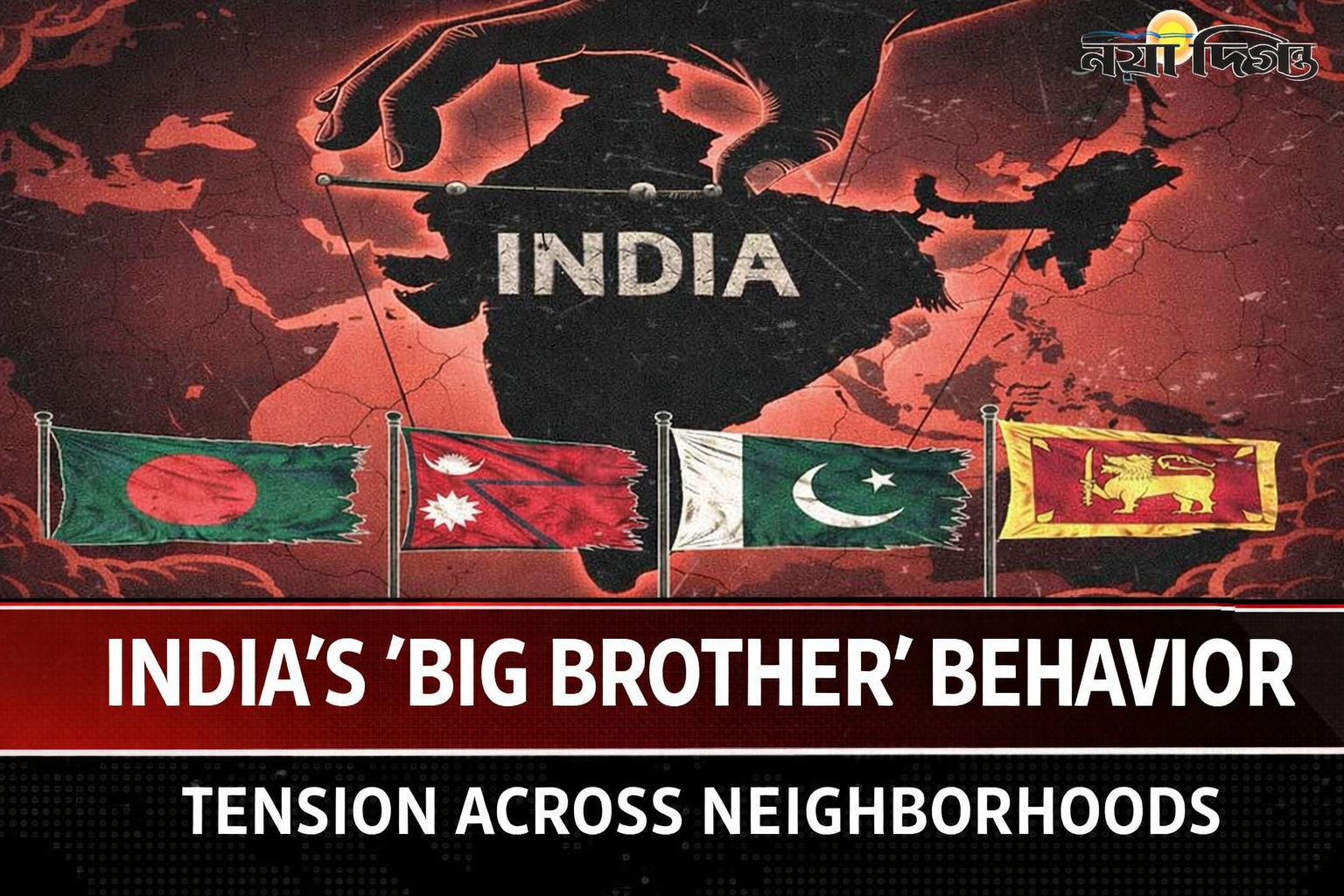
In his concluding remarks, Ambassador Khalid Mahmood stated that the Modi government’s embrace of Hindutva ideology has caused significant damage to India’s internal cohesion and regional standing. Despite being a large country with vast resources, India’s aggressive posture has eroded trust among its neighbours and damaged its international image. He emphasized that India must act as a responsible and cooperative neighbour rather than a domineering “big brother.”
Indian aggression and the growing influence of Hindutva ideology pose serious challenges to South Asian peace and stability. For Bangladesh, safeguarding sovereignty requires vigilance, diplomatic preparedness, and strategic foresight. Unless India reassesses its regional approach and respects the sovereignty of neighbouring states, South Asia will remain vulnerable to persistent insecurity and instability.