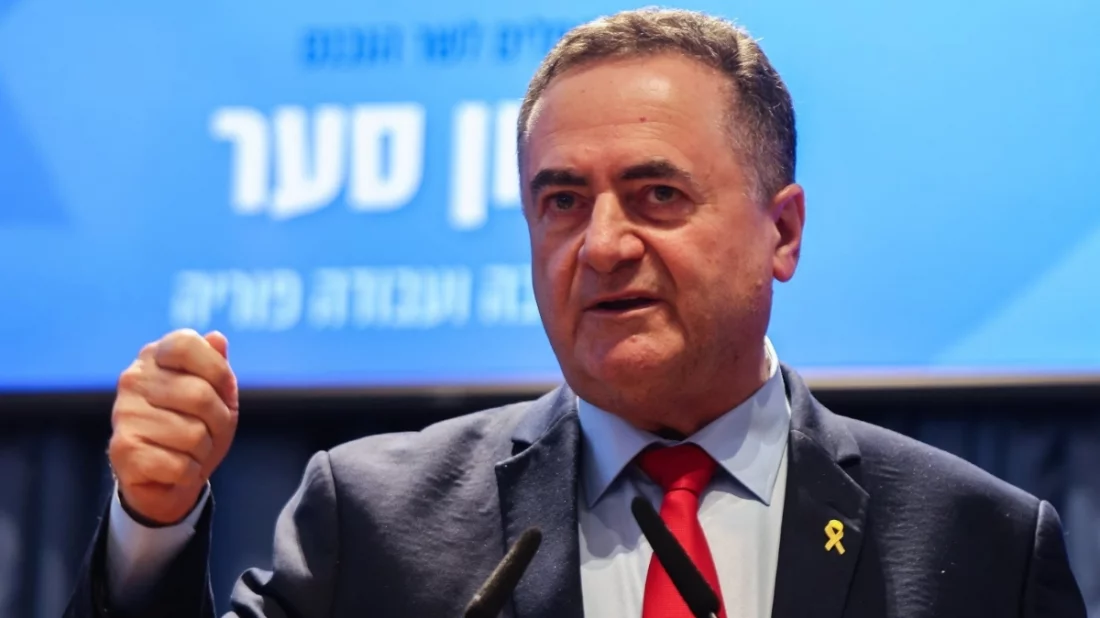
Israel has declared that it will not withdraw “even one millimeter” from the so-called “Yellow Line” in Gaza, despite the launch of the second phase of U.S. President Donald Trump’s war-ending plan. The statement was made by Israeli Defense Minister Israel Katz, signaling a firm stance on Israel’s military position in the territory.
Speaking on Tuesday (February 17) at a conference organized by the Hebrew daily Yedioth Ahronoth, Katz emphasized that Israeli forces would remain in their current positions until Hamas is fully disarmed and its extensive tunnel network completely dismantled. The “Yellow Line” refers to the position to which Israeli troops withdrew during the first phase of Trump’s peace initiative in eastern Gaza.
Katz reiterated Israel’s uncompromising objective of eliminating Hamas’s military capabilities. He stated unequivocally that Hamas would not be allowed to retain weapons or tunnels in Gaza under any circumstances, declaring that military operations would continue “until the last tunnel is destroyed.”
On Monday, Israeli Cabinet Secretary Yossi Fuchs announced that the government would give Hamas 60 days to disarm. If the group fails to meet the conditions within that timeframe, Israel has threatened to resume full-scale war. Although a ceasefire has technically been in effect since October 10, 2025, Israel has continued airstrikes and military operations in various parts of Gaza, actions critics say undermine the truce.
The second phase of President Trump’s peace plan became effective in mid-January. It includes provisions for a gradual withdrawal of Israeli troops from Gaza, the launch of reconstruction efforts, increased humanitarian assistance, and the establishment of an administrative committee to govern the territory. However, the defense minister’s recent remarks have cast fresh doubt over the future of the peace process.
While describing the United States as a “great ally,” Katz acknowledged that differences of opinion had surfaced during the course of the war. As a result, Israel is now seeking to reduce reliance on external partners by expanding domestic production of weapons and ammunition.
To further strengthen its defense capabilities, Israel’s Ministry of Defense has approved a long-term project titled Shield of Israel. Under this initiative, an additional 350 billion shekels (approximately $95 billion) will be allocated to the defense budget over the next decade.
Katz argued that national security and economic strength are mutually dependent, stating that security cannot be ensured without a strong economy—and vice versa. Since the outbreak of the war in October 2023, more than 72,000 Palestinians have reportedly been killed in Gaza, and nearly 90 percent of civilian infrastructure has been destroyed, raising deep concern within the international community.
Source: Anadolu Agency