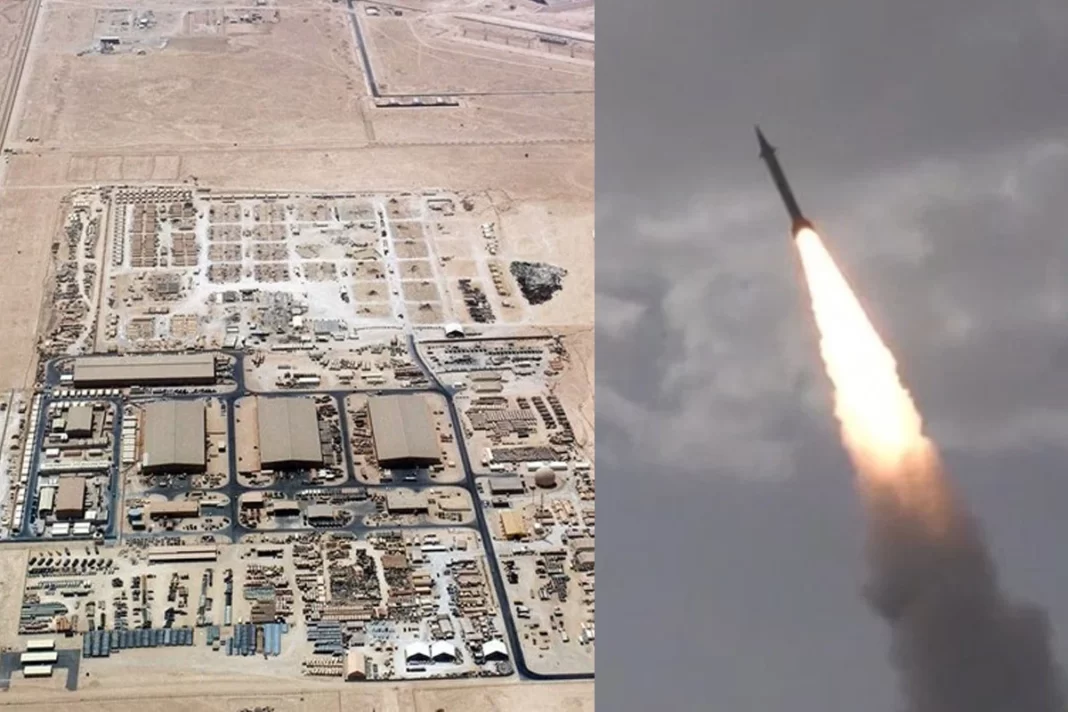
Tensions in the Middle East have surged once again, sparking fresh concerns for the stability of the global economy. Following U.S. President Donald Trump’s announcement that American forces had “completely destroyed” three Iranian nuclear facilities, Tehran has issued a stern warning: it will target U.S. bases in the Persian Gulf and potentially shut down the Strait of Hormuz — a critical chokepoint through which nearly one-fifth of the world’s oil supply passes.
This growing geopolitical uncertainty has already rattled international markets. Analysts are warning that the closure of the Strait of Hormuz could push crude oil prices sharply higher, fuel inflation in the United States, and complicate the Federal Reserve’s plans to ease interest rates. They also note that in such a scenario, safe-haven assets like gold could rally, while Chinese assets may remain relatively insulated from the shock.
In a Monday note, the China International Capital Corporation (CICC) wrote, “We cannot ignore the risks ahead. Markets may struggle to price in potential growth impacts during the early stages of the conflict.” The warning follows Trump’s dramatic announcement on Saturday, which was seen as a major escalation in the already tense U.S.-Iran standoff.
Iran’s threat to block the Strait of Hormuz — a narrow but strategic waterway linking the Persian Gulf with global markets — has historically been a red line for energy traders. Disruption here could derail the global oil supply chain, sending shockwaves across economies still grappling with post-pandemic recovery challenges.
Oil Prices Climb as Conflict Intensifies
He Jiahua, an analyst at Zhongtai Securities, noted Sunday evening that although the current geopolitical flare-up has coincided with a period of relatively low oil prices, the risks are still considerable. “Fortunately, this tension emerged at a time of steep oil price declines, so the immediate impact is somewhat limited. But if Iran persists in threatening to close the Strait of Hormuz, oil prices could soar to $100–$120 per barrel,” he warned.
He further added that if oil prices surpass the $100 mark, U.S. inflation could rise significantly in the second half of the year. On Monday, following the escalation in tensions, the benchmark Brent crude oil price surged to around $79.40 per barrel — its highest since January — before settling slightly lower later in the day. Oil prices had already risen nearly 3% in the past week due to growing concerns about Middle Eastern energy supply disruptions.
Ripple Effects Across the Financial Landscape
China Merchants Securities highlighted that if the regional conflict continues to drive up oil prices and inflation, monetary and trade policies would need to adjust accordingly. “To mitigate the pressure from inflation, interest rate cuts might become more likely later in the year,” the firm stated.
Meanwhile, analysts at CITIC Securities referenced historical patterns, suggesting that gold — a classic safe-haven asset — tends to outperform the U.S. dollar in times of geopolitical shock. Spot gold prices climbed to $3,391.15 on Monday morning before dipping to $3,362.38 later in the day, indicating heightened investor interest in risk-averse assets.
Strategic Implications and Market Outlook
The latest developments present a multi-dimensional risk for the global economy. A prolonged conflict could severely disrupt energy supply chains, destabilize emerging markets, and force central banks to choose between controlling inflation and supporting economic growth.
The Strait of Hormuz has long been a geopolitical flashpoint, and Iran’s threat to shut it down could trigger not only economic turmoil but also a broader military escalation involving multiple regional and global powers. With the United States now visibly involved in the Iran-Israel confrontation, the stakes have risen considerably.
In such an environment, volatility across global equity, commodity, and currency markets is expected to remain high. Analysts stress that policymakers worldwide must prepare for multiple scenarios — from prolonged inflationary shocks to strategic realignments in energy trade routes.
As the situation unfolds, the world watches closely — not just for the next military move, but for its cascading impact on inflation, interest rates, energy security, and the fragile post-pandemic global economic recovery.
Source: South China Morning Post