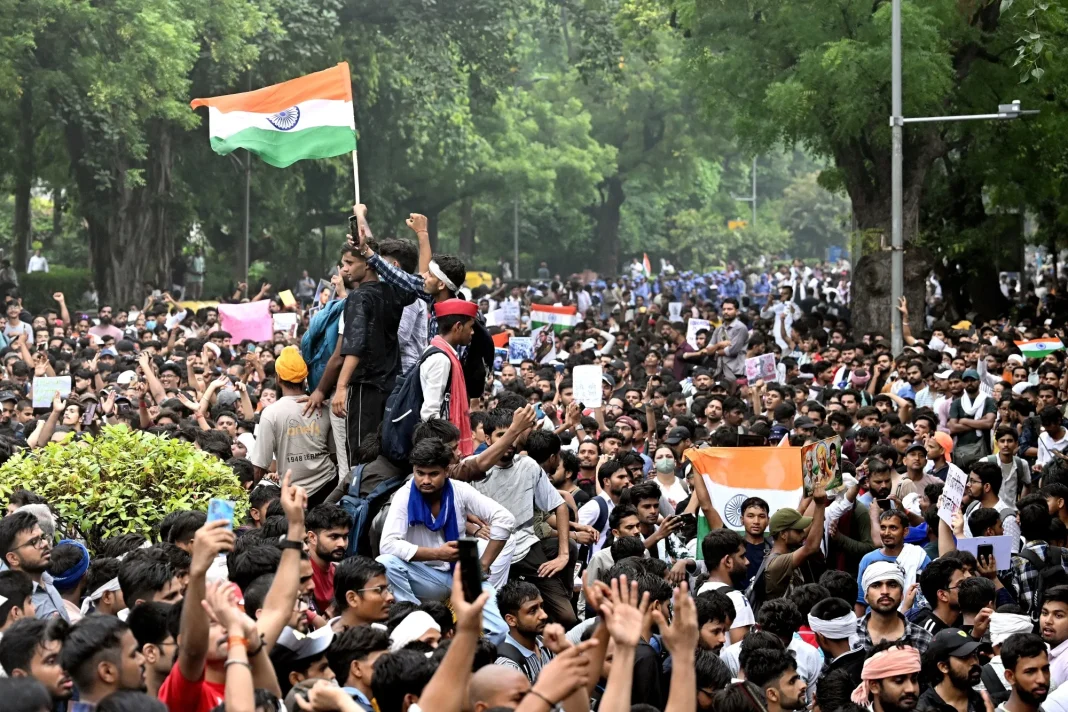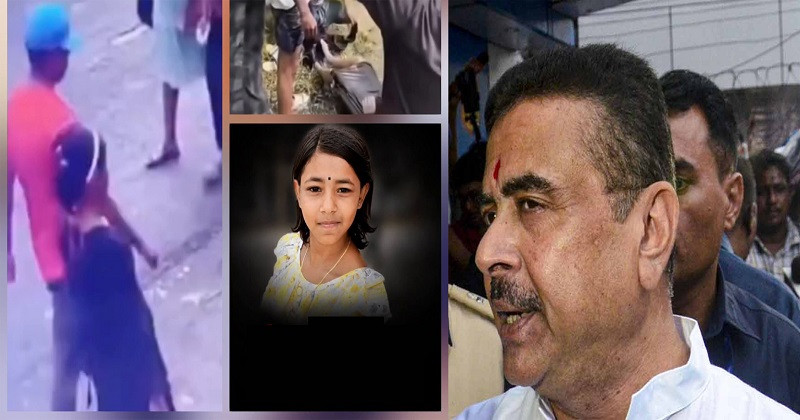
Twelve days after the alleged gang rape and murder of 11-year-old Muslim girl Rimi in Surajpur village of West Bengal, residents say the demand for justice has been overshadowed by violence, mass arrests, political controversy, and growing communal tensions.
The village, located under Dhapdhapi Gram Panchayat No. 2 in Baruipur subdivision of South 24 Parganas district, has witnessed an escalating police crackdown following public protests over the brutal killing.
Lynching of FIR-Named Suspect
Hours after the girl’s body was recovered on July 5, an angry mob allegedly lynched Indrajit Tanti Mondal, an auto-rickshaw driver whose name appeared in the First Information Report (FIR) filed in connection with the gang rape and murder case.
By July 11, West Bengal Chief Minister Suvendu Adhikari handed over a government job appointment letter to Mondal’s brother and financial compensation of ₹2.5 million (25 lakh) to his family. The Chief Minister described Mondal as an “innocent man,” claiming he had been targeted solely because of his identity.
The announcement quickly became a political flashpoint, with critics questioning how the government could declare a suspect innocent while the investigation remained ongoing and his name continued to appear in the FIR filed by the victim’s father.
Police Action Sparks Fear Among Muslim Families
Following the protests, police launched an extensive crackdown, arresting several Muslim men accused of participating in the demonstrations and subsequent violence.
On July 8, another key suspect in the rape and murder case, Prabhas Mondal, was killed in what police described as an encounter.
Residents claim the arrests have triggered widespread panic among Muslim families. Many Muslim men have reportedly fled the village, fearing detention, leaving behind women, children, and elderly family members.
Most of those who fled work as daily laborers, construction workers, vegetable vendors, or street hawkers. Their absence has left many households without any source of income.
A 30-year-old mother of four, who requested anonymity, said her husband earns about ₹300 a day as a construction helper.
“We have no savings. My husband has been hiding for the last ten days. Shopkeepers are no longer willing to give us rice, lentils, or cooking oil on credit. We don’t know how we will survive.”
Similar concerns were echoed across the village.
Several women said their husbands left because they feared being arrested in what they described as “false cases.”
“We are Muslims. That’s why we are always the first to be targeted,” one resident alleged.
Protest Initially United Both Communities
Residents insist the initial protest following the girl’s murder was not communal.
According to villagers, both Hindu and Muslim residents jointly blocked roads and demanded justice for the child. Their anger was directed primarily at the brutality of the crime and what they described as the police’s initial failure to act promptly.
Locals said they themselves examined CCTV footage to identify where the girl had been taken before police made significant progress in the investigation.
However, many Muslim residents now believe that the police response has transformed a united movement for justice into a campaign disproportionately targeting one community.
A 20-year-old resident said:
“When one of the accused was beaten to death, both Hindus and Muslims were present in the crowd. But now only Muslim men are being arrested in connection with the lynching.”
Dozens Arrested
Police have arrested 42 people in connection with the protests and subsequent violence. As of July 15, eight people had reportedly been arrested specifically in connection with the lynching of Indrajit Mondal.
The mother of recently arrested Abdul Rafiq recalled a late-night police raid on July 7.
“It was midnight. Hundreds of police officers entered our village and took my son away. I asked what he had done, but they gave no answer. My husband is bedridden with a spinal condition, my daughter-in-law is young, and she has two small children. My son was the only earning member of our seven-member family.”
Climate of Fear
Residents say the mass arrests have created a climate of fear extending far beyond those directly affected.
A 22-year-old woman said the events have discouraged many from participating in future protests.
“Whenever people protest against a crime, Muslims become the targets. If the government is already giving clean chits to suspects, why would anyone risk standing up for justice?”
Several villagers also questioned the government’s decision to publicly declare Indrajit Mondal innocent before the investigation had concluded.
They alleged that arrests of Muslim men accelerated following the Chief Minister’s statement.
Police Yet to Respond
According to reports, journalists sought comments from Inspector General of Police Kankar Prasad Barui and Baruipur Police Superintendent Arvind Anand regarding both the investigation and allegations of arbitrary arrests.
At the time of publication, no official response had been received.
Arrest of Local Left Leader Draws Criticism
Public anger intensified after the arrest of Lahek Ali, a local leader of the Communist Party of India (Marxist) and a schoolteacher known for providing free education to underprivileged children.
Ali was arrested on July 12 on allegations of inciting violence during the protests.
Police booked him under several provisions of the Bharatiya Nyaya Sanhita (BNS), the Prevention of Damage to Public Property Act, public order laws, and the Indian Railways Act.
Ali has denied all charges, calling them politically motivated.
His lawyer, Sayantan Banerjee, argued:
“Lahek Ali stood beside the victim’s family throughout. Police officers were present whenever he visited. How could he have incited violence? These cases are intended to intimidate protesters.”
Villagers from both Hindu and Muslim communities supported Ali’s version, claiming he actually helped calm the crowd rather than inflame tensions.
A resident identified as Ramakrishna said:
“He was arrested because of his religious identity. We all saw him trying to prevent the situation from turning into a riot.”
Other residents, including Rana Mondal and Gopal Sardar, reportedly expressed similar views.
Justice for the Victim Fading from Public Focus
Many villagers fear the original crime has now been eclipsed by political conflict, police operations, and communal narratives.
Public discussion has shifted from the rape and murder itself to the lynching of Indrajit Mondal, subsequent arrests, Lahek Ali’s imprisonment, the police encounter that killed Prabhas Mondal, and political accusations exchanged over the incident.
Residents say they still do not know why the child was murdered or whether all those responsible will ultimately be identified and prosecuted.
A woman taking her child to school remarked:
“What investigation are people talking about? Everyone is discussing the lynching, Lahek Ali’s arrest, and the encounter. Does anyone still remember justice for that little girl?”
Victim’s Father Expresses Confidence in Investigation
Unlike many residents, the victim’s father said he remains satisfied with the progress of the investigation.
He has been offered a government job in the state’s Correctional Services Department.
He acknowledged that Indrajit Mondal’s name was included in the FIR he filed and said he continues to trust the police investigation.
“I named him in the FIR. Now the police are investigating. I have full faith in the police. I believe we will get justice.”
He added that the accused were known local residents and allegedly had histories of substance abuse.
Broader Questions Over Policing
The incident has also renewed scrutiny of policing in South 24 Parganas.
According to police sources cited in reports, more than 50 missing-person cases remain under investigation in the Baruipur area alone. The region has also long faced allegations of human trafficking and illegal kidney trafficking networks.
While Surajpur’s demand for justice has not disappeared, many residents say it has been buried beneath fear—fear that protesting against a horrific crime could now lead to police raids, arrests, and political retaliation.