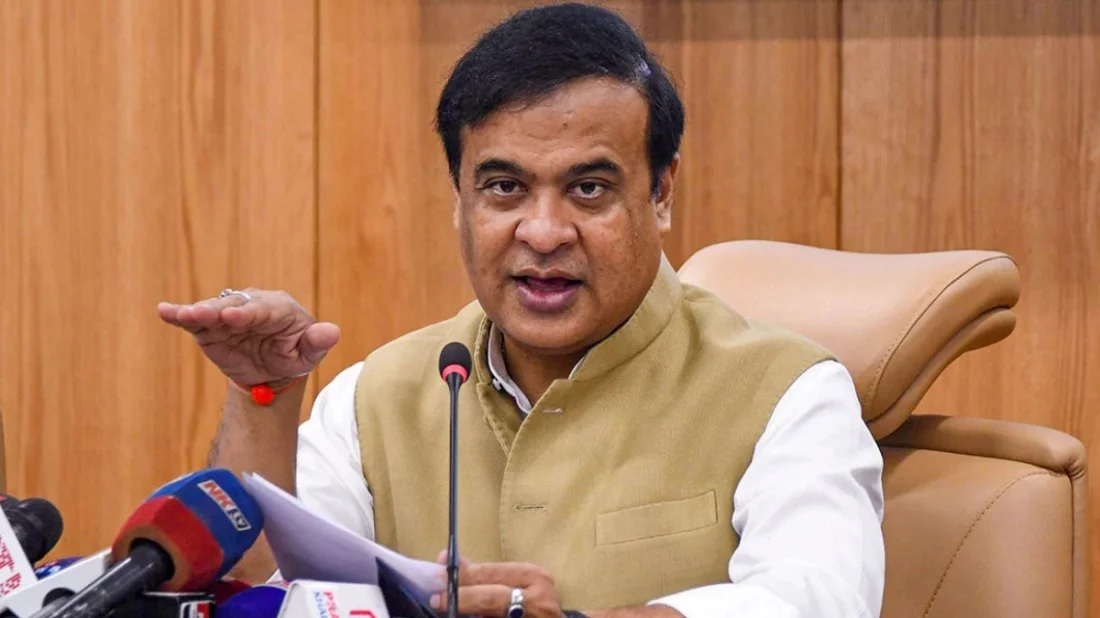
Assam Chief Minister Himanta Biswa Sarma has issued a strong warning that New Delhi will not remain silent if threats to separate India’s northeastern region from the mainland continue. His remarks come amid rising political rhetoric and diplomatic tensions involving statements from Bangladesh that, according to Indian leaders, question India’s territorial integrity.
Speaking to journalists on Tuesday (16 December), Sarma said repeated calls to detach India’s Northeast and merge it elsewhere reflect what he described as a “deplorable mindset” coming from across the border. He remarked that over the past year, statements emerging from Bangladesh advocating the integration of India’s northeastern states with Bangladesh were not only provocative but also completely unrealistic. According to him, even imagining such a scenario is a “grave miscalculation” on Bangladesh’s part.
The Assam Chief Minister emphasized that India is a vast nation, a nuclear power, and the world’s fourth-largest economy. In that context, he claimed that making such threats demonstrates a deeply flawed understanding of geopolitical realities. Sarma further warned that India should reconsider extending goodwill and assistance if such rhetoric continues.
“If such behavior against India persists, we will not remain silent,” he cautioned.
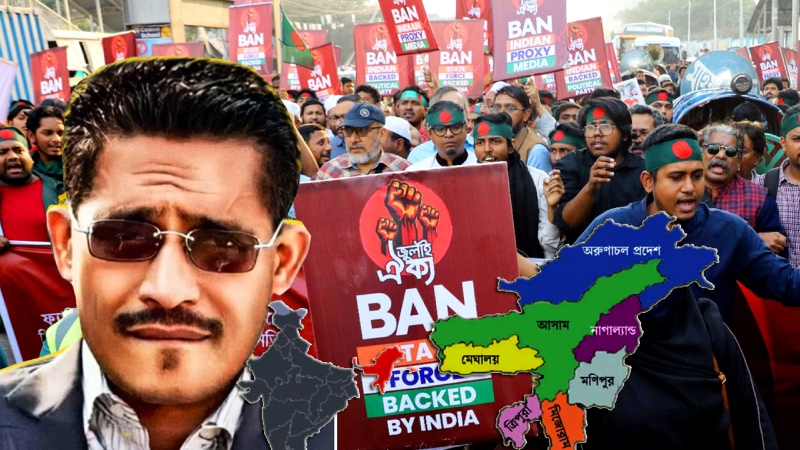
Sarma’s sharp response follows recent remarks by Hasnat Abdullah, a leader of Bangladesh’s National Citizen Party. On Monday (15 December), speaking at a rally at the Central Shaheed Minar in Dhaka, Abdullah warned that if Bangladesh were destabilized, India’s “Seven Sisters” of the Northeast would be separated. These comments triggered immediate political reactions in India, particularly in Assam and other northeastern states.
Earlier, Bangladesh’s interim government Chief Adviser Dr. Muhammad Yunus had highlighted Bangladesh’s strategic geographical importance for India’s landlocked eastern and northeastern states, stating that Bangladesh serves as their only gateway to the sea. His comments reignited debate in India about the Siliguri Corridor—commonly known as the “Chicken’s Neck”—a narrow strip of land that connects mainland India to the Northeast.
Responding to such discussions, Himanta Biswa Sarma argued that those who attempt to threaten India by referencing the Siliguri Corridor should remember that Bangladesh itself has vulnerable corridors. He pointed out that Bangladesh has at least two strategically sensitive routes that could be equally exposed in any regional conflict.
According to Sarma, the first vulnerable corridor runs approximately 80 kilometers through Bangladesh, stretching from South Dinajpur in West Bengal to the southwestern Garo Hills of Meghalaya. The second is the 28-kilometer-long Chattogram Corridor, extending from South Tripura to the Bay of Bengal. By highlighting these routes, the Assam Chief Minister sought to underscore that geopolitical vulnerabilities exist on both sides of the border.
Sarma’s remarks underline the growing strain in India-Bangladesh relations, particularly amid heightened nationalist rhetoric and strategic concerns. Observers note that such exchanges reflect deeper anxieties about regional stability, border security, and the delicate balance of diplomacy between the two neighboring countries.
Source: The Hindu