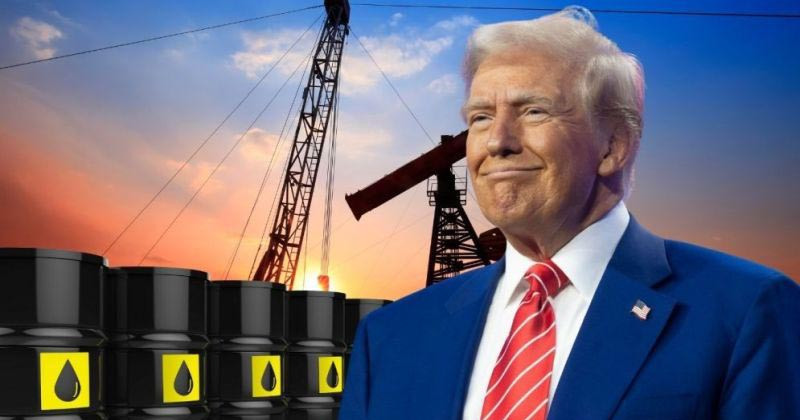
The decision by the United States to place revenues from Venezuelan oil sales into banks in Qatar—rather than transferring the money directly to Venezuela—has triggered fresh international debate. Under the Trump administration, this unconventional financial arrangement is being defended as a strategic move to protect the funds from legal claims while maintaining leverage over Venezuela’s oil sector. Critics, however, see it as a controversial form of offshore control that raises serious transparency concerns.
Why Qatar?
Venezuela has long been isolated from the global banking system due to extensive Western sanctions. According to a CNN report, routing oil revenues through Qatari banks is meant to ensure that the money does not get frozen, seized, or tied up in legal disputes involving Western creditors. Qatar, which maintains diplomatic channels with both Washington and Caracas, is viewed as a neutral and reliable intermediary.
So far, the Trump administration has overseen the sale of nearly $500 million worth of Venezuelan oil. U.S. Treasury Secretary Scott Bessent confirmed that the funds began reaching Venezuela from Thursday onward. Local Venezuelan banks have even started advertising increased cash availability, signaling short-term liquidity relief.
Executive Orders and Legal Shielding
President Donald Trump issued a special executive order designed to shield these funds from any legal claims or liens. According to the administration, the goal is to ensure that creditors cannot access Venezuela’s oil income and that the money is ultimately used for humanitarian purposes inside the country.
There is also a historical precedent behind choosing Qatar. Doha has previously acted as a mediator between the United States and Venezuela. During the Biden administration, a similar mechanism was used when sanctions on Iran were partially eased, with Qatar facilitating controlled financial transactions.
Transparency Concerns and Political Backlash
The arrangement has drawn sharp criticism in Washington. Democratic Senator Elizabeth Warren described it as “legally questionable” and warned that it could encourage corruption. Critics raise several key concerns:
- Lack of transparency: Holding the funds in Qatar may allow them to bypass U.S. legal oversight, effectively turning them into a “slush fund.”
- Risk of misuse: There are fears that Venezuelan Vice President Delcy Rodríguez could divert the money to corrupt military factions or drug trafficking networks instead of humanitarian needs.
Why Does the U.S. Need Venezuelan Oil?
Despite being one of the world’s largest oil producers, the United States still has strong incentives to engage with Venezuela—primarily for technical reasons.
- Heavy crude requirements: U.S. shale production mainly yields light crude oil, while refineries in Texas and Louisiana are optimized for heavy, dense crude.
- High conversion costs: Retrofitting these refineries to process light crude would require billions of dollars in investment, making it economically impractical.
- Geographic advantage: Alongside Canada and Russia, Venezuela holds some of the world’s largest reserves of heavy crude, making it strategically important for U.S. energy security.
A Broader Geopolitical Play
Analysts believe this oil-for-cash mechanism is only the beginning. Larger volumes of Venezuelan oil revenue may soon flow through the same channel, potentially strengthening U.S. influence in Latin American geopolitics while keeping tight control over how—and where—Venezuela’s oil money is used.