
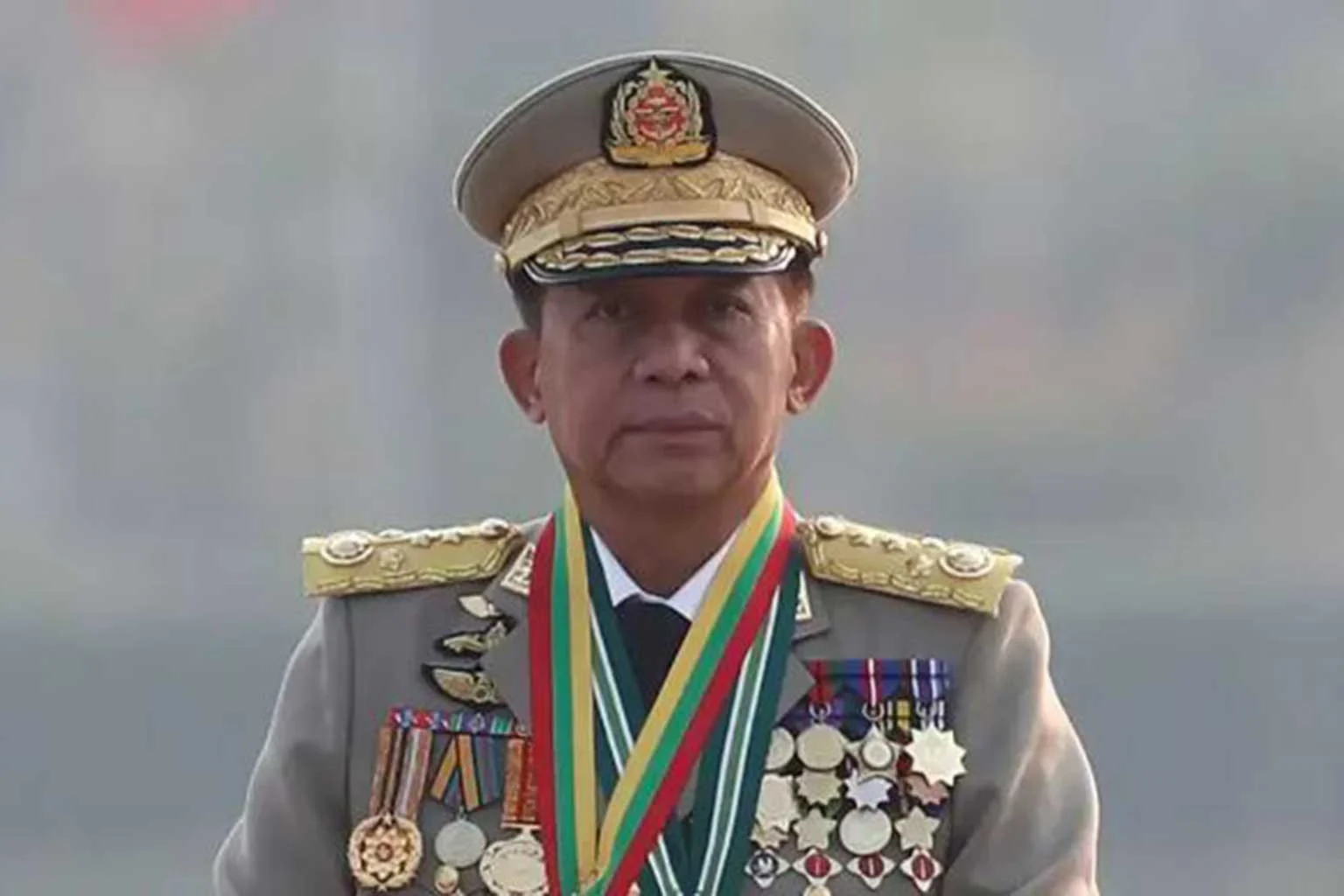
Myanmar’s military-backed President Min Aung Hlaing has declared that his government will not comply with certain parts of the landmark ruling issued by the International Court of Justice (ICJ), which found Myanmar responsible for committing genocide against the Rohingya minority during the military crackdown in 2017.
In his first public response following the historic judgment, Min Aung Hlaing said Myanmar would take appropriate measures as a responsible state but would refuse to implement requirements it considered “inappropriate.”
According to reports carried by Myanmar’s state media, the president made the remarks during a meeting on Wednesday. However, he did not specify which particular provisions of the court’s ruling his administration intended to reject.
His statement represents a significant challenge to the international community’s efforts to secure accountability for atrocities committed against the Rohingya. It also raises concerns about whether the landmark judgment will translate into meaningful justice, compensation and safe repatriation for hundreds of thousands of displaced people.
The remarks come just days after the ICJ delivered its judgment on November 19, 2026, in the case brought by The Gambia against Myanmar under the 1948 Convention on the Prevention and Punishment of the Crime of Genocide.
A Historic Verdict Against Myanmar
In a landmark decision delivered in The Hague, the ICJ found, by a majority of nine votes to six, that Myanmar had committed genocide against the Rohingya population in northern Rakhine State during the 2017 military operations.
The court concluded that Myanmar had violated its obligations under the Genocide Convention. It also found that the country had failed to prevent genocide committed by individuals operating alongside its security forces.
This is particularly significant because it marks the first time the ICJ has formally found a state responsible for committing genocide under the 1948 Genocide Convention.
The judgment followed years of legal proceedings, evidence gathering and international investigations into the systematic violence against the Rohingya community.
The court examined evidence of mass killings, widespread sexual violence, attacks on children, the destruction of villages and the targeting of civilians attempting to escape across the border into Bangladesh.
According to the court’s findings, approximately 10,000 Rohingya were killed during the 2017 military operations. More than 700,000 people fled to Bangladesh to escape the violence, while approximately 815,000 Rohingya were affected by the campaign in various ways.
The judges concluded that the scale and systematic nature of the atrocities, together with the available evidence, established the intention to destroy a substantial part of the Rohingya population.
The Gambia’s Legal Battle for Rohingya Justice
The case was initiated in November 2019 by The Gambia, a small West African country, which accused Myanmar of violating the Genocide Convention through its treatment of the Rohingya Muslim minority.
The Gambia brought the case with support from the Organisation of Islamic Cooperation (OIC), arguing that the atrocities committed in Rakhine State were not isolated incidents but part of a systematic campaign against an ethnic and religious minority.
Myanmar consistently rejected the genocide allegations throughout the proceedings. Its authorities maintained that the 2017 military operations were legitimate counterterrorism measures launched in response to attacks by armed Rohingya militants against security installations.
However, the ICJ examined the evidence presented by both sides, including witness accounts, investigative reports and documentation of widespread violence. The court rejected Myanmar’s central defence and concluded that the evidence supported a finding of genocidal intent.
The judgment also carries broader implications for international law. The Genocide Convention obliges states not only to refrain from committing genocide but also to prevent and punish it.
What Has the ICJ Ordered Myanmar to Do?
The court’s judgment goes beyond declaring Myanmar responsible for genocide. It establishes a series of legal obligations intended to address the consequences of the atrocities and prevent similar crimes in the future.
Among the key requirements are:
- End violations: Myanmar must cease any continuing violations of its obligations under the Genocide Convention.
- Investigate and prosecute: Authorities must promptly investigate individuals reasonably suspected of involvement in genocide and prosecute those responsible where appropriate.
- Prevent future atrocities: Myanmar must introduce effective legal and institutional safeguards to prevent further genocidal acts.
- Protect the Rohingya: The government must ensure that the Rohingya are protected against discrimination, persecution and further violence.
- Restore property: The country must take measures to return or replace property lost during the military operations.
- Provide rehabilitation: Survivors must have access to appropriate physical and psychological rehabilitation.
- Pay compensation: Myanmar is legally obligated to compensate Rohingya individuals and the community for damage that cannot be addressed through restitution.
The court has also required Myanmar to submit a report within two years detailing the restitution measures taken and its proposed compensation arrangements. The amount and modalities of compensation will be considered through further proceedings before the court.
The judgment is final and legally binding on the parties. There is no ordinary appeal against it.
Why Myanmar’s Refusal Matters
Min Aung Hlaing’s declaration has created uncertainty over the implementation of the judgment.
Although the ICJ is the United Nations’ principal judicial organ, it does not have its own police force or military authority to compel a country to comply with its decisions.
If Myanmar refuses to implement the judgment, the issue could become a matter of international diplomacy and enforcement through the United Nations Security Council.
However, the Security Council’s ability to take effective action may be complicated by the political interests of its permanent members, particularly because China and Russia have historically opposed stronger international pressure on Myanmar’s military authorities.
This creates a serious challenge: the court can establish legal responsibility, but securing practical compliance requires sustained international cooperation and political pressure.
Myanmar’s refusal to accept parts of the judgment could therefore prolong the struggle for justice and accountability for Rohingya survivors.
Bangladesh at the Centre of the Rohingya Crisis
The implications of the judgment are particularly important for Bangladesh, which has hosted a massive Rohingya refugee population since the 2017 military crackdown.
More than one million Rohingya refugees are currently living in camps in Cox’s Bazar and surrounding areas. Many escaped Myanmar after witnessing killings, sexual violence, village destruction and other forms of persecution.
Bangladesh has repeatedly called for the safe, voluntary, dignified and sustainable repatriation of the Rohingya to their homeland.
However, the absence of security guarantees, citizenship rights, freedom of movement and protection against discrimination has prevented meaningful repatriation.
The ICJ judgment strengthens the legal and diplomatic basis for demanding that Myanmar address the conditions that forced the Rohingya to flee.
For Bangladesh, the ruling is not simply a matter of international legal history. It directly concerns national security, economic pressure, border stability and the future of a prolonged humanitarian crisis.
Safe repatriation cannot be achieved merely by arranging transportation across the border. Myanmar must create conditions in which Rohingya families can return without fear of renewed persecution.
International Community Responds to the Verdict
The ICJ’s decision has been welcomed by Rohingya communities, human rights organisations and international advocates who have campaigned for accountability for years.
The United Kingdom has taken additional measures against Myanmar’s military leadership, including sanctions targeting five senior military officers. It has also announced further steps involving humanitarian assistance and efforts to restrict the military’s access to aviation fuel.
The United Nations has also emphasised that the judgment must be followed by concrete action, including accountability, safe repatriation, reparations and measures to prevent future atrocities.
On November 20, the President of the 81st session of the UN General Assembly, Khalilur Rahman, visited Rohingya refugee camps in Cox’s Bazar and highlighted the importance of implementing the judgment. He stressed that the ruling must lead to meaningful justice and a safe future for the Rohingya.
Min Aung Hlaing’s Political Position and Myanmar’s Continuing Crisis
Min Aung Hlaing has been at the centre of Myanmar’s political and military crisis since February 2021, when the armed forces overthrew the elected civilian government led by Aung San Suu Kyi.
The coup triggered widespread protests, armed resistance and a devastating civil war that continues to undermine the country’s political stability and economy.
The military authorities have faced extensive international sanctions and diplomatic isolation over their conduct since taking power.
Min Aung Hlaing, who led the military during the 2017 operations in Rakhine State, has subsequently assumed the presidency under the military-backed political system.
His administration has sought to improve Myanmar’s international standing. However, rejecting parts of a binding international court judgment could further complicate those efforts and deepen the country’s diplomatic isolation.
There is also an important legal distinction: the ICJ judgment establishes the international responsibility of the state of Myanmar. It is not a criminal conviction of Min Aung Hlaing or any other individual. Individual criminal responsibility requires separate legal proceedings before a competent criminal court.
The Road Ahead: Will the Rohingya Finally Get Justice?
The ICJ judgment represents a historic moment in the decades-long struggle of the Rohingya people for recognition and justice. For survivors who lost family members, homes and livelihoods, the ruling provides international legal recognition of the atrocities they endured.
However, a court judgment alone cannot rebuild destroyed communities, restore lost lives or guarantee the safe return of refugees.
The biggest challenge now is implementation. Myanmar must demonstrate that it is prepared to fulfil its international legal obligations rather than selectively accept or reject the court’s decisions.
The international community must also maintain diplomatic pressure, support accountability mechanisms and ensure that humanitarian assistance for Rohingya refugees does not decline.
For Bangladesh, the priority remains a sustainable solution that allows Rohingya refugees to return home voluntarily, safely and with full respect for their fundamental rights.
Min Aung Hlaing’s latest declaration raises an uncomfortable question for the international community: If a country can refuse to implement a binding judgment on genocide, what protection does international law really offer to vulnerable populations?
The answer will depend not only on the authority of the International Court of Justice but also on whether the United Nations and its member states are willing to turn a historic legal verdict into meaningful action.
Sources and References
- Reuters – Myanmar says it will not fully comply with ICJ genocide orders
- International Court of Justice – Judgment of 19 November 2026
- United Nations General Assembly – Statement on the ICJ judgment
- Associated Press – Historic ruling against Myanmar
- RTÉ / AFP – Myanmar opposes inappropriate parts of genocide ruling
- Independent Investigative Mechanism for Myanmar – ICJ case overview

