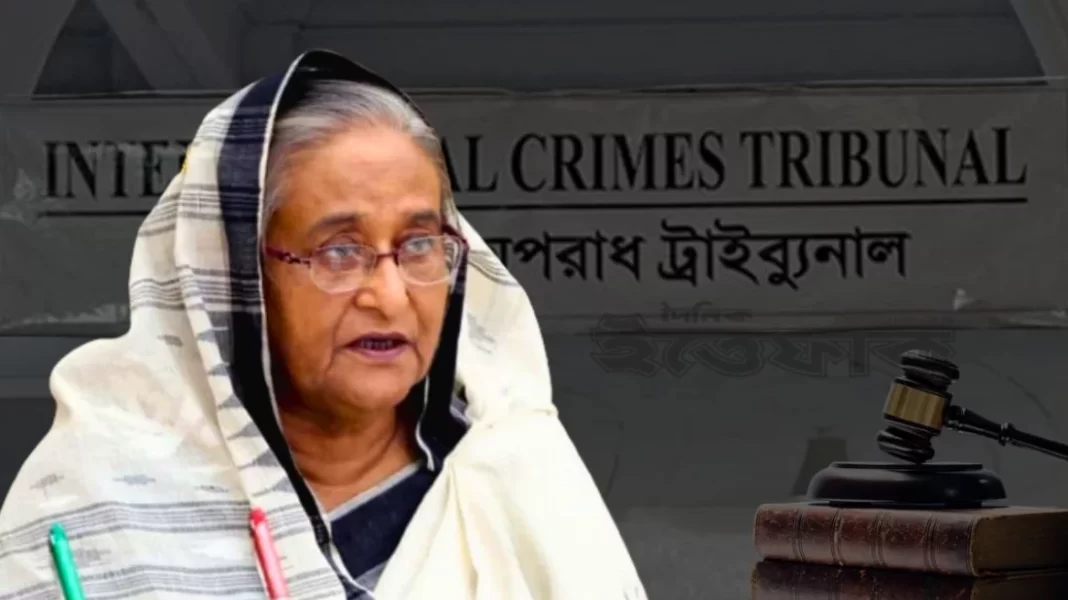
Dhaka, Bangladesh — The nation’s attention is firmly fixed on the International Crimes Tribunal today as it prepares to deliver a historic verdict against ousted Prime Minister Sheikh Hasina and two co-accused individuals in a landmark war crimes case linked to the July Massacre. The tribunal is scheduled to announce its judgment later today, drawing unprecedented media presence and heightened security across the Supreme Court and tribunal premises.
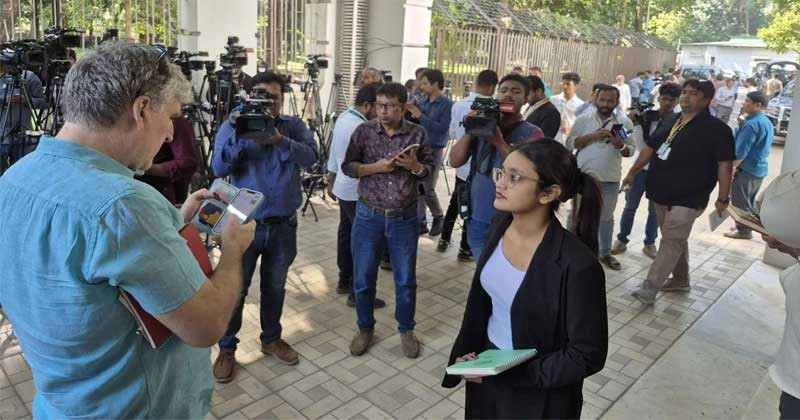
From early dawn, reporters and camera crews from Bangladesh’s major news outlets, alongside prominent international media organizations, converged on the tribunal grounds to document what is widely considered one of the most consequential legal proceedings in the country’s history. Journalists from Reuters, AP, AFP, Al Jazeera, and BBC World were seen lining up outside the courtroom, preparing to relay updates to a global audience.
Masudur Rahman, President of the Supreme Court Reporters Forum, told Dhaka Post that “this is the first time in Bangladesh’s history that a sitting or former Prime Minister is facing a verdict in a crimes against humanity case. This is why every major global media organization has its eyes on the tribunal today.” According to Rahman, Reuters is expected to broadcast the proceedings live, further intensifying international interest.
Unprecedented Security Measures Enforced
Authorities have imposed multilayered security protocols around the tribunal and Supreme Court complex. Police, RAB, APBn, Border Guard Bangladesh (BGB), and even the Bangladesh Army have been deployed to ensure order throughout the day. Intelligence agencies are on high alert, monitoring movements within the vicinity.
As part of the security lockdown, law enforcement restricted public movement from Sunday evening, closing the road from Doel Chattar to Shikkha Bhaban and limiting access for pedestrians. According to officials, these measures were taken to prevent any untoward incident ahead of the high-stakes verdict.
A Long, Complex Trial Approaches Its End
The tribunal had set November 17 as the date for announcing the verdict, following months of hearings and cross-examinations. The three-member judicial panel of Tribunal–1—headed by Justice Md. Golam Mortuza Majumder, along with Justice Md. Shafiul Alam Mahmood and Justice Md. Mohitul Haque Enam Chowdhury—confirmed the schedule on November 13.
Over the course of 28 working days, testimony from 54 witnesses was heard, followed by extensive legal arguments. The prosecution and state-appointed defense presented their submissions and counterarguments across nine additional sessions. On October 23, Attorney General Md. Asaduzzaman delivered the state’s final submission, after which Chief Prosecutor Mohammad Tajul Islam and state counsel Amir Hossain completed rebuttals. The tribunal then reserved the date for judgment.
During arguments, the prosecution demanded the highest punishment for Sheikh Hasina and former Home Minister Asaduzzaman Khan Kamal. For the third accused—Chowdhury Abdullah Al-Mamun—who acted as an approver (state witness), prosecutors left sentencing to the tribunal’s discretion. His lawyer, Zayed Bin Amjad, however, argued for complete acquittal. Amir Hossain, state-appointed counsel, expressed strong belief that both Hasina and Kamal would be acquitted.
Charges and Evidence: A Massive Case File
The prosecution brought five charges of crimes against humanity against the three accused. These include allegations of instigation, use of deadly weapons, the murder of Abu Saeed, killings in Chankharpul, and the burning of bodies in Ashulia.
The formal charge sheet spans a staggering 8,747 pages. Among them:
- 2,018 pages of source documents
- 4,005 pages of seizure lists and documentary evidence
- 2,724 pages containing detailed lists of victims and martyrs
A total of 84 individuals were listed as witnesses in the investigation report, which the tribunal’s investigation agency submitted to the Chief Prosecutor on May 12.
A Verdict of Historic Significance
As Bangladesh waits anxiously, legal analysts, political observers, and citizens acknowledge that today’s verdict will mark a turning point in the country’s judicial and political landscape. With the tribunal compound fortified and media presence at an all-time high, the eyes of the nation—and the world—remain locked on the courtroom where history is about to be written.