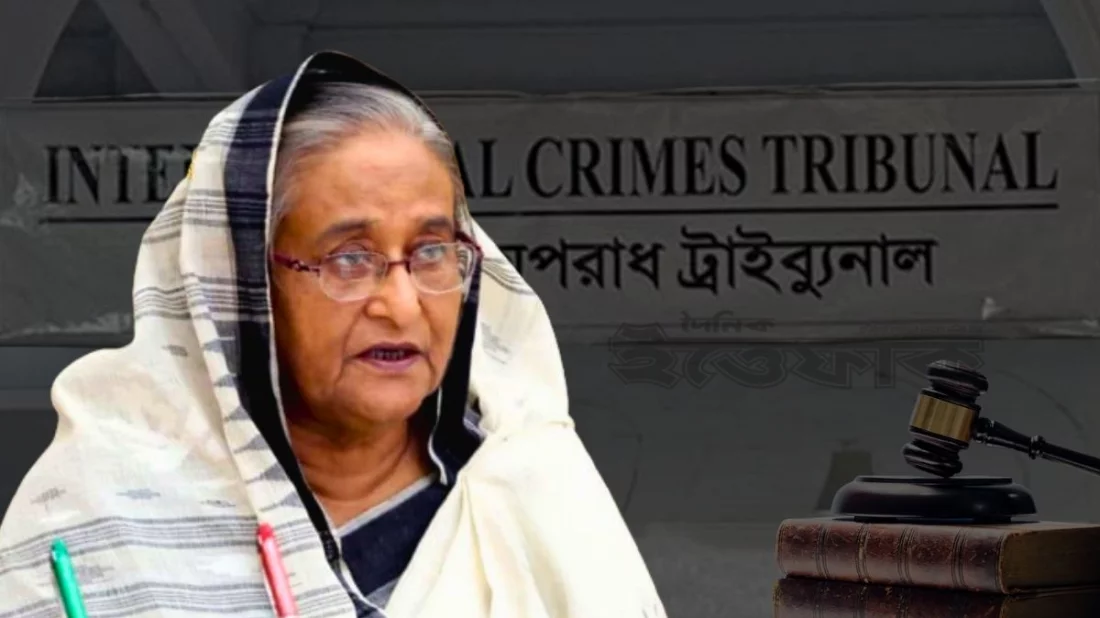
The International Crimes Tribunal (ICT) of Bangladesh has delivered a landmark judgment, sentencing former Prime Minister Sheikh Hasina to death for her alleged role in crimes against humanity committed during the nationwide July–August mass uprising last year. The tribunal found her guilty on two out of five charges, both of which carry the death penalty. She was also sentenced to imprisonment until natural death in another charge related to coordinated violence against protesters.
The highly anticipated ruling was announced by a three-member bench of International Crimes Tribunal-1, chaired by Justice Md. Golam Mortuza Mojumder. The other members of the tribunal were Justice Md. Shafiul Alam Mahmood and Judge Md. Mohitul Haque Enam Chowdhury.
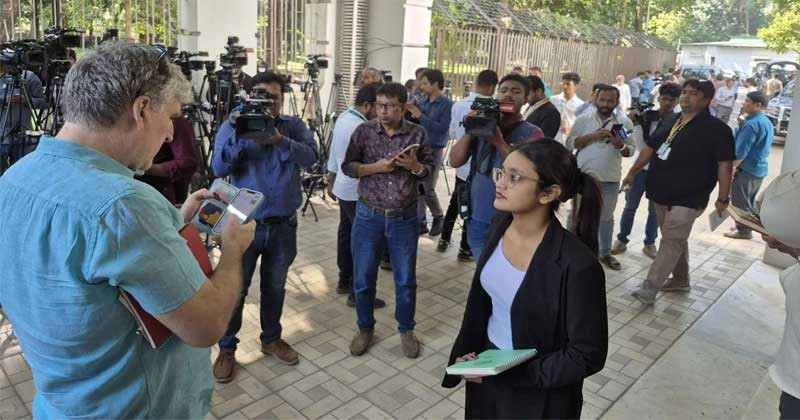
The courtroom was tense as the verdict was delivered. Family members of victims, civil society observers, lawyers, and media personnel filled the gallery, many of them waiting for months to hear the tribunal’s decision on one of the most consequential cases in Bangladesh’s political history.
Extensive Evidence Presented: From Audio Footage to Forensic Reports
The tribunal reviewed a massive body of evidence before reaching its conclusion. Prosecutors submitted hours of audio and video footage, eyewitness testimonies, and forensic analyses linking state forces’ actions to killings in Jatrabari, Rampura, Badda, Savar, Ashulia, and Rangpur.
Several key pieces of evidence included:
- Recorded phone conversations allegedly between Sheikh Hasina and then-Information Minister Hasanul Haq Inu, which prosecutors argued proved her direct involvement and command responsibility.
- Reports from international human rights organizations, documenting excessive use of lethal force and unlawful killings.
- Sworn statements from survivors, many of whom described scenes of indiscriminate firing, targeted arrests, and beatings during the uprising.
The prosecution argued that the evidence demonstrated a “systematic and organized pattern of violence” against unarmed civilians.
Co-Accused: Former Home Minister and Ex-IGP Also Convicted
Two other high-profile officials were tried alongside Hasina:
- Asaduzzaman Khan Kamal, former Home Minister – sentenced to death on one charge involving alleged authorization of lethal force.
- Chowdhury Abdullah Al-Mamun, former Inspector General of Police (IGP) – sentenced to five years’ imprisonment. He turned approver and cooperated with prosecutors, offering detailed testimony about operational orders and chain-of-command instructions.
Both Hasina and Asaduzzaman Khan are believed to be fugitives currently residing in India, according to case submissions.
Arguments by Prosecution and Defense
During closing summaries on 23 October, Attorney General Md. Asaduzzaman drew parallels with international tribunals that prosecuted world leaders for mass atrocities. He urged the court to impose “the highest punishment permissible under international criminal law.”
Chief Prosecutor Mohammad Tazul Islam rebutted points raised by the state-appointed defense, while defense counsel Amir Hossain challenged the credibility and interpretation of the video evidence.
Counsel for the former IGP, Zaed Bin Amjad, argued for full acquittal, stating that his client’s cooperation and testimony were crucial in reconstructing the events.
Witnesses, Case Volume, and Charges
Out of 84 witnesses listed, 54 testified, including survivors, forensic experts, journalists, and police officials. The first testimony, delivered on 3 August by Khokan Chandra Barman, described the violent crackdown he witnessed firsthand.
The five charges against the defendants included:
- Incitement to violence
- Use of lethal weapons on civilians
- Murder of Abu Saeed
- Killings in Chankharpul
- Burning of bodies in Ashulia
The tribunal reviewed an extensive case file totaling 8,747 pages, including:
- 2,018 pages of references
- 4,005 pages of seizure lists and documentary evidence
- 2,724 pages listing names of victims
Investigators submitted their final report to the Chief Prosecutor on 12 May, leading to the formal trial proceedings.
Verdict Date and National Impact
After closing arguments on 23 October, the tribunal set 17 November as the date for delivering the verdict. The ruling is expected to have significant political reverberations both domestically and internationally, as it marks the first time a former Bangladeshi prime minister has been sentenced in this manner by an international-standard tribunal.