One of the most fundamental questions of the international system has resurfaced with renewed urgency: Is international law genuinely equal for all states, or does it apply only to weaker nations while powerful countries effectively stand above it?
Recent remarks by United Nations Secretary-General António Guterres have brought this dilemma sharply into focus. In an interview with BBC Radio 4, his criticism of the United States was not an isolated comment, but rather a reflection of a deeper crisis within the current global governance framework.
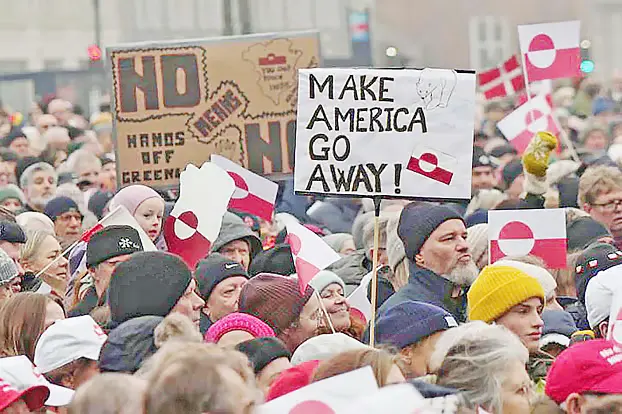
Guterres expressed serious concern that the United States is acting irresponsibly by prioritizing its own power over international legal norms. According to him, Washington increasingly views multilateral solutions as irrelevant. These comments came at a time when large-scale U.S. military actions in Venezuela and the detention of its president have raised profound questions about international law, national sovereignty, and the core principles of the UN Charter. At the same time, former President Donald Trump’s repeated threats to annex Greenland have revived memories of “power politics,” where legal norms are sidelined in favor of raw strength.
International law is not merely a moral guideline; it is a framework established after the devastation of World War II to prevent unilateral aggression by powerful states and to stop the world from sliding back into large-scale conflict. The UN Charter clearly states that no country has the right to violate the sovereignty of another, and that the use of force must be a last resort, undertaken collectively. Yet in practice, the United States has repeatedly bypassed these principles through unilateral decisions.
The invasion of Iraq stands as one of the most striking examples. Justified by claims of weapons of mass destruction—claims later proven unfounded—the war represented a clear breach of international norms. Similar patterns emerged in Afghanistan, military interventions in Syria and Libya, and the unilateral withdrawal from the Iran nuclear deal. In each case, international law and UN decisions were either ignored or sidelined. The consequences went far beyond the targeted states, triggering regional instability, humanitarian disasters, refugee crises, and the spread of extremism.
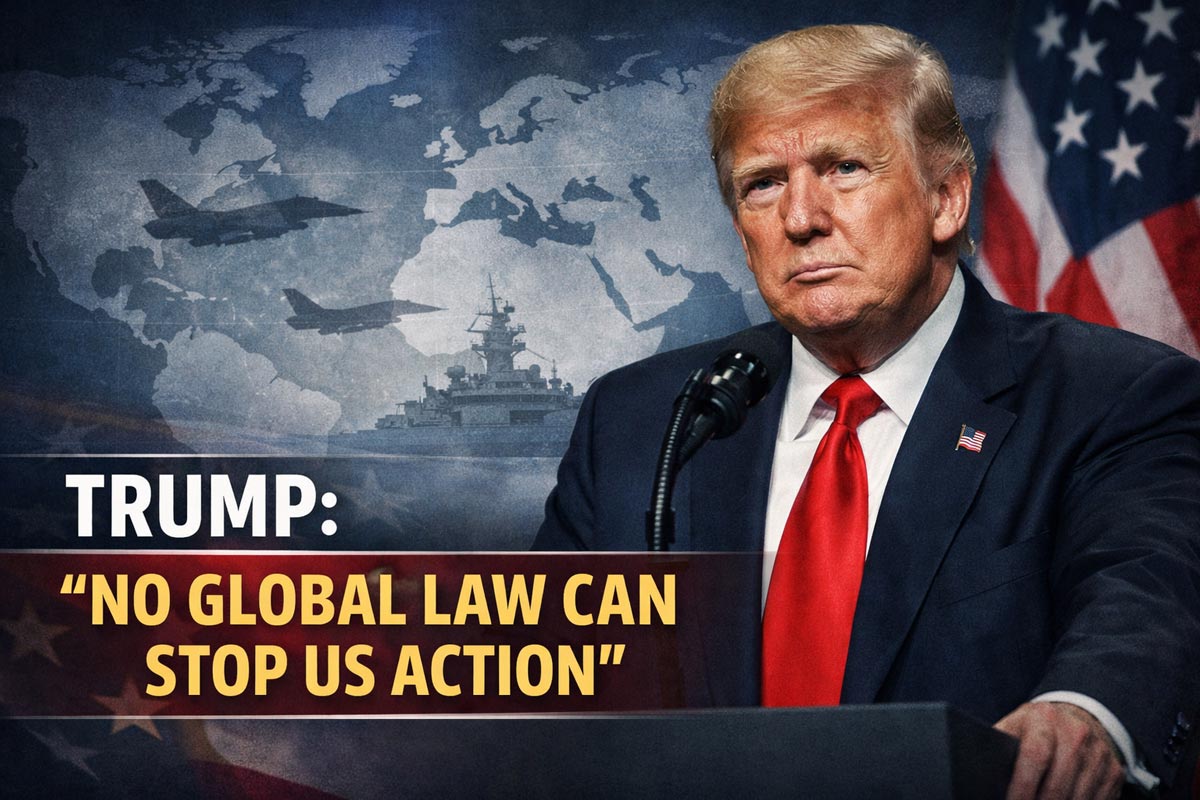
This tendency became even more pronounced during the Trump administration. Under the banner of “America First,” multilateral institutions and international agreements were weakened. The United Nations was frequently labeled ineffective, and unilateral use of power was elevated to a guiding principle of U.S. policy. Washington often argued that the UN is too slow, constrained by veto politics, and unable to respond effectively to major crises. While there is some truth in these criticisms, a critical question remains: does the weakness of international institutions justify breaking international law? If a state becomes the judge, lawmaker, and enforcer all at once, what remains of the international system?
This is precisely why the UN Secretary-General’s warning is so significant. His concern extends beyond U.S. behavior alone; it is about the precedent such actions set. If the United States considers itself above international law, other powerful states may follow the same path. In that scenario, international law would cease to be a pillar of global order and instead become a decorative language masking power struggles.
The greatest victims of such a shift would be weaker and developing nations. Their security, sovereignty, and survival depend heavily on international law and multilateral mechanisms. If law yields to power, the world risks returning to the kind of chaos that prompted the creation of the United Nations in the aftermath of World War II.
Ultimately, the question is not only whether the United States is above the law—it is about the future of the global order itself. If the U.S. truly seeks global leadership, that leadership must be exercised within the framework of international law, through multilateralism and responsible conduct. Otherwise, the collapse of international legal norms will not be a burden borne by one nation alone; its consequences will be felt by the entire world.