In 1885, Belgium’s King Leopold II invaded the mineral-rich Congo and claimed it as his personal possession. To justify the conquest, he argued that the land was “uncivilized” and “unprotected,” and that only European rule could bring order, Christianity, and progress. From 1885 to 1908, Congo was not even a Belgian colony—it was Leopold’s private property. For another fifty years afterward, it remained under Belgian colonial rule.
The people of Congo never accepted this domination. After nearly seventy-five years of continuous resistance, they finally gained independence in 1960. One of the central figures of that struggle was Patrice Lumumba. Today, history remembers Leopold not as a civilizer, but as a butcher.
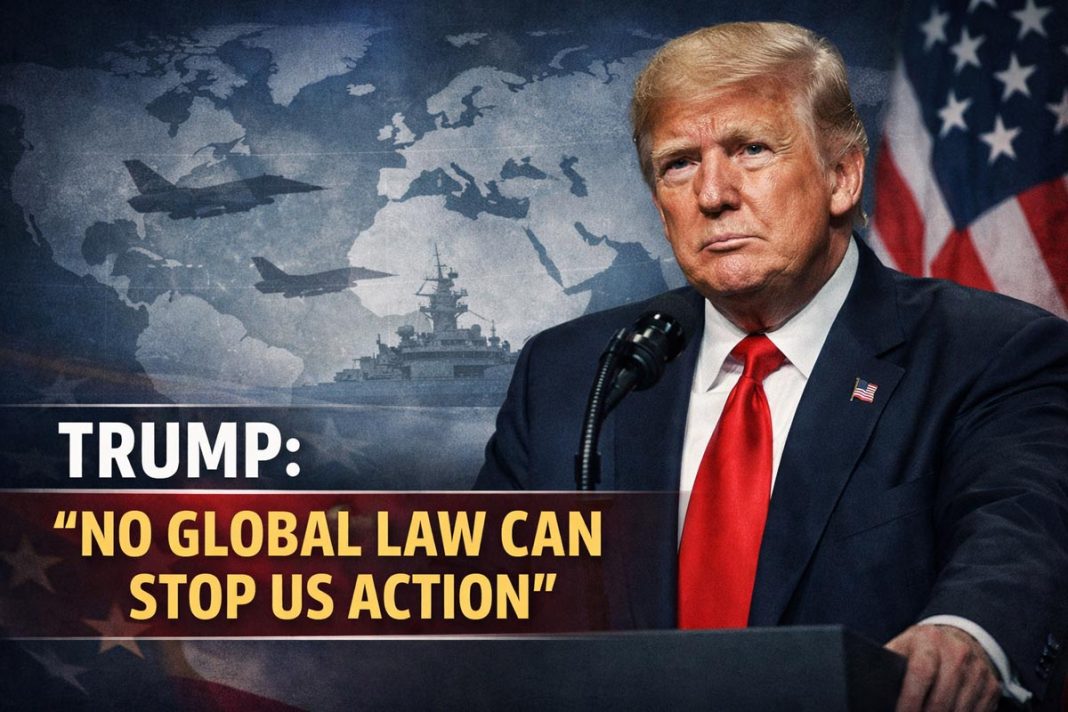
Nearly 150 years later, another resource-rich territory has drawn the attention of a powerful leader: Greenland. The world’s largest island—roughly three times the size of Texas—is an autonomous territory under the Kingdom of Denmark and is believed to be even richer in strategic minerals than Congo. Whether Greenlanders want it or not, U.S. President Donald Trump insists he wants the island. His stated justification is American “national security”: if the United States does not take control, he claims, China or Russia might.
The idea of acquiring Greenland was reportedly planted in Trump’s mind by his friend Ronald Lauder, an heir to the Estée Lauder cosmetics empire. Before entering politics, Trump was best known as a real-estate magnate, a man who built his reputation on hotels, towers, and golf courses. Lauder allegedly told him that hotels alone would not secure a place in history—buying Greenland would. Trump first floated the idea during his initial presidency. Denmark reacted with polite disbelief; Greenlanders responded with laughter. Trump, angered by what he perceived as disrespect, canceled a planned visit to Denmark.
In 2025, Trump returned to the White House under very different circumstances. His party controls not only the presidency but also both chambers of Congress and the Supreme Court. Senior figures within his party rarely challenge him. This time, Trump revived the Greenland proposal with greater force—suggesting that if purchase was impossible, takeover might be the alternative. Denmark and Greenland again rejected the idea outright.
Trump’s stance has placed NATO in an unprecedented dilemma. The United States leads the 31-member alliance, yet here it is openly threatening the sovereignty of a fellow member’s territory. Danish and Swedish leaders rushed to Washington in an attempt to defuse the crisis, reportedly exhausting every diplomatic channel. Their efforts failed. Afterward, they acknowledged that fundamental disagreements with the United States remained unresolved.
Trade tensions between the U.S. and Europe were already simmering. Greenland added fuel to the fire. Eight European countries jointly declared that they would defend Greenland’s sovereignty “at any cost.” To underline their position, they sent limited troops to the island—officially to deter any Chinese or Russian threat. Trump responded by threatening punitive trade tariffs: first 10 percent, then an additional 25 percent if Europe did not back down. His message was blunt—Greenland must be his.
Many observers describe Trump’s Greenland fixation as a modern revival of nineteenth-century colonialism. Europe formally rejected territorial conquest among “civilized” states as far back as the 1648 Peace of Westphalia. Despite that, two world wars followed. Learning from those catastrophes, a post-1945 global order emerged—largely under U.S. leadership—based on the principle that no state should seize another’s territory unless attacked.
The United Nations, founded in 1945 by 51 countries, enshrined territorial integrity in its founding charter. Greenland, though part of Denmark, is an autonomous territory, and seizing it without the consent of its people would be illegal. This principle was reaffirmed in 1970 through UN General Assembly Resolution 2625, which states that no country—no matter how powerful—has the right to acquire another’s territory by force.
Trump’s framing of Greenland treats it less as a home to people and more as a valuable piece of real estate. This mindset echoes the colonial era, when land was viewed as property and its inhabitants were secondary to gold, minerals, and strategic advantage. That such thinking should come from the United States—often described as the guardian of the international legal order—is both surprising and deeply troubling.
Beyond legality lies the question of morality. Reducing a populated land to a strategic asset strips its people of agency and dignity. Denmark, aware of the sensitivity of the issue, has adopted a cautious approach. It has emphasized that if security is Trump’s genuine concern, Denmark and its NATO partners are prepared to strengthen Greenland’s defenses. A 1951 U.S.–Denmark defense agreement already grants Washington broad rights to build military facilities on the island, including up to fourteen bases.
Trump’s core MAGA supporters largely applaud his stance. Many others do not. Senior Republican Senator Mitch McConnell has warned that attempting to seize Greenland would fracture NATO and undermine U.S. strategic interests. Democratic Senator Chris Murphy has echoed the same concern. A bipartisan group of U.S. lawmakers has introduced legislation stating that no funds may be allocated for any military operation to seize Greenland without explicit congressional approval.
Ironically, Trump’s posture has pleased America’s rivals. Russia and China see opportunity in a weakened NATO and growing transatlantic rifts. Russia watches Ukraine; China watches Taiwan. If the United States itself claims the right to take territory in the name of “security,” it becomes harder to credibly oppose similar actions by others. Even regional powers like India could invoke the same logic—why heed international criticism if great powers themselves ignore it?
History offers a warning. In the fifth century BCE, the Greek historian Thucydides recounted how Athens invaded the small island of Melos in 416 BCE. The Athenians argued that the strong have the right to do what they can, and the weak must endure what they must. Athens won the battle—but within twelve years, it was defeated by Sparta, and its empire collapsed. Thucydides concluded that Athens ultimately destroyed itself through arrogance.
The lesson remains relevant. Power may allow conquest, but it does not guarantee legitimacy, stability, or lasting success. When might replaces law, even the strongest empires plant the seeds of their own decline.