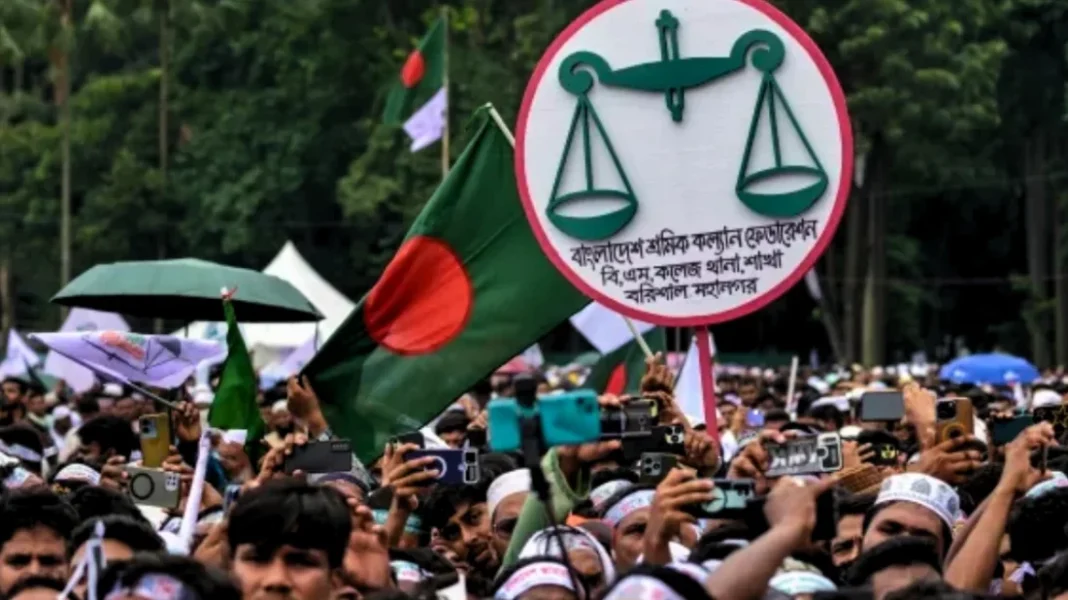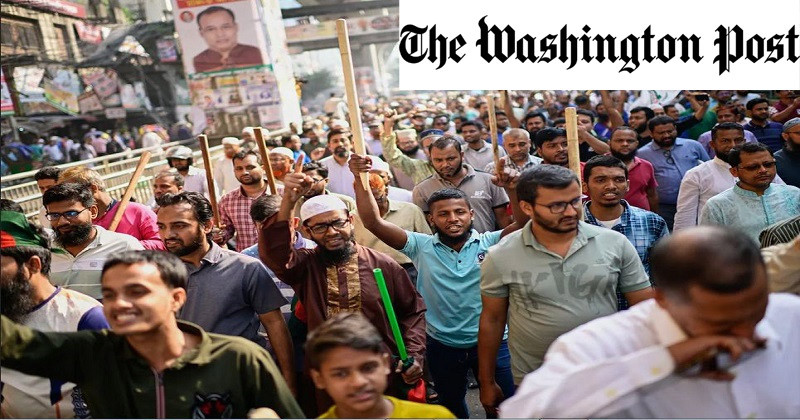
Ahead of Bangladesh’s upcoming general election, a bombshell report published by the Washington Post has stirred intense debate in regional and global political circles. The report claims that U.S. diplomats in Dhaka are interested in building closer ties with the Islamist party Jamaat-e-Islami and are even keen to have the group as a “friend.” The information is based on audio recordings obtained by the newspaper. Analysts warn that this apparent shift in U.S. diplomatic posture could create new strains in India–U.S. relations.
According to the report, during a closed-door meeting with female journalists on December 1, a U.S. diplomat in Dhaka remarked that Bangladesh is currently leaning toward an “Islamist trajectory.” The diplomat reportedly predicted that Jamaat-e-Islami would perform better in the February 12 election than at any other time in its history.
South Asia expert and Atlantic Council senior fellow Michael Kugelman believes that Washington’s softer stance toward Jamaat could significantly widen the gap between New Delhi and Washington. India has historically viewed Jamaat as close to Pakistan and as a potential threat to regional security.
While the report suggests increased U.S. engagement with Jamaat, it also highlights strong caution from American officials. According to the audio recordings, the diplomat warned that if Jamaat comes to power and attempts to impose hardline Sharia law or adopts policies contrary to U.S. interests, the Trump administration could respond with severe measures—such as imposing a 100 percent tariff on Bangladesh’s garment exports.
The Washington Post notes that Jamaat-e-Islami has been banned multiple times in Bangladesh’s history, most recently under the rule of former Prime Minister Sheikh Hasina, who was ousted in a 2024 mass uprising. Traditionally, the party has advocated Sharia law and reduced working hours for women. However, in recent years, Jamaat has sought to rebrand itself, publicly emphasizing anti-corruption, transparency, and good governance.
In the recorded conversation, the U.S. diplomat is heard saying, “We want to have them as friends.” The diplomat also asked journalists whether they could invite members of Jamaat’s influential student wing to television talk shows, asking, “Can you talk to them? Would they come on your programs?”
Responding to the controversy, U.S. Embassy spokesperson Monica Shai said in a statement that the December discussion was a routine off-the-record meeting between U.S. officials and local journalists. She emphasized that multiple political parties were discussed and that the United States does not support any particular party, adding that Washington will work with any government elected by the people of Bangladesh.
Jamaat-e-Islami’s U.S.-based spokesperson, Mohammad Rahman, stated that the party would not comment on remarks made during a private diplomatic meeting.
The report further notes that following the fall of Sheikh Hasina in 2024, an interim government led by Nobel laureate Dr. Muhammad Yunus has been overseeing preparations for the election. Political analyst Mubashar Hasan says Jamaat has now returned to Bangladesh’s political “mainstream.”
Jamaat’s main electoral rival is the Bangladesh Nationalist Party (BNP). Sources cited in the report claim that BNP Chairperson Tarique Rahman believes Jamaat may perform well in the election but is not interested in including the party in a governing alliance. In contrast, Jamaat Ameer Shafiqur Rahman has told Reuters that his party is open to forming a government with BNP.
Economic concerns were also raised during the Dhaka meeting. The U.S. diplomat reportedly warned that around 20 percent of Bangladesh’s total exports go to the United States. If women’s participation in the workforce were restricted, international orders could dry up, potentially pushing Bangladesh’s economy toward collapse. However, the diplomat expressed optimism that Jamaat would avoid such steps, noting that the party includes many educated and pragmatic leaders.