Al Jazeera Report | Bangladesh Election
Bangladesh’s Election May Redefine Power as Jamaat-e-Islami Gains Ground
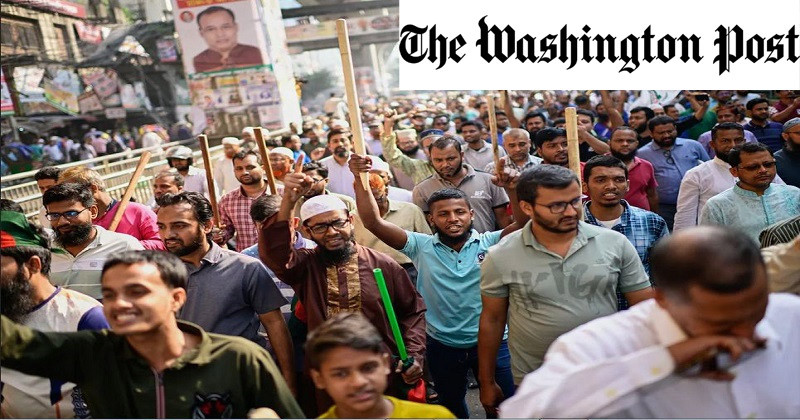
Bangladesh’s political landscape appears to be heading toward a historic turning point as the country prepares for its next general election. For the first time, Jamaat-e-Islami—the country’s largest Islamist political party—is being viewed as a leading force within an electoral alliance with a realistic chance of assuming state power. According to an in-depth report by Al Jazeera, the election scheduled for 12 February could represent the most significant political opportunity in the party’s history.
This will be the first national election since the fall of Sheikh Hasina’s government in August 2024, following a mass uprising led by students and ordinary citizens. Under the interim administration headed by Nobel laureate Dr. Muhammad Yunus, the Awami League has been banned, effectively transforming the election into a largely two-sided contest. Al Jazeera reports that while the Bangladesh Nationalist Party (BNP) remains the frontrunner, its strongest challenger has emerged in the form of a newly formed alliance led by Jamaat-e-Islami, alongside the National Citizen Party (NCP) and several other Islamist groups.
Recent opinion polls have further strengthened Jamaat’s confidence. A survey conducted in December by the US-based International Republican Institute (IRI) showed BNP enjoying 33 percent public support, while Jamaat closely followed with 29 percent. The gap narrowed even further in a joint poll released last week by several Bangladeshi research organizations, which placed BNP at 34.7 percent and Jamaat at 33.6 percent.
Political analysts believe that a Jamaat victory would mark a dramatic comeback for the party. Over the past 15 years, Jamaat faced severe repression under previous governments, with many of its top leaders executed or imprisoned on charges of crimes against humanity. These years of political exclusion have paradoxically helped the party rebuild sympathy among certain segments of the population, analysts say.
Founded in 1941 by Syed Abul A’la Maududi, Jamaat-e-Islami opposed Bangladesh’s independence during the 1971 Liberation War—a position that continues to generate deep resentment among large sections of society. However, current party leaders argue that prolonged persecution over the last decade and a half has reshaped public perception and increased popular support.
Jamaat’s deputy leader (Naib-e-Ameer), Dr. Syed Abdullah Mohammad Taher, told Al Jazeera that Bangladeshis have experienced governance by both the Awami League and the BNP for more than 55 years and are now seeking an alternative political force. Jamaat is presenting itself as a “moderate Islamic political party” and has taken symbolic steps to broaden its appeal. Notably, it has nominated a Hindu candidate, Krishna Nandi, in Khulna—an unprecedented move that analysts see as an effort to attract non-Muslim voters.
Despite these efforts, the prospect of Jamaat coming to power has sparked significant concern both domestically and internationally. Critics fear that an Islamist government could attempt to introduce Sharia law or restrict the rights of women and religious minorities. Jamaat leaders, however, repeatedly insist that they will operate strictly within Bangladesh’s existing secular constitution and focus on institutional reforms rather than ideological imposition.
Thomas Kean, a senior consultant at the International Crisis Group, warns that a Jamaat-led government could face new challenges in relations with India. Ideological differences with India’s ruling Bharatiya Janata Party (BJP) may complicate bilateral ties. Conversely, the post-August political shift has opened the door to a gradual rebuilding of relations between Bangladesh and Pakistan—an outcome that could be strategically advantageous for Jamaat.
Seat-Sharing Among 11 Parties
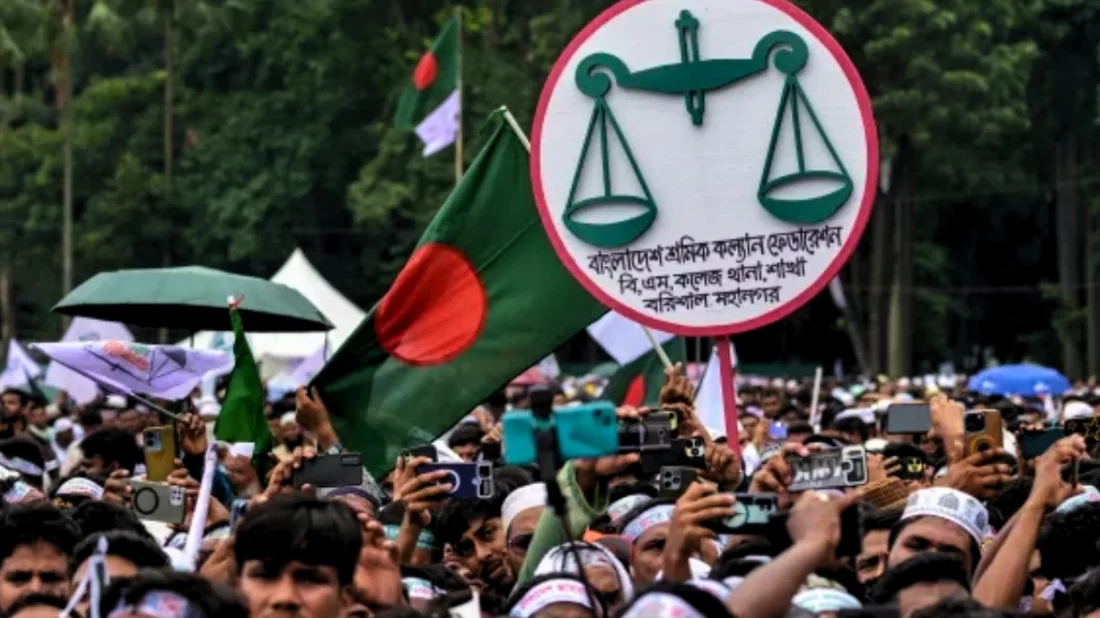
Under the alliance’s seat-sharing arrangement, Jamaat-e-Islami is expected to contest 179 parliamentary seats, while the National Citizen Party will field candidates in 30 seats. Jamaat’s organizational machinery is widely regarded as highly disciplined and effective. Its student wing, Islami Chhatra Shibir, has recently achieved notable victories in student union elections across major university campuses, further demonstrating the party’s grassroots strength.
According to Jamaat leaders, the party currently claims around 20 million supporters and approximately 250,000 registered members, known as Rukon. Analysts argue that the upcoming election is not merely a routine vote but a decisive test of Jamaat’s national legitimacy. The ballot on 12 February will ultimately determine whether a party long associated with controversy can successfully transform its organizational resilience into full state authority.
Source: Al Jazeera