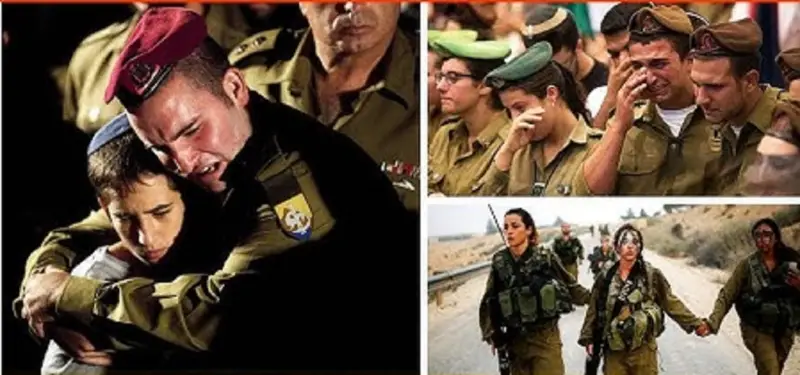
The Israeli Defense Forces (IDF), long regarded as one of the most formidable militaries in the Middle East, is now facing a severe manpower and morale crisis. Nearly 100,000 reservists, who form the backbone of Israel’s military strength, have not returned from leave, despite urgent recall orders. This development has sparked alarm within the Israeli security establishment, raising serious concerns about the IDF’s ability to sustain its operations, particularly as the government considers expanding its offensive in Gaza.
A Reserve Force Strained Beyond Limits
With a standing army of roughly 169,000 soldiers, Israel has historically relied heavily on its reserve corps to maintain readiness during extended conflicts. However, even before a potential new ground offensive in Gaza, the IDF reported a shortage of 10,000–12,000 personnel in critical combat units (The Week). To fill this gap, the military renewed 20,000 reservist contracts and issued emergency orders for up to 60,000 more reservists to return to service within a week (The Week, AP News, The Wall Street Journal).
Despite these efforts, compliance has been strikingly low, with tens of thousands of reservists opting not to return. The crisis is not merely logistical but reflects a deep fracture in morale, public trust, and military cohesion.
Morale Collapses and Mounting Refusal
Several studies and media reports point to a sharp decline in motivation among Israeli reservists:
- A Hebrew University study revealed that 36% of reservists now report lower motivation to serve (Reuters).
- Earlier estimates suggested that only 70% of reservists were answering call-ups, and participation rates are now hovering at just 60–70% (Reuters, Al Mayadeen English).
- Draft refusal is spreading, especially among ultra-Orthodox (Haredi) Jews, where around 14,600 exemptions were canceled but resistance remains strong (The Week, Al Mayadeen English).
- Domestic protests are gaining momentum. Demonstrations in Tel Aviv have seen both reservists and conscientious objectors calling for a ceasefire and demanding a new political direction (The Guardian).
Chief of Staff Eyal Zamir has warned that if participation continues to decline, the IDF may not be able to meet minimum readiness standards for a large-scale offensive (Palestine Chronicle, Reuters).
The Psychological Toll: PTSD, Burnout, and Suicide
Years of war mobilization and intense combat rotations have left Israeli reservists emotionally and psychologically drained.
- Research shows that PTSD symptoms among reservists have soared to 12% after Gaza combat tours, compared to less than 0.5% at enlistment (The Times of Israel).
- The IDF has confirmed at least 21 suspected suicides among soldiers in 2024 alone, with over half involving reservists (The Times of Israel).
- Reservists describe a crushing combination of trauma, burnout, and the strain of balancing military duties with civilian careers and family life (The Washington Post, The Times of Israel).
This psychological burden is weakening not only military readiness but also public faith in the war’s direction.
Economic and Domestic Disruption
The crisis extends beyond the battlefield. Israel’s economy is deeply strained as tens of thousands of citizens are repeatedly pulled away from civilian jobs:
- In late 2023, reserve duty accounted for 5% of all working hours lost nationwide. By mid-2024, around 34,000 workers per month were still absent due to extended military call-ups (Israel Democracy Institute).
- Government financial support has been inadequate. Over 40% of reservists surveyed expressed dissatisfaction with compensation for time lost at work and rising family expenses (Israel Defense).
- Older reservists face an additional emotional toll, often serving alongside soldiers young enough to be their children, some of whom they’ve seen killed in combat (The Times of Israel).
Strategic Impasse: A War Without an Exit Strategy
The IDF’s “Gideon’s Chariots II” plan for Gaza City requires sustained mobilization, yet lacks a clear post-war political or reconstruction framework (The Times, The Washington Post).
- Humanitarian agencies, including the UN and Red Cross, have warned of catastrophic civilian consequences if Israel expands its ground campaign (The Guardian).
- Reports suggest that the government’s success metrics—particularly militant casualty counts—are overstated. Analysts estimate that only around 8,900 of nearly 47,700 suspected militants have been confirmed or are believed killed, far below claims of 17,000–20,000 (The Guardian).
- Without a credible exit strategy, analysts warn that Israel risks being drawn into a prolonged “forever war” with no clear victory or resolution (The Times, The Guardian).
A Military on the Brink
Israel’s military strength has long relied on the resilience of its reservists, yet this foundational pillar is now crumbling. The country’s political leadership, under Prime Minister Benjamin Netanyahu, faces mounting pressure from both domestic critics and international allies to de-escalate. However, far-right factions in the coalition remain determined to press forward with maximalist goals, leaving the IDF caught between political ambitions and battlefield realities.
The refusal of nearly 100,000 reservists to return is not just a manpower problem—it’s a symptom of a deeper national reckoning. Israelis are questioning the cost, morality, and long-term feasibility of an indefinite war, and many reservists are voting with their feet. For now, the IDF faces an unprecedented challenge: fighting an escalating conflict with a fatigued, demoralized, and increasingly reluctant reserve corps.
Sources:
The Guardian, Reuters, AP News, The Week, The Wall Street Journal, The Washington Post, Palestine Chronicle, The Times of Israel, Israel Democracy Institute, Israel Defense