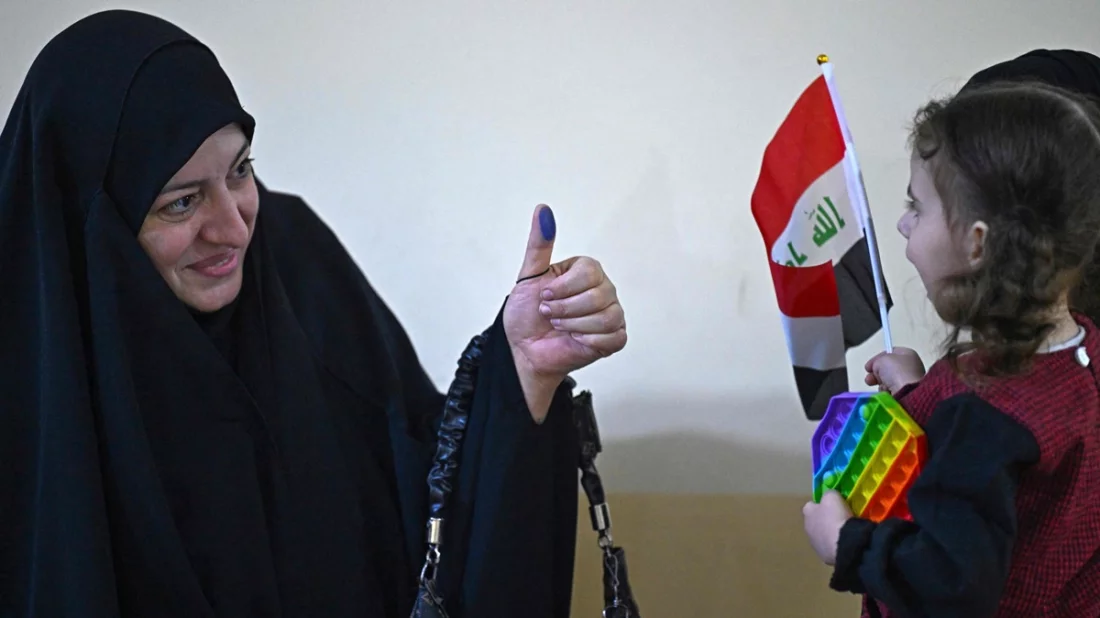
Iraq’s 46 million citizens have cast their votes in the country’s much-anticipated parliamentary elections, an event closely watched by both Iran and the United States due to its potential impact on regional power dynamics. Polling concluded on Tuesday (November 11), and vote counting is now underway, according to Iraq’s Independent High Electoral Commission.
In an official statement, the commission announced that 10,898,327 Iraqis participated in Tuesday’s general voting, while an additional 1,084,289 military and security personnel had already cast their ballots during a special early voting session on Sunday. With a total of 21,404,291 eligible voters, the overall voter turnout surpassed 55 percent, marking a relatively strong showing amid widespread concerns about political fatigue and voter apathy.
Polling stations opened at 7 a.m. local time and closed punctually at 6 p.m., without any extension, reflecting a relatively smooth and orderly electoral process across most regions.
Prime Minister Mohammed Shia al-Sudani expressed satisfaction with the successful conduct of the election, calling it a major milestone for Iraq’s democratic journey. In a post on X (formerly Twitter), he stated,
“Once again, our courageous Iraqi people have taken a significant step toward greater stability and progress.”
Al-Sudani hailed the election as “a consolidation of the democratic system,” emphasizing that its successful execution fulfilled one of the government’s most important commitments outlined in its executive program.
A total of 7,743 candidates, including 2,247 women, contested for seats in the Iraqi Council of Representatives. The current parliamentary term began on January 9, 2022, and is set to last four years. According to Iraqi law, general elections must be held at least 45 days before the end of the sitting legislature’s mandate.
Iraq’s political structure is characterized by a delicate sectarian balance: the presidency traditionally goes to a Kurd, the prime minister’s post is held by a Shia Muslim, and the speaker of parliament comes from the Sunni community. The current assembly remains dominated by Shia parties and coalitions, a reflection of Iraq’s post-2003 political landscape shaped after the fall of Saddam Hussein’s regime.
Observers note that both Tehran and Washington are paying close attention to the outcome, given their competing interests in Baghdad’s political orientation. A stable and legitimate election result could strengthen Iraq’s standing as a key player in Middle Eastern diplomacy—while any signs of dispute or instability could risk reigniting factional tensions.
As the counting continues, Iraqis wait anxiously to see whether this election will usher in genuine reform and renewed political unity, or simply reproduce the familiar patterns of coalition wrangling and power-sharing that have long defined the country’s fragile democracy.