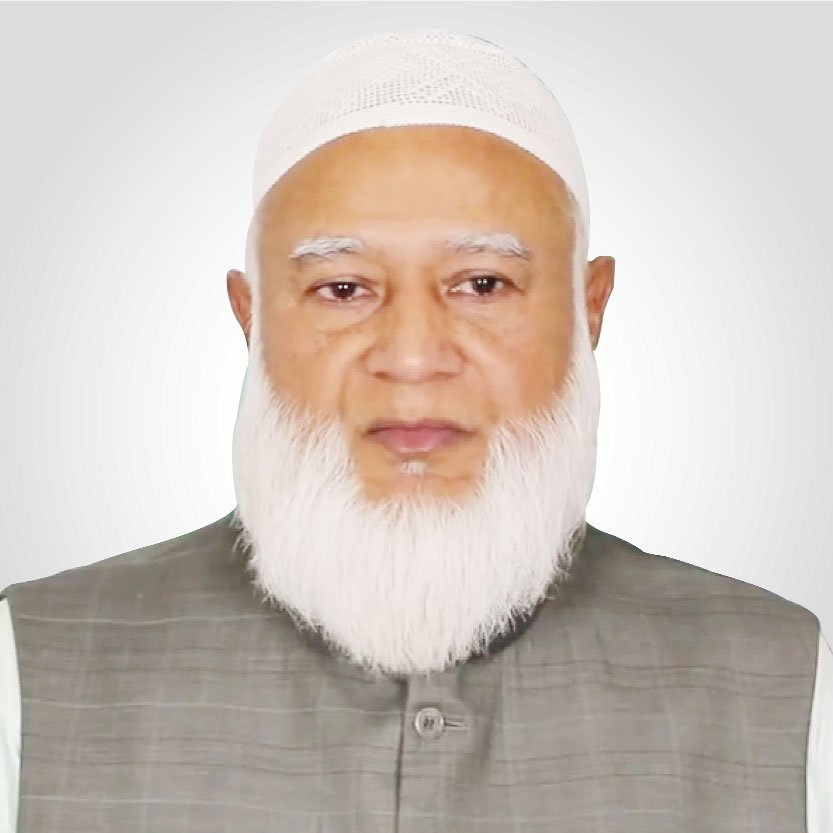
Dr. Shafiqur Rahman, the Amir of Bangladesh Jamaat-e-Islami, stands today as one of the most prominent, influential, and widely discussed political leaders in Bangladesh. His journey—from a dedicated physician to a nationally recognized political figure—has been marked by integrity, organizational excellence, and an unwavering commitment to social justice. Over the decades, he has emerged as a steadfast voice for democratic rights, citizen empowerment, and the establishment of a just and humane society.
On Friday evening, at 6:30 PM, Dr. Rahman took oath for the third consecutive term as the Amir of Jamaat-e-Islami for the 2026–2028 session at the Al-Falah Convention Hall in Dhaka’s Moghbazar. His renewed mandate reflects the trust and confidence the party’s grassroots leadership continues to place in him.
Early Life and Family Background
Dr. Shafiqur Rahman was born on 31 October 1958 in a respected Muslim family in Kulaura Upazila of Moulvibazar district. His father, Mohammad Abru Miah, and mother, Khatibunnecha, raised their five children with strong moral values and religious grounding. Dr. Rahman, the third among the siblings, grew up in an environment that emphasized education, community service, and principled living—traits that profoundly shaped his future path.
Education and Professional Career
His academic journey began at Baramchal High School, from where he completed SSC in 1974. He then pursued higher secondary education at Sylhet MC College, completing HSC in 1976. Dr. Rahman later enrolled at the prestigious MAG Osmani Medical College, earning his MBBS degree in 1983.
After entering the medical profession, he served patients with diligence and compassion. However, alongside medicine, he gradually became engaged in socio-political activism, driven by a desire to work for people on a larger scale. His transition from medical practice to full-time politics would eventually reshape his life—and influence national politics.
Political Journey
Dr. Rahman’s political involvement began during his student life. His early engagement with the JASAD Chhatra League marked the beginning of his activism. In 1977, he joined Bangladesh Islami Chhatra Shibir, where he soon rose to leadership positions, serving as President of both the Sylhet Medical College unit and the Sylhet City branch.
His association with Jamaat-e-Islami began in 1984. Over the decades, he earned recognition for his disciplined leadership, strategic thinking, and ability to inspire organizational unity. He gradually ascended through various important roles:
- Member, Central Majlis-e-Shura (1985)
- Sylhet District Secretary (1986–88)
- Sylhet District Naib-e-Amir (1989–91)
- Sylhet District Amir (1991–1998)
- Member, Central Executive Council (1998)
- Sylhet Metropolitan Amir (1998–2007)
- Assistant Secretary General (2010)
- Executive Committee Member (2011)
- Acting Secretary General (2011–2016)
- Secretary General (2017–2019)
In November 2019, he was elected Amir directly by Jamaat members and has been serving in that role since 2020. His repeated re-elections signal his wide acceptance across the party structure and his ability to navigate challenging political landscapes.
Family Life
In 1985, Dr. Rahman married Dr. Amina Begum, who later became a Member of Parliament in Bangladesh’s 8th National Assembly. They have three children: two daughters and a son.
- Their elder daughter is undergoing FCPS training in Cardiology.
- Their younger daughter, after completing MBBS and MPH, is serving as an Assistant Professor.
- Their son is also an MBBS graduate.
The family is known for its strong academic background and longstanding commitment to social service.
Social Contributions and Entrepreneurship
Beyond politics, Dr. Shafiqur Rahman is also widely respected for his philanthropic initiatives. He founded a private medical college and hospital, aiming to expand quality healthcare services to underserved populations. His contributions extend to the establishment of schools, colleges, madrasas, charitable hospitals, libraries, orphanages, and mosques in various regions.
He is a lifelong member of several national institutions, including the Bangladesh Red Crescent Society, Bangladesh Medical Association (BMA), and the Chamber of Commerce.
International Engagements
As part of political and humanitarian missions, Dr. Rahman has traveled to numerous countries, including the United Kingdom, Germany, Italy, Austria, Turkey, Saudi Arabia, Malaysia, and the United Arab Emirates. These engagements have broadened his global outlook and enriched his understanding of international socio-political dynamics.
A Symbol of Integrity and Courage in National Politics
In the highly turbulent political landscape of Bangladesh, especially during what he and his party describe as a period of authoritarian governance, Dr. Rahman has maintained a reputation for fearless leadership. His moral integrity, disciplined organizational style, and unwavering commitment to democratic transformation have made him a defining figure for many.
As he begins his new term as Amir, Bangladesh is at a crossroads—grappling with demands for political reform, economic equality, and an inclusive national identity. Many of his supporters believe that Dr. Shafiqur Rahman’s leadership is aligned with these aspirations. They view him as someone capable of mobilizing diverse communities—across religion, class, and region—to build an “inclusive Bangladesh,” where justice and dignity prevail for all citizens.