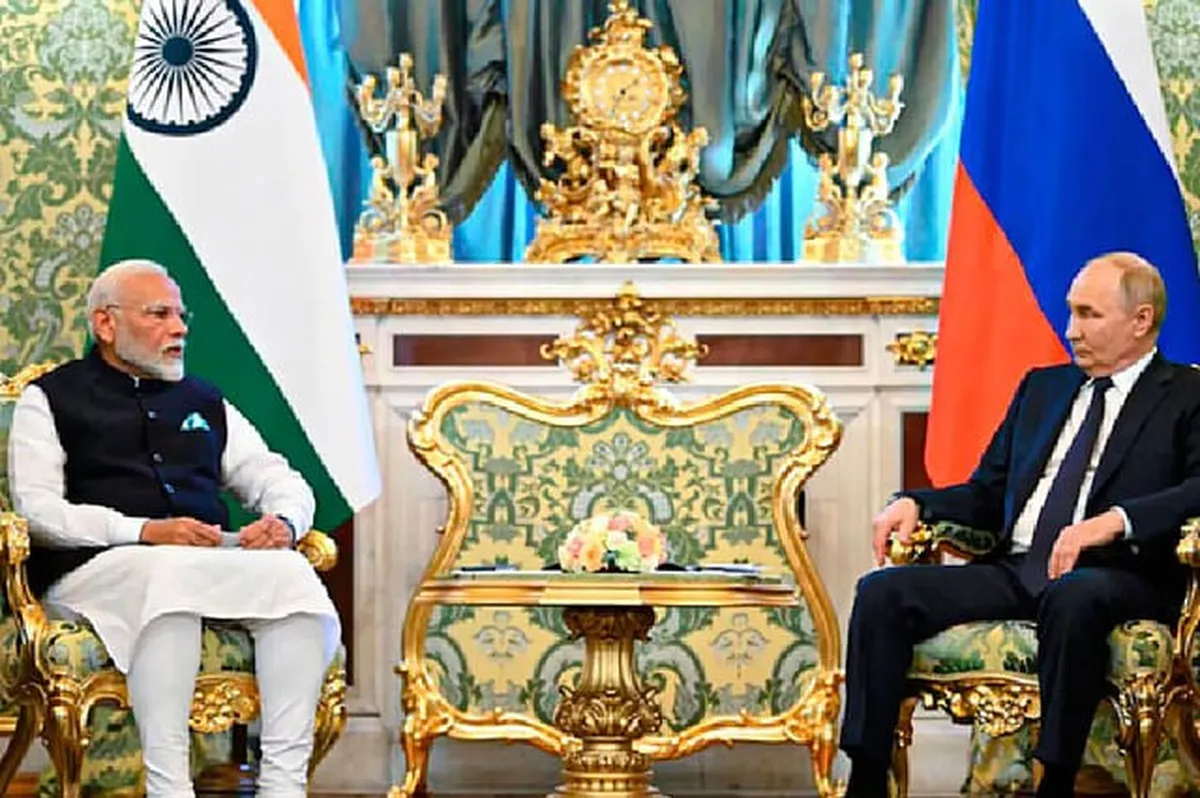
Indian Prime Minister Narendra Modi’s recent visit to Moscow has sparked renewed interest in India’s foreign policy maneuvers, particularly amidst the backdrop of global geopolitical tensions. This visit, after a delay due to Russia’s actions in Ukraine, underscores India’s strategic calculus in maintaining robust ties with both Russia and the West, notably the United States.
-
Context and Background
Modi’s visit to Moscow represents a critical juncture in the enduring diplomatic saga between India and Russia, rooted in decades of strategic alignment. From the early 1970s, when India sought Soviet support during its conflict with Pakistan, these bilateral ties have evolved into a multifaceted partnership encompassing defense, energy, and geopolitical coordination. Despite India’s expanding engagements with Western powers, especially the United States, its relationship with Russia remains pivotal to its foreign policy calculus. This enduring alliance has been underpinned by mutual geopolitical interests and a history of reliable cooperation, shaping India’s strategic outlook in the global arena.
Over the years, India and Russia have collaborated closely on defense procurement, with Russia historically being India’s largest supplier of military hardware. Beyond defense, bilateral economic ties, particularly in energy cooperation, have strengthened, contributing to India’s energy security objectives. Modi’s recent visit underscores India’s intent to reaffirm and potentially expand these strategic partnerships amidst evolving global dynamics, where the rise of China and geopolitical shifts in Asia-Pacific necessitate careful diplomatic navigation. As India seeks to balance its relationships with both traditional allies like Russia and newer partners in the West, Modi’s diplomatic overtures in Moscow highlight India’s strategic intent to maintain a diversified and robust foreign policy approach.
-
Strategic Independence vs. Allegiance
India’s stance on the Ukraine-Russia conflict illustrates its strategic commitment to maintaining independence amidst complex global alignments. Despite burgeoning ties with Western powers, particularly the United States, India has chosen not to unequivocally align against Russia. Modi’s recent interaction with Ukrainian President Volodymyr Zelensky during the G-7 summit exemplifies India’s nuanced approach, prioritizing diplomatic engagement over outright alignment in international disputes.
This approach underscores India’s pragmatic foreign policy, which seeks to navigate global conflicts while safeguarding its national interests and maintaining geopolitical autonomy. By engaging with both sides and avoiding overt alignment, India aims to leverage its position as a key player in international diplomacy without being drawn into polarizing conflicts. Modi’s diplomatic maneuvers reflect India’s intent to foster stability and dialogue, promoting peaceful resolutions while preserving its strategic partnerships with multiple global powers.
-
China Factor and Regional Dynamics
India’s strategic calculations are profoundly shaped by the formidable presence of China in the geopolitics of the Asia-Pacific region. Persistent border disputes and periodic military standoffs between India and China underscore the urgency for India to forge strategic alliances with global powers like Russia. Russia’s expansive geographical reach, robust nuclear capabilities, and significant influence in Central Asia are viewed by India as indispensable assets in balancing China’s expanding regional influence.
The Sino-Indian border conflicts, particularly in regions like Ladakh, highlight the strategic imperatives driving India’s alignments with Russia. By cultivating strong ties with Moscow, India aims to bolster its defense capabilities and diplomatic leverage against China’s assertive regional policies. Russia’s historical partnership with India in defense cooperation, including the supply of advanced military equipment and technology, further solidifies their strategic alliance. Moreover, Russia’s diplomatic clout and presence in international forums provide India with critical support in countering China’s influence, enhancing regional stability, and safeguarding its national interests in the broader Indo-Pacific theater.
-
Historical Context: Nixon, China, and Indo-Russian Ties
The historical context of US-China rapprochement under President Nixon casts a long shadow over India’s foreign policy calculus, influencing its approach to contemporary global alignments. In the early 1970s, Nixon’s strategic outreach to China was a geopolitical maneuver aimed at leveraging Beijing against the Soviet Union during the Cold War. This realignment strained US-India relations, as Washington’s pivot towards China coincided with its support for Pakistan during the Bangladesh Liberation War. The Nixon administration’s backing of Pakistan, despite widespread human rights abuses and military aggression in East Pakistan (now Bangladesh), exacerbated India’s mistrust of US intentions in the region
India’s response to these developments was pivotal: seeking to counterbalance US alignment with Pakistan and China, India turned to the Soviet Union for strategic support. The Indo-Soviet Treaty of Friendship and Cooperation signed in 1971 solidified this alliance, marking a significant shift in India’s foreign policy orientation towards the Eastern Bloc. The treaty provided crucial diplomatic and military backing to India during its conflict with Pakistan and subsequent creation of Bangladesh, underscoring the depth of Indo-Soviet relations during the Cold War era.
This historical precedent continues to shape India’s cautious approach to current global alignments, particularly in navigating its relationships with major powers like Russia and the United States. India’s leaders and foreign policy planners draw lessons from the Nixon era, emphasizing the importance of strategic autonomy and diversification of alliances to safeguard national interests. Amidst contemporary geopolitical tensions and power shifts in the Indo-Pacific region, India remains wary of overdependence on any single global power, preferring instead a balanced and pragmatic approach that preserves its sovereignty and strategic flexibility.
-
Geostrategic Implications for India’s Defense and Security
India’s robust defense partnership with Russia spans several decades and plays a crucial role in shaping its national security framework. Russia has historically been India’s foremost supplier of advanced defense equipment and technology, ranging from fighter jets and tanks to missile systems and naval vessels. This longstanding collaboration has not only bolstered India’s military capabilities but also diversified its defense procurement sources, reducing dependency on any single country. Modi’s recent visit to Moscow signifies India’s strategic intent to sustain and potentially enhance this defense cooperation, particularly in light of escalating regional security threats.
The strategic imperative behind India’s defense ties with Russia is underscored by shared geopolitical interests and mutual concerns over regional stability. With the Indo-Pacific region witnessing increasing geopolitical competition and the proliferation of non-state actors, including cyber threats, India views its partnership with Russia as critical for enhancing defense preparedness and resilience. The collaboration extends beyond hardware procurement to joint military exercises, technology transfers, and capacity-building initiatives, all aimed at bolstering India’s defense capabilities against evolving security challenges.
-
Economic Opportunities and Energy Security
India’s economic cooperation with Russia extends beyond defense into vital sectors such as energy, where Russia’s abundant reserves of natural gas and oil offer significant opportunities for India’s energy security and economic growth. Modi’s recent discussions in Moscow undoubtedly centered around expanding these economic ties, which are crucial for diversifying India’s energy sources and bolstering its resilience against global energy market fluctuations.
Russia stands as a pivotal partner in India’s quest for energy security, providing a stable and reliable source of natural resources amidst uncertainties in other energy markets. The potential expansion of cooperation in energy includes not only the import of Russian oil and natural gas but also joint ventures in energy infrastructure development, such as pipelines and refineries. These initiatives not only strengthen bilateral economic relations but also contribute to India’s strategic goal of achieving energy self-sufficiency and sustainability.
Moreover, deepening economic cooperation with Russia holds broader implications for India’s economic growth trajectory. As India seeks to enhance its industrial base and infrastructure development, collaborations with Russia in sectors like manufacturing, technology transfer, and space exploration can pave the way for mutual economic benefits. Modi’s proactive engagement in expanding economic ties with Russia underscores India’s strategic foresight in leveraging diverse partnerships to drive economic progress and ensure long-term energy security.
-
Multilateral Diplomacy and Global Governance
India’s engagement with Russia holds profound implications for multilateral diplomacy and global governance, underpinned by their shared status as permanent members of the UN Security Council. Together, they collaborate extensively on pressing global issues spanning counterterrorism, climate change mitigation, and peacekeeping operations. Modi’s recent visit to Moscow serves as a robust reaffirmation of India’s commitment to bolstering these multilateral frameworks, thereby amplifying its influence on international platforms.
As stalwarts of global governance, India and Russia wield considerable diplomatic clout in shaping policies that impact global security and stability. Their collaborative efforts in initiatives such as BRICS (Brazil, Russia, India, China, South Africa) and the Shanghai Cooperation Organization (SCO) further solidify their strategic alignment on regional and global issues. Modi’s diplomatic engagements in Moscow likely included discussions on strengthening these multilateral platforms, fostering consensus on complex geopolitical challenges, and advancing shared interests in international law and order.
Moreover, India’s partnership with Russia extends beyond bilateral concerns to broader global responsibilities, including sustainable development goals, nuclear non-proliferation efforts, and cybersecurity initiatives. By deepening ties with Russia, Modi’s administration underscores India’s proactive role in global governance, advocating for inclusive policies that reflect the aspirations of emerging economies while safeguarding international peace and security. This collaborative approach not only enhances India’s diplomatic stature but also reinforces its commitment to a multipolar world order built on equitable and cooperative international relations.
Conclusion
Modi’s visit to Moscow symbolizes India’s diplomatic finesse in maintaining multifaceted international relationships amid complex geopolitical currents. As India continues to assert its role on the global stage, its engagements with both Russia and the West will be crucial in shaping the contours of future global geopolitics, particularly in the Indo-Pacific region.
In summary, India’s approach to the Moscow mission underscores its commitment to strategic autonomy and balancing regional dynamics, making it a key player in shaping the evolving global order.
—
References:
– Reuters, “India’s Modi to visit Russia amid Ukraine crisis, China border tensions”, March 2024.
– Council on Foreign Relations, “India-U.S. Relations”, April 2023.
– The Diplomat, “India-Russia Relations: A Historical Perspective”, January 2022.