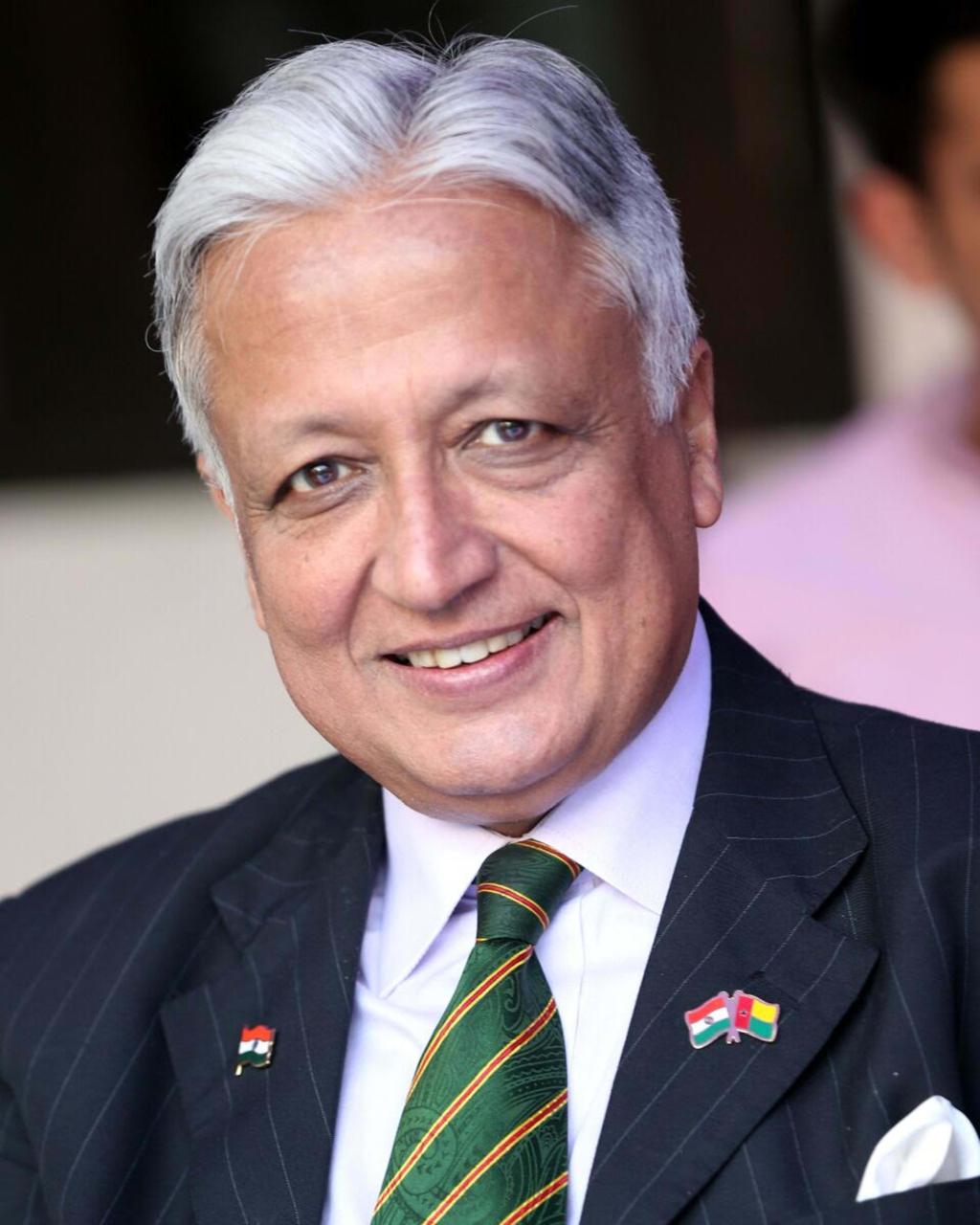
Since my student days, I have had a particular interest in watching interviews for different competitive examinations, including BCS, administrative services, and other high-level government positions. Even today, whenever I get time, I watch interviews and mock interviews related to India’s Union Public Service Commission (UPSC). In particular, I have watched several interviews conducted by former Indian diplomat Dr. Deepak Vohra.
Deepak Vohra has had a long career in the Indian Foreign Service and considerable experience in diplomacy. In various UPSC mock interviews, he can be seen asking candidates direct and challenging questions. A recent report on one such interview also highlighted his approach of encouraging candidates to answer directly and express their own views rather than simply giving what might be considered a “politically correct” answer.

There is nothing wrong with asking direct or difficult questions. In fact, challenging questions are necessary to assess the analytical ability, reasoning, knowledge, and decision-making skills of future civil servants, particularly under pressure.
But the question is: What kind of questions are being asked when Bangladesh is discussed?
In some of Vohra’s mock interviews, Bangladesh, India’s role in 1971, and the situation of Hindu minorities in Bangladesh have emerged as topics of discussion. There is no doubt that these are important subjects for an Indian civil-service aspirant to understand.
However, there is a difference between asking questions about the situation of minorities in a neighbouring country and framing questions in a way that may create a predetermined negative perception of that country.
If serious allegations concerning attacks, persecution, or killings of Hindus in Bangladesh are used as the basis of an interview question, the candidate should also be presented with reliable facts, the broader context, the law-and-order situation, and the wider social realities of Bangladesh.
An entire country, nation, or millions of people should not be judged solely on the basis of isolated incidents.
If a Hindu, Buddhist, Christian, or member of any other religious community in Bangladesh is subjected to violence or persecution, we certainly condemn it and demand justice. Protecting the safety and rights of minority citizens is the responsibility of the state.
At the same time, it is equally important to recognize that Bangladesh cannot be fully understood if its society is viewed only through the lens of communal conflict.
A legitimate question may be: How can the safety and rights of minorities in Bangladesh be better protected?
But if the underlying impression becomes that Bangladesh is synonymous with minority persecution, can that really give a future administrator a complete and accurate understanding of Bangladesh?
This is where our concern begins.
A future Indian Administrative Service officer may not only be involved in India’s domestic administration. Many civil servants may eventually deal with issues involving borders, foreign policy, trade, security, regional cooperation, and relations with neighbouring countries.
Therefore, their knowledge of Bangladesh should be fact-based, balanced, and multidimensional.
Bangladesh has problems, and Bangladesh itself does not deny that. Political conflict, allegations of human-rights violations, minority security, law-and-order issues, and administrative weaknesses are all legitimate subjects of discussion.
But Bangladesh’s development, economy, education, garment industry, women’s education, social transformation, religious coexistence, trade relations with India, and the long-standing people-to-people connections between the two countries should also be part of the discussion.
A future administrator should be presented with a complete picture of a neighbouring country—not only its negative aspects.
There is another important issue: 1971.
The important role played by the people and government of India during Bangladesh’s Liberation War is a part of history. The people of Bangladesh do not deny that history.
However, historical cooperation in 1971 should not be invoked in every discussion of present-day bilateral relations in a way that questions Bangladesh’s right to make independent decisions or pursue its own national interests.
Gratitude can exist. Respect for history can exist. But sovereignty and mutual dignity must exist as well.
Bangladesh is not a subordinate state of India, just as India is not an enemy state of Bangladesh. The two countries are neighbours, and each has its own national interests. Sometimes there will be cooperation, and sometimes there will be differences. That is a normal reality of international relations.
Therefore, if an Indian civil-service candidate is asked whether Bangladesh is sufficiently grateful to India because India helped Bangladesh in 1971, another diplomatic question may also be considered:
Are relations between states governed only by gratitude, or by mutual interests, equality, sovereignty, and mutual respect?
That is an important question in international relations.
Our concern is not to attack any individual. Rather, it is about the kind of framework through which future administrators may come to understand a neighbouring country.
The questions of a former diplomat naturally carry weight because of his extensive experience. If a particular perspective is repeatedly reflected in those questions, it is reasonable to discuss whether such framing may influence the way candidates perceive the country being discussed.
However, caution is also necessary.
It would not be correct to conclude from the questions of one mock interviewer that all Indian IAS officers hold a negative view of Bangladesh. The personal views of individual civil servants, official government policy, and state decisions are not necessarily the same thing.
But the question remains:
How is Bangladesh being presented to India’s future administrators?
If Bangladesh has problems, discuss them. If there are allegations of minority persecution, investigate them. If crimes occur, demand justice. Discuss the history of 1971. Discuss Bangladesh’s political and social weaknesses as well.
But at the same time, present Bangladesh’s development, the lives of its ordinary people, its economy, culture, and the long-standing relationship between the millions of people of the two countries.
Because criticism should not be used to hide the truth; it should help make the truth clearer.
Bangladesh also has a responsibility. We should not view Indian society, the Indian state, or the Indian people through a one-sided lens. India itself contains diverse opinions, religions, languages, political perspectives, and social realities.
For the relationship between the two countries to remain constructive, what is needed is not fear of one another, but a better understanding of one another.
Friendship does not mean blind support.
Criticism does not mean hostility.
And diplomacy does not mean a one-sided narrative.
Our expectation is that India’s future administrators will understand Bangladesh in its full reality. Just as Bangladesh should acknowledge its own shortcomings and continue to improve, we also expect neighbouring countries to develop an understanding of Bangladesh that is factual, balanced, and grounded in reality.
Because today’s UPSC candidate may become tomorrow’s administrator.
The perception of neighbouring Bangladesh that is formed in a candidate’s mind today may, in one way or another, influence how that person thinks when carrying out official responsibilities in the future.
So let the questions be difficult. Let them be challenging.
But let the foundation of those questions be facts, history, and reality—not preconceived notions.