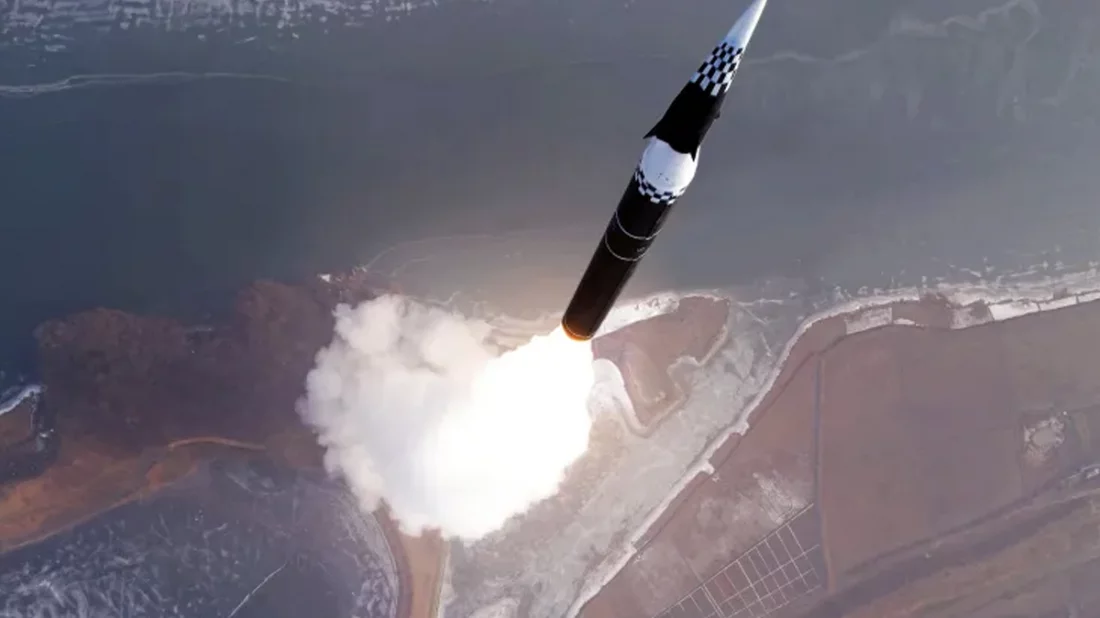
Just days before Donald Trump is set to take the oath as the next President of the United States on January 20, North Korea has launched multiple short-range ballistic missiles, causing alarm across the Korean Peninsula and raising concerns about regional stability. According to a report by Qatar-based news outlet Al Jazeera, the missile launches were detected on Tuesday, January 14, and South Korea’s military confirmed the provocations.
The timing of these missile tests is significant. With the upcoming transition of power in the United States, many experts believe that North Korea is sending a calculated message to the incoming Trump administration. This move is being interpreted as an attempt by Kim Jong-un to assert North Korea’s stance on continuing its missile and nuclear weapons programs, despite international opposition and sanctions.
Details of the Missile Launches
South Korea’s Joint Chiefs of Staff (JCS) reported that North Korea launched several short-range ballistic missiles from the eastern coast of the country toward the sea. The launches were detected around 9:30 a.m. local time and are believed to have been conducted from Jagang Province, a mountainous region that has previously been used for weapons tests.
According to the JCS, the missiles traveled approximately 250 kilometers (155 miles) before landing in the sea. While these were not long-range intercontinental ballistic missiles (ICBMs) capable of reaching the U.S. mainland, the tests are still considered provocative, as they violate United Nations Security Council resolutions that prohibit North Korea from conducting any ballistic missile activities.
The South Korean military stated that there are indications North Korea is preparing for additional missile launches in the coming days. The situation is being closely monitored, and South Korea is sharing all relevant intelligence with the United States and Japan to ensure a coordinated response to any further provocations.
South Korea’s Response
South Korea’s acting President Choi Sang-mok issued a stern warning following the missile launches. He stated, “North Korea’s actions are a direct threat to peace and stability on the Korean Peninsula. We will respond appropriately to any further provocations.”
The South Korean government has also increased its military readiness and is conducting joint surveillance operations with the United States to detect any signs of further missile tests. In addition, the country is working to strengthen its missile defense systems, including the Terminal High Altitude Area Defense (THAAD) system deployed by the U.S. military in South Korea.
A Test for U.S.-North Korea Relations
The timing of North Korea’s missile launches presents a significant challenge for the incoming Trump administration. Donald Trump’s foreign policy stance toward North Korea has been a topic of global interest, especially given his unpredictable approach to diplomacy.
During his campaign, Trump criticized former President Barack Obama’s handling of North Korea, suggesting that he would take a tougher stance. However, his exact strategy remains unclear. The missile launches ahead of Trump’s inauguration are seen by many analysts as a deliberate provocation, aimed at testing the resolve of the new U.S. president.
Dr. Victor Cha, a former White House official and expert on North Korean affairs, commented, “North Korea is trying to gauge how the Trump administration will respond to provocations. This is a critical moment for U.S.-North Korea relations.”
Japan’s Reaction
Japan has also expressed concerns over North Korea’s missile launches. Japanese Prime Minister Shinzō Abe condemned the tests, stating that North Korea’s actions are a violation of international law and pose a threat to regional security.
“We are in constant communication with the United States and South Korea to ensure a coordinated response. North Korea’s actions are unacceptable, and we will continue to work with our allies to maintain peace and stability in the region,” Abe said.
Japan has increased its military vigilance and is closely monitoring North Korea’s activities through its Self-Defense Forces and intelligence agencies. The country has also reiterated its commitment to strengthening its missile defense capabilities.
North Korea’s Message to the World
Experts believe that North Korea’s recent missile launches are a deliberate signal to the incoming U.S. administration and the international community. By demonstrating its missile capabilities, Pyongyang aims to assert its presence on the global stage and challenge the international pressure to denuclearize.
Dr. Kim Dong-yup, a North Korean affairs analyst, stated, “North Korea is trying to show that it will not be intimidated by the change in leadership in the U.S. The missile launches are a message to Trump that Pyongyang will continue its weapons programs despite international opposition.”
This message is also directed at North Korea’s domestic audience. By conducting missile tests, Kim Jong-un seeks to reinforce his leadership and project strength to his people, particularly at a time when the country faces economic hardships due to international sanctions and the impact of the COVID-19 pandemic.
Geopolitical Implications
The missile launches have significant geopolitical implications for the region. The Korean Peninsula remains one of the most volatile regions in the world, with tensions often escalating due to North Korea’s provocative actions.
The United States, South Korea, and Japan have repeatedly called for North Korea to abandon its nuclear weapons program and return to the negotiating table. However, North Korea has continued to pursue its weapons development, citing the need to defend itself against what it perceives as hostile U.S. policies.
The recent missile launches are likely to complicate efforts to resume diplomatic talks. The six-party talks involving North Korea, South Korea, the United States, China, Japan, and Russia have been stalled since 2009. Attempts to engage North Korea in bilateral talks have also faced challenges, particularly due to the country’s refusal to halt its missile and nuclear tests.
What’s Next for the Region?
As Donald Trump prepares to take office, the world is closely watching how his administration will handle the North Korea issue. Analysts suggest that Trump may seek to strengthen sanctions on North Korea or push for tougher diplomatic measures through the United Nations.
However, there are also concerns that Trump’s unpredictable approach to foreign policy could escalate tensions further. Dr. Bruce Klingner, a former CIA analyst, warned, “Trump’s rhetoric on North Korea has been confrontational. If he follows through on his tough stance, it could lead to a dangerous escalation.”
Meanwhile, South Korea and Japan are reinforcing their defense systems to prepare for any further missile launches. Both countries have called for increased cooperation with the U.S. to ensure a strong and unified response to North Korea’s actions.
The latest missile tests by North Korea mark a critical moment in the evolving relationship between the U.S. and North Korea. As Donald Trump prepares to take office, his administration faces a significant challenge in addressing North Korea’s provocations.
The international community is bracing for how the new U.S. administration will respond. Will Trump pursue a diplomatic solution, or will he take a more confrontational approach? The coming weeks and months will be crucial in determining the future of U.S.-North Korea relations and the stability of the Korean Peninsula.
For now, North Korea’s actions continue to pose a challenge to peace and stability in the region, and the world is waiting to see how the new U.S. president will navigate this complex geopolitical issue.