Following the cessation of a 12-day war with Israel, Iran appears to be presenting a transformed image—one of national unity, restraint, and civilian resilience. Both the ruling establishment and state-controlled media are celebrating what they call an “unprecedented national solidarity.” But behind this rare moment of harmony, experts caution that it could be a temporary calm before a deeper social storm.
According to a report by Iran International, President Masoud Pezeshkian on Thursday (June 26) thanked all citizens across the country, including political prisoners, for showing restraint during wartime. A relatively moderate figure in Iranian politics, Pezeshkian praised the Iranian people for their composure, especially when the government failed to provide adequate civilian protection. Despite these failures, he noted, the public did not protest or express open outrage.
Sociologist Saeed Moidfar, president of the Iranian Sociological Association, issued a warning: “If the government does not take real steps to bridge the growing gap with the people, the end of the war may not bring peace but the beginning of a new social crisis.”
One of the most notable changes following the ceasefire is the shift in Iran’s ideological rhetoric. Islamic terminology, long dominant in state discourse, appears to have taken a backseat to nationalist language. Headlines now begin with “Iran,” while references to “Islam” have become noticeably sparse. Even in Supreme Leader Ayatollah Ali Khamenei’s most recent speech, the term “Islamic Iran” appeared only once—and that too in a contextually irrelevant manner.
This shift is echoed by both state-run and reformist media outlets. Prominent dailies like Etemad and Arman-e Melli praised national unity on their front pages and highlighted prominent public figures calling for greater social cohesion.
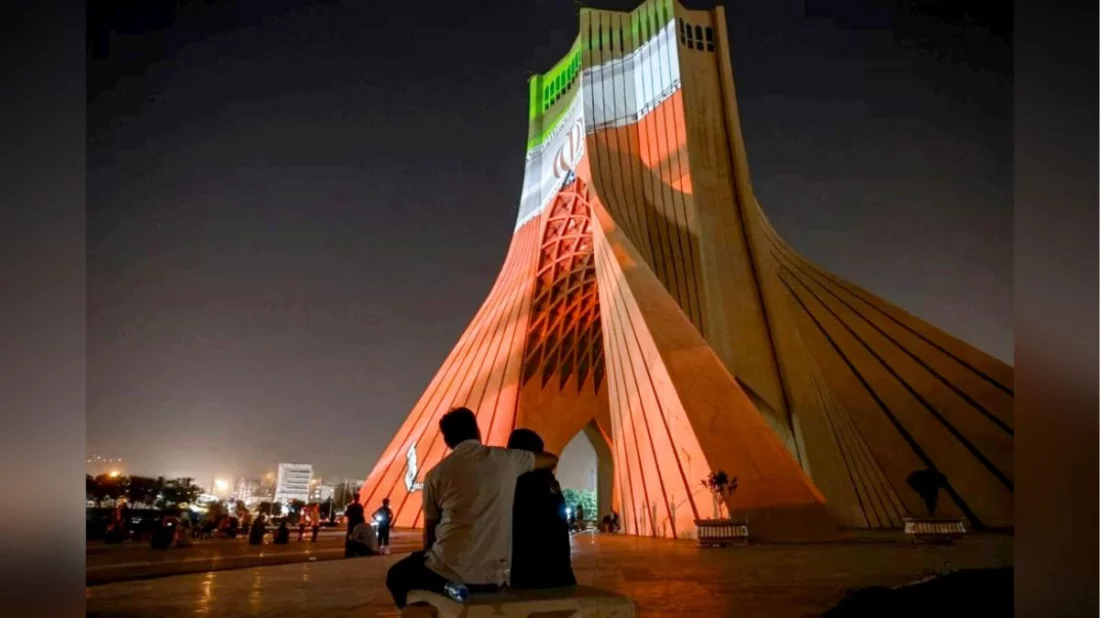
A powerful symbol of this renewed nationalism came in the form of a patriotic concert at Tehran’s Azadi Monument, where the Tehran Symphony Orchestra performed “Oh Iran,” a well-known anthem. Cultural figures took part in televised interviews celebrating Iran’s artistic and historical heritage, and Etemad featured a full-page spread of these individuals as national icons.
Observers note that the government’s tone carries a subtle but clear message of indebtedness to the people. Reformist sociologist Hamid Reza Jalaipour stated, “It is the government’s duty to reward the people’s restraint during the war and use this opportunity to reinforce national unity.”
Interestingly, even some conservatives are echoing this sentiment. A former editor from a pro-regime newspaper admitted that the onus is now on the state to reciprocate the patience shown by its citizens.
In Parliament, lawmakers are scrambling to adjust to the post-war reality. A recent resolution passed unanimously calls for ending cooperation with the UN nuclear watchdog agency, reflecting an effort to maintain a “revolutionary posture.” Ahmad Bakhshayesh, a member of the National Security Committee, argued that Iran must now recalibrate both its economic and foreign policy strategies. Another committee member, Benam Saeedi, took it a step further—urging reconciliation with political opponents.
Yet amid all the calls for unity and reform, one crucial figure remains largely unmentioned in both praise and criticism: Supreme Leader Ayatollah Khamenei. Though he ordered the war and holds the ultimate authority over all key policy decisions, public discourse rarely names him directly. The silence suggests a carefully maintained political façade—one in which the word “government” serves as a polite stand-in for the unelected leadership that truly governs Iran.
For now, the ruling class is relying heavily on the language of unity and nationalism to maintain its legitimacy. But whether this rhetorical shift leads to substantive political reform or simply buys the regime more time remains to be seen. As the dust of war settles, Iran stands at a crossroads—its people transformed by crisis, and its government under pressure to prove it has changed as well.