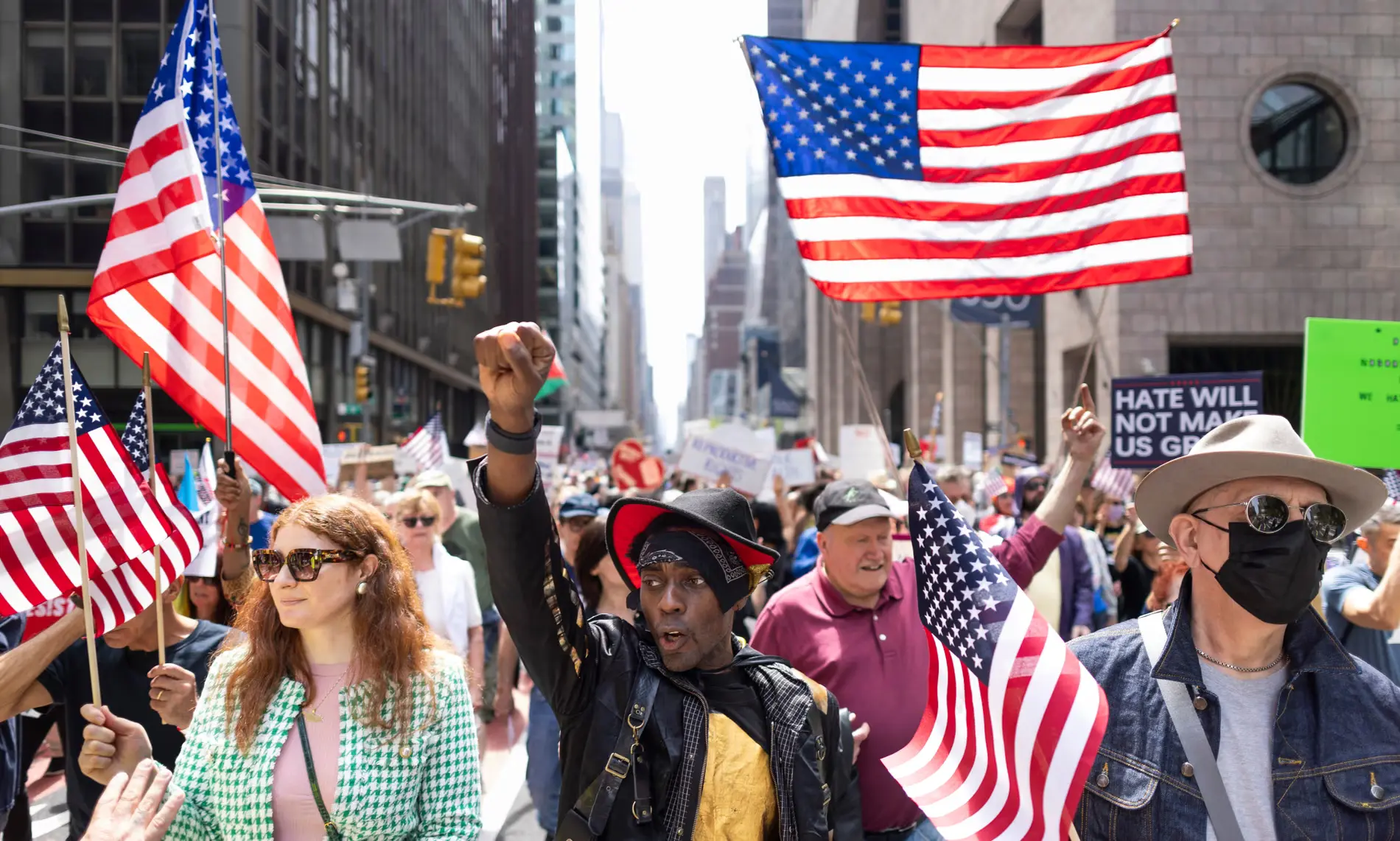
In a sweeping wave of nationwide demonstrations, people from all walks of life took to the streets across the United States over the weekend to protest against the political agenda and ideology associated with former President Donald J. Trump. From major metropolitan centers like New York City, Los Angeles, and Chicago to smaller towns and state capitals, tens of thousands of Americans raised their voices in a unified call to reject what they describe as an alarming return to divisive and authoritarian politics.
A Resurgence of Grassroots Activism
The protests were organized by a broad alliance of advocacy groups, civil rights leaders, labor unions, environmental organizations, and progressive coalitions. These groups, many of whom gained momentum during Trump’s presidency, have reactivated in response to the former president’s increasing public visibility, potential 2024 campaign ambitions, and continued influence over the Republican Party.
“Trump’s agenda was never just about politics—it was about a worldview that threatens democracy, equality, and truth,” said Angela Martinez, a teacher and activist from Dallas, Texas. “We’re here to say we won’t go back. We’re moving forward together.”
Across the country, demonstrators carried homemade signs with messages such as “Protect Democracy,” “No to Fascism,” “Our Bodies, Our Rights,” and “Make America Think Again.” Many marchers wore T-shirts supporting causes like climate justice, LGBTQ+ rights, immigrant protections, and racial equality.
Key Grievances: A Return to Controversial Policies
The protests centered on a host of issues that defined the Trump administration and continue to raise alarm among critics:
- Anti-immigration measures, including travel bans, family separation at the border, and the rescission of protections for undocumented youth under DACA.
- Judicial appointments that cemented a conservative majority in the federal courts, including the Supreme Court’s rollback of federal abortion protections.
- Environmental deregulation, including the withdrawal from global climate accords and the weakening of pollution control policies.
- Persistent misinformation about the outcome of the 2020 election, which fueled the January 6 Capitol insurrection and continues to cast a shadow over American electoral integrity.
- Emboldenment of extremist groups, which many believe found a platform during Trump’s presidency.
In Atlanta, Rev. Marcus Langley, a community leader and pastor, addressed the crowd: “We must remember the lessons of the past four years. Silence is not neutrality—silence is complicity. If we truly believe in justice, we must stand up for it every day.”
A Peaceful but Powerful Mobilization
In most cities, the protests remained peaceful, with local officials crediting organizers for effective coordination and cooperation with law enforcement. Marches were accompanied by musical performances, speeches, and even moments of silent reflection to honor lives lost due to racial injustice, COVID-19 mismanagement, and gun violence—issues many say were worsened under Trump’s leadership.
In cities like Portland, Denver, and Miami, there were isolated tensions between protesters and small groups of counter-demonstrators. However, law enforcement confirmed that any altercations were quickly contained and did not escalate.
“We’re proud of our city,” said San Francisco Police Chief Emily Kim. “People exercised their constitutional rights in a safe and respectful manner.”
Eyes on 2024 and Beyond
While Trump has not officially announced another run for the presidency, his rallies, public statements, and sway over Republican primaries have kept him at the center of political discourse. Protest organizers say the demonstrations are not just about expressing dissent—they’re about building momentum for sustained civic action.
“We are not waiting for Trump to make his move,” said Jordan Patel, a youth organizer in Seattle. “We are mobilizing now—to educate, to vote, to organize, and to resist.”
Several progressive lawmakers, including Rep. Ayanna Pressley, Sen. Bernie Sanders, and Rep. Pramila Jayapal, voiced their support for the demonstrators. In an online statement, Senator Sanders remarked, “What we saw this weekend was democracy in action. The American people are standing up to say that hatred, lies, and corporate greed have no place in our future.”
A Movement Rekindled
For many, the protests marked a revival of the spirit that characterized the massive resistance movements during Trump’s presidency—from the Women’s March and March for Our Lives to the Black Lives Matter protests. But this time, activists say, they are more prepared, more organized, and more determined to make lasting change.
“This is about safeguarding the soul of our nation,” said Nia Thompson, a college student in Philadelphia. “It’s not enough to oppose Trump. We have to dismantle the systems that allowed his rise in the first place.”
As chants of “No Trump, No KKK, No Fascist USA” echoed through the streets, the message from Americans was clear: the battle for democracy, justice, and truth is far from over—and the people are ready to fight for it.